المحتويات
مقال
How Alphabet edged past Apple in the AI race
January 8, 2026
مقال
How Alphabet edged past Apple in the AI race
January 8, 2026
مقال
How Alphabet edged past Apple in the AI race
January 8, 2026

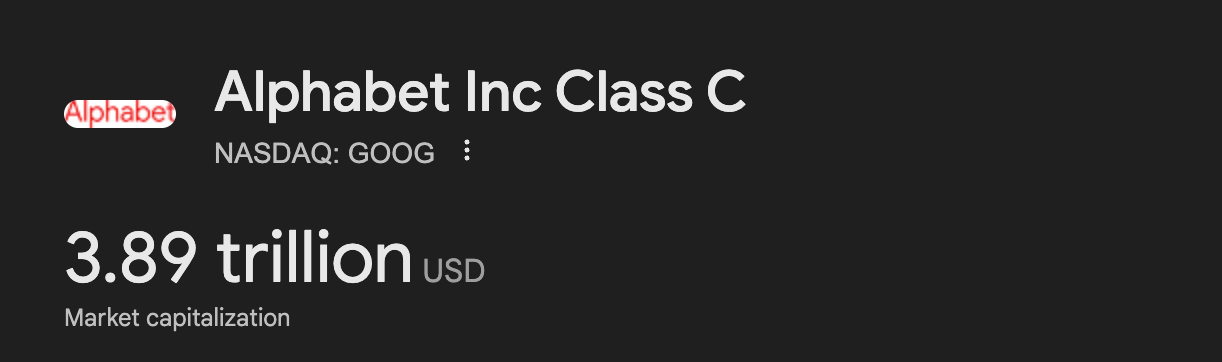
Alphabet has overtaken Apple in market capitalisation for the first time since 2019, closing Wednesday at $3.88 trillion, just ahead of Apple’s $3.84 trillion. The shift reflects a growing divide in how investors are judging AI progress across Big Tech.
This move is less about a single trading session and more about a reassessment of long-term execution. As artificial intelligence moves from experimentation to commercial deployment, markets are increasingly rewarding companies that can translate investment into scalable products and recurring revenue. That change in mindset has worked in Alphabet’s favour.
What’s driving Alphabet’s breakout?
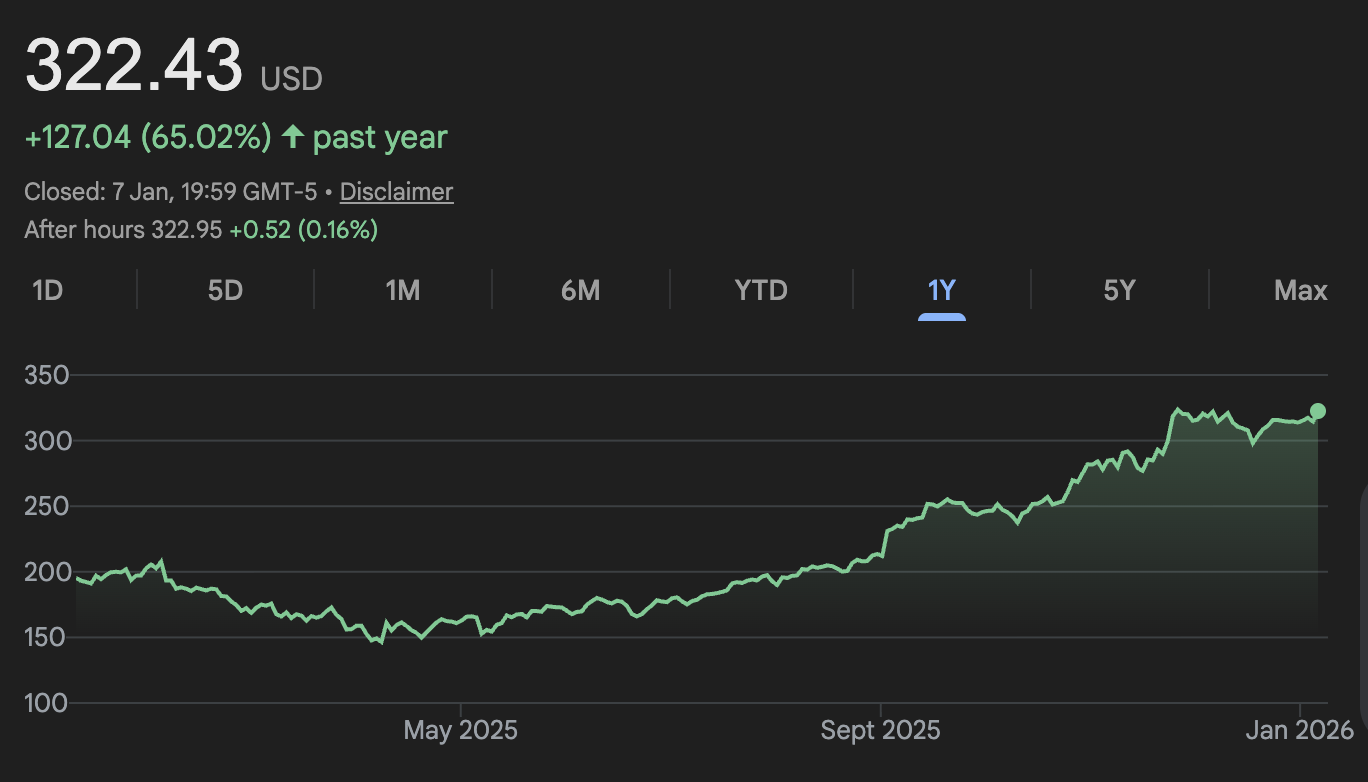
Alphabet’s resurgence has been fuelled by a clear pivot from cautious positioning to assertive AI execution. The stock finished 2025 up 65%, marking its strongest annual performance since 2009, as investor confidence returned around its ability to compete at the infrastructure level of AI.
Markets responded positively to Alphabet’s decision to build rather than outsource critical AI components, directly challenging Nvidia’s dominance instead of relying solely on external providers.
That narrative gathered pace in November with the launch of Ironwood, Alphabet’s seventh-generation tensor processing unit. The chip is designed to lower costs for large-scale AI workloads, particularly within Google Cloud environments.
Momentum continued in December with the release of Gemini 3, which received strong early feedback for improved reasoning and multimodal capabilities. Alphabet shares gained more than 2% on Wednesday alone, closing at $322.03, as sentiment shifted decisively.
Why it matters
This shift in market leadership underscores the growing importance of AI dominance. Alphabet operates a vertically integrated AI ecosystem, spanning custom silicon, in-house models, cloud infrastructure, and global distribution. That structure allows the company to monetise AI across multiple layers rather than competing purely on end-user features.
Analysts are increasingly favouring this approach. Raymond James described Alphabet’s AI strategy as “commercially aligned with enterprise demand,” emphasising clearer revenue pathways over speculative innovation. Apple, meanwhile, is facing pressure for slower execution at a point in the cycle where speed and scale have become critical.
Impact on the tech market
Alphabet’s move past Apple is reshaping investor positioning across the broader technology sector. Capital is flowing toward firms that can demonstrate visible, AI-linked revenue growth, particularly within enterprise and cloud services.
During Alphabet’s October earnings call, CEO Sundar Pichai noted that Google Cloud had secured more than $1 billion in contracts in 2025 through Q3, surpassing the total for the previous two years combined, reinforcing signs of institutional adoption.
Apple’s outlook appears more uncertain. Shares have dropped by over 4% in the past five days as concerns mount over delivery risk. The postponed rollout of Apple’s next-generation Siri, now expected in 2026, has left the company vulnerable as AI shifts from a differentiator to a baseline requirement.
Expert outlook
Looking ahead, analysts expect Alphabet’s valuation to be driven by cloud growth momentum and the uptake of its AI hardware through 2026. Competition from Microsoft and Nvidia remains intense, but Alphabet’s ability to deploy proprietary chips internally provides it with cost control and flexibility that few of its peers can replicate. A UBS strategist noted that Alphabet is now “shaping the enterprise AI cost curve rather than responding to it.”
Apple’s window is tightening. Raymond James downgraded the stock this week, cautioning that upside into 2026 may be limited unless Apple delivers a meaningful leap in AI capability rather than incremental improvements. The market will be watching closely to see whether Apple’s long-anticipated AI strategy can regain momentum or further cement Alphabet’s structural advantage.
Key takeaway
Alphabet’s move ahead of Apple underscores a market that now prioritises AI execution over brand strength alone. By aligning chips, models, and cloud infrastructure, Alphabet has positioned itself as a full-stack AI contender. Apple’s delays illustrate how costly hesitation has become in this phase of the cycle. The next key question is whether AI-driven revenues can scale faster than the capital required to sustain them.
Alphabet technical outlook
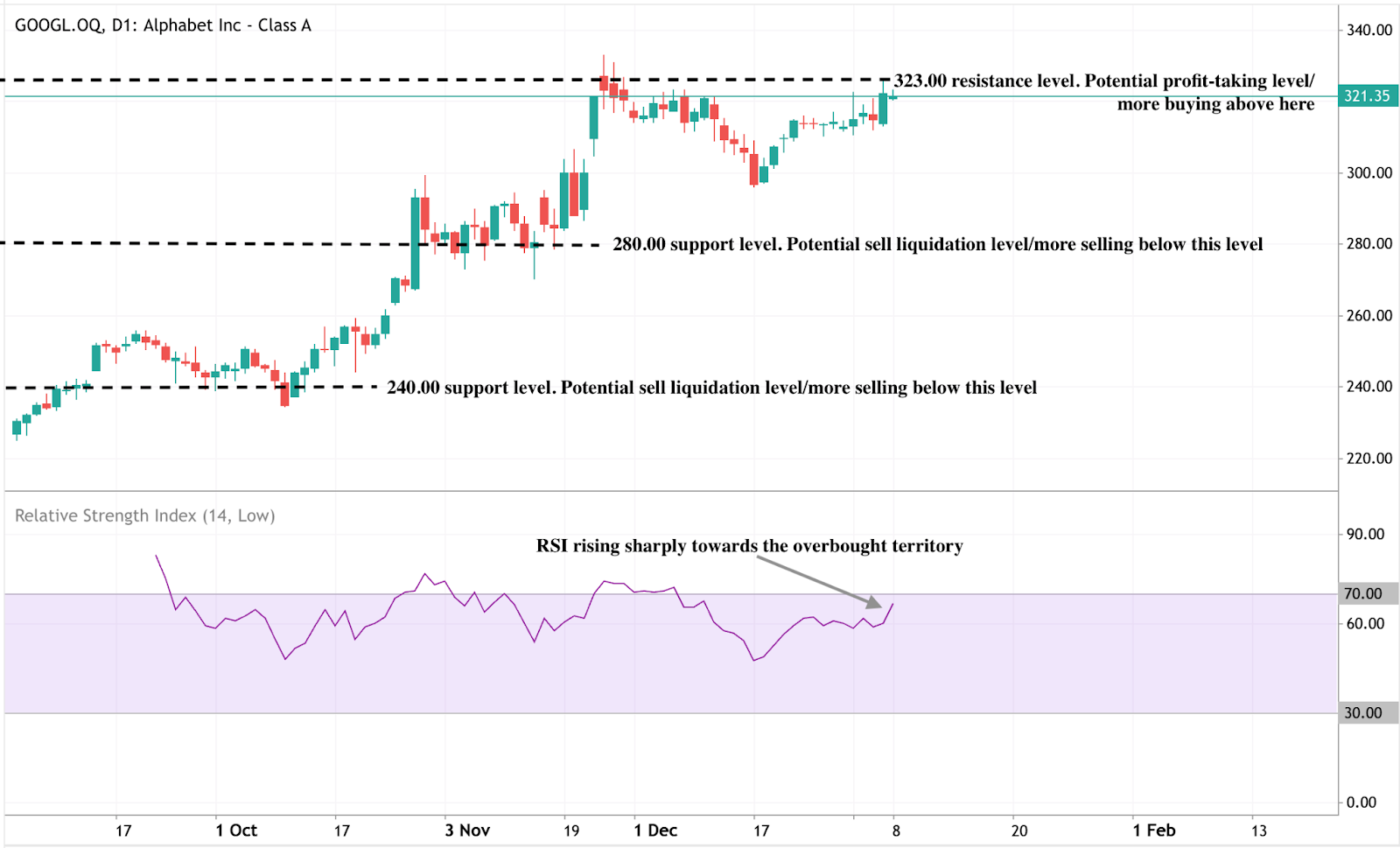
Alphabet is pushing back toward the $323 resistance zone following a strong multi-month rally, with prices consolidating just below a level that has previously triggered profit-taking.
The broader trend remains decisively bullish, supported by a sequence of higher highs and higher lows. Recent pullbacks have been absorbed without breaking key support levels. Momentum indicators suggest a stretched yet constructive setup: the RSI is climbing toward overbought territory, indicating strong upside momentum while also increasing the likelihood of short-term consolidation.
On the downside, $280 remains a critical support area, with a deeper correction only coming into focus below $240. A sustained break above $323 would likely confirm trend continuation, while repeated rejection at resistance could result in a pause to digest gains rather than signal a reversal.
إخلاء مسؤولية:
The performance figures quoted refer to the past, and past performance is not a guarantee of future performance or a reliable guide to future performance.
الأسئلة الشائعة
Why did Alphabet overtake Apple in market capitalisation?
How important is AI to Alphabet’s recent rally?
Why is Apple seen as lagging in AI?
Does this mean Alphabet is now the leading AI stock?
What should investors watch next?


