المحتويات
مقال
The 2025 verdict: Bitcoin, Gold and Silver’s boldest calls put to the test
January 2, 2026
مقال
The 2025 verdict: Bitcoin, Gold and Silver’s boldest calls put to the test
January 2, 2026
مقال
The 2025 verdict: Bitcoin, Gold and Silver’s boldest calls put to the test
January 2, 2026
%20(1).png)
Every market cycle creates its truth-tellers.
Some spot the turn before anyone else. Some remain bullish long after the crowd has lost faith. Others stand firmly against the tide, convinced the market has lost its way - until price forces a reckoning.
2025 delivered no shortage of strong opinions. Bitcoin powered through levels once dismissed as fantasy. Gold pushed beyond long-held ceilings. Silver, long overlooked, finally demanded attention. And throughout it all, analysts, economists, portfolio managers and social media commentators laid down markers on what they believed would happen next.
This isn’t about crowning winners or ridiculing misses. It’s about revisiting the voices that shaped the conversation - and seeing how their arguments fared once the market had its say.
Bitcoin: the great divide widened
Eugene Fama - intellectually consistent, market-defiant
If Bitcoin needed a steadfast sceptic in 2025, Eugene Fama filled the role effortlessly.
Well before Bitcoin marched past the trillion-dollar threshold, the Nobel laureate had already made his position clear. Bitcoin, in his view, failed the fundamental tests of money: no stable purchasing power, no intrinsic backing, no reason to endure over decades.
He didn’t hedge his stance. Fama assigned Bitcoin a near-certain probability of eventual worthlessness within ten years.
From today’s vantage point, price action didn’t merely challenge that view—it bulldozed through it.
Bitcoin surged past $100,000. Institutional participation deepened. Spot ETFs changed who could access the market. Regulators shifted tone, replacing hostility with frameworks and pathways.
Yet framing Fama as simply “wrong” misses the point.
His critique was never about momentum or adoption - it was about monetary theory. If Bitcoin persists, he argues, then the academic definition of money must evolve alongside it. In that sense, 2025 didn’t invalidate his thesis. It delayed the moment of truth.
Capital cast its vote. The debate remains open.
Tom Lee - momentum, timing, and conviction rewarded
Where Fama stood for academic resistance, Tom Lee represented market intuition at full throttle.
Fresh off calling the equity rebound with uncanny accuracy, Lee extended that confidence to Bitcoin, laying out a $100,000 base case when scepticism was still widespread. Many waved it off as ETF-fuelled optimism.
That dismissal didn’t age well.
By late summer, Bitcoin had not only reached the level, it also stabilised above it. Lee’s reasoning was straightforward and, in hindsight, spot on:
- ETFs expanded access dramatically
- Post-halving supply tightened
- Easing rates reignited risk appetite
Crucially, Lee never promised a smooth ride. He warned that volatility would flush out weak positioning along the way. That warning proved prescient. Bitcoin stumbled, shook confidence, and then resumed its climb.
Those who trusted the framework stayed the course. Those who hesitated were left chasing.
In a year crowded with forecasts, Lee’s stood out because price followed his script almost beat for beat.
Jon Glover and the technicians - right on timing, early on finality
Then came the technicians.
Ledn’s Jon Glover, using Elliott Wave analysis, pinpointed Bitcoin’s push toward $125,000 with striking accuracy - just as broader sentiment began to fray. On timing, the call was impressive.
Where debate flared was what came next.
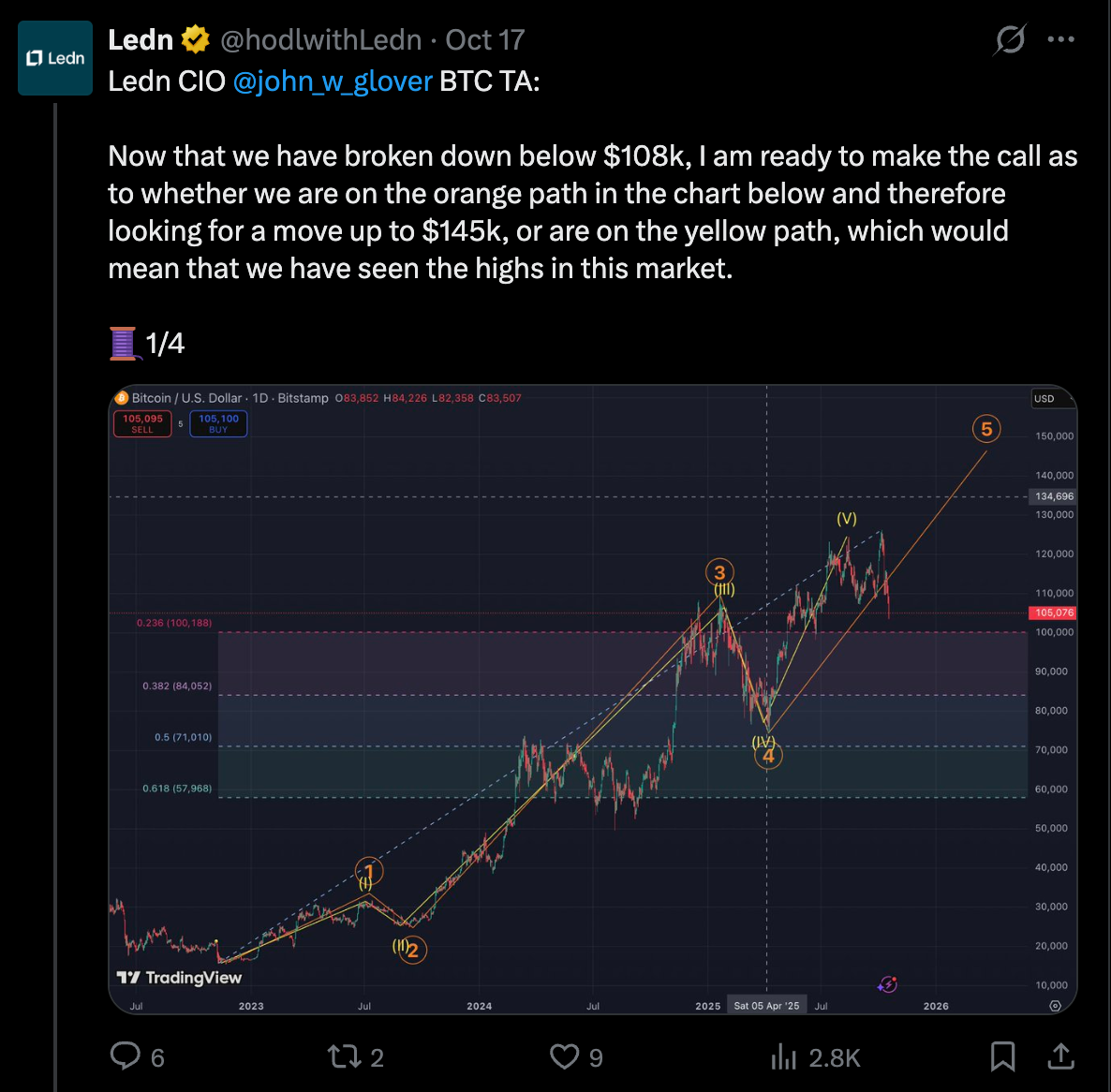
Calling the bull market “over” after the subsequent pullback felt definitive - perhaps overly so.
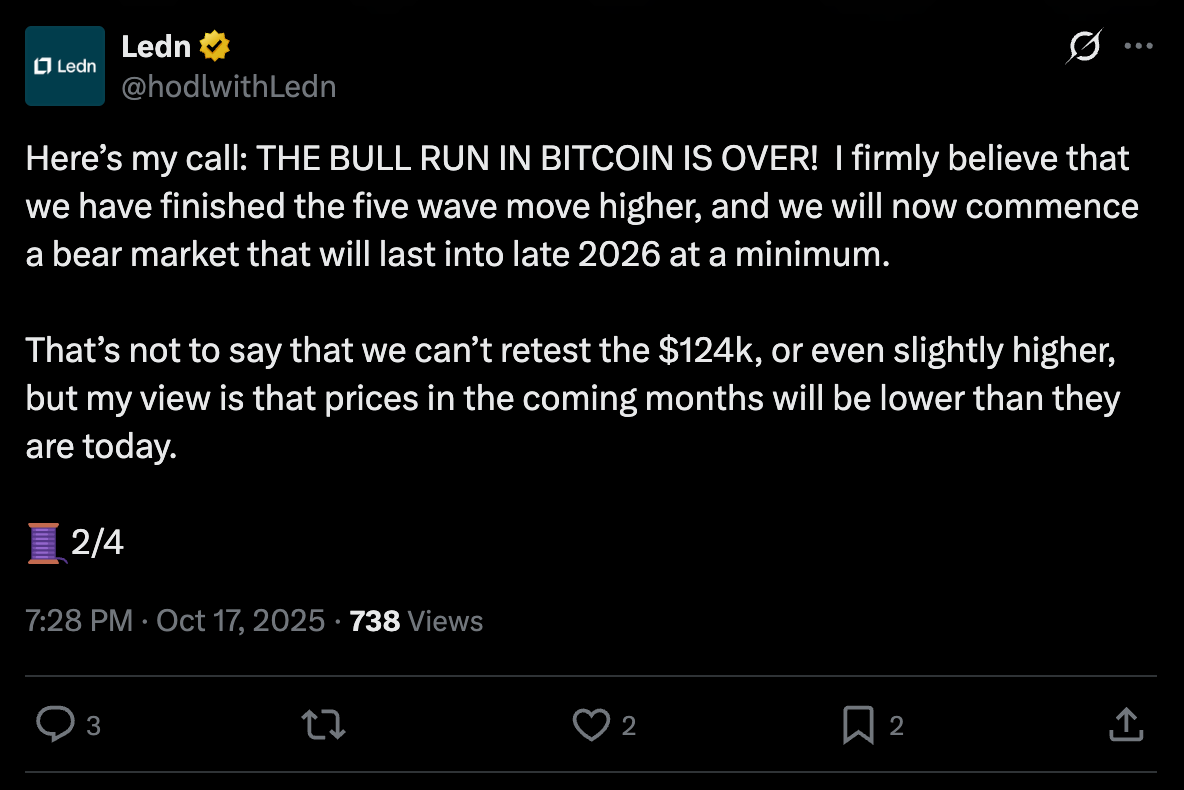
Yes, Bitcoin corrected. Yes, volatility returned with force. But adoption metrics, ETF inflows and regulatory momentum didn’t unravel alongside price.
2025 reinforced a familiar truth for traders: cycles twist and retrace, but underlying narratives don’t always collapse on cue.
Gold: the quiet winner that stopped whispering
Gold began 2025 with momentum. It ended the year with authority.
For years, voices like Maria Smirnova and Rick Rule argued that gold’s rise wasn’t driven by fear - it was structural. Central banks weren’t speculating; they were hedging. Demand from the East wasn’t temporary; it was embedded. And currency debasement wasn’t a future risk—it was already happening.
When gold cleared $3,000 and continued to rise, disbelief gave way to acceptance.
Those who framed gold solely as a crisis asset missed the bigger shift. This wasn’t panic. It was a strategic allocation - from governments to private investors.
Rick Rule’s logic proved hard to ignore: when inflation consistently outruns yields, holding only paper assets guarantees erosion. Gold didn’t need to dethrone the dollar. It only needed to reclaim a larger slice of global portfolios.
In 2025, that process accelerated.
The miners lagged, and then they didn’t
Early in the year, critics scoffed at gold equities. If bullion was at record highs, why weren’t miners surging?
The explanation, as Rule repeatedly noted, was straightforward: central banks accumulate gold, not mining shares.
However, fundamentals tend to catch up. As costs stabilised, capital discipline improved, and free cash flow strengthened, the valuation gap narrowed. By the latter half of the year, re-ratings began quietly and without spectacle.
Those waiting for dramatic headlines arrived late.
Silver: from perpetual underdog to reluctant star
For years, silver lived in limbo. Too industrial for purists. Too monetary for manufacturers. Forever compared to gold, rarely judged on its own merits.
In 2025, it stopped trying to justify itself.
Major banks, including Citigroup, lifted forecasts sharply, arguing that silver would outperform gold - and the case played out. Investment demand climbed. ETF holdings rose. Industrial usage tied to solar and electrification remained stubbornly strong.
As capital rotated, the gold-to-silver ratio compressed, exactly as many analysts had anticipated.
Smirnova had long warned that silver bull markets rarely announce themselves. They creep forward, then accelerate without warning. That rhythm returned - gradual at first, then decisive.
Those waiting for a dramatic supply shock missed the signal. Silver didn’t need one. Sustained demand was enough.
Key takeaway
If 2025 delivered a single lesson, it was this:
- Price rarely waits for consensus
- Narratives decay faster than capital flows
- Being early only matters if you can stay in the game
Some forecasts were validated by price. Others by principle. A few by timing alone.
But perhaps the clearest takeaway wasn’t about who got it right-it was about how markets reward conviction only when it’s flexible.
As Bitcoin, gold and silver head into their next phase, one certainty remains:
There will be no shortage of confident voices.
And once again, the market will decide which ones are worth listening to.
إخلاء مسؤولية:
The performance figures quoted refer to the past, and past performance is not a guarantee of future performance or a reliable guide to future performance.
الأسئلة الشائعة
Which market calls had the biggest impact in 2025?
Did Bitcoin’s performance contradict sceptical forecasts?
Why did gold exceed many expectations in 2025?


