المحتويات
مقال
January FOMC: Why the Fed is likely to hold steady as markets look ahead
January 27, 2026
مقال
January FOMC: Why the Fed is likely to hold steady as markets look ahead
January 27, 2026
مقال
January FOMC: Why the Fed is likely to hold steady as markets look ahead
January 27, 2026
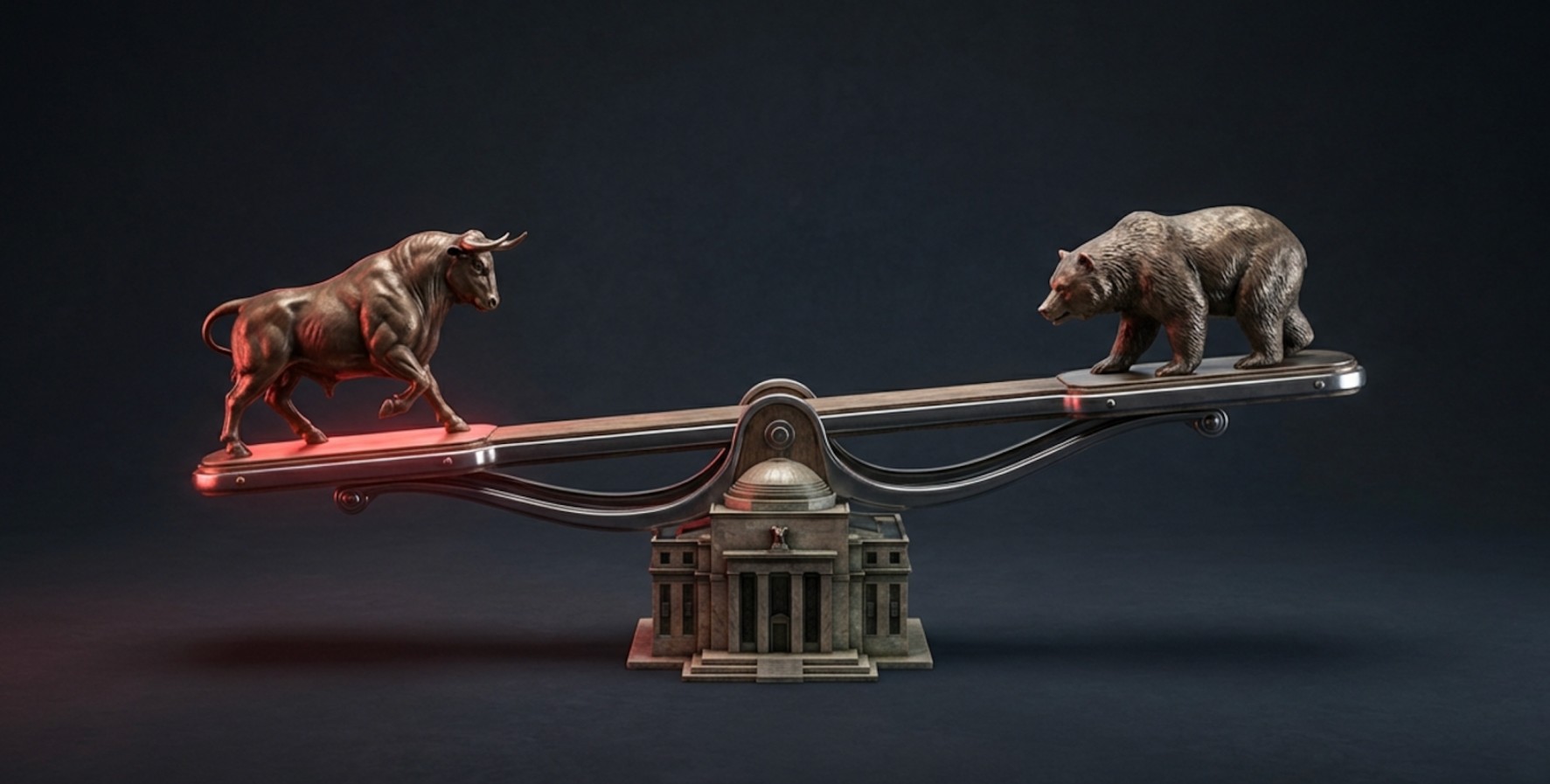
The Federal Reserve is widely expected to keep interest rates unchanged today, not because conditions are calm, but because the risks of acting outweigh the benefits. Inflation remains stuck close to 3%, the labour market is softening, and economic growth is running well above trend. Together, those forces leave policymakers with little room to manoeuvre at the January FOMC meeting.
Markets have largely accepted this outcome. Futures pricing implies roughly a 97% chance that rates remain on hold, pushing expectations for any policy shift into the latter half of 2026. As a result, attention has shifted away from the decision itself and towards Chair Jerome Powell’s assessment of where the balance of risks now lies.

With GDP growth tracking an annualised 5.4% and political scrutiny of the Fed intensifying, today’s meeting is shaping up to be less about rates and more about credibility, independence, and how long policymakers are prepared to wait.
What’s driving the January FOMC decision?
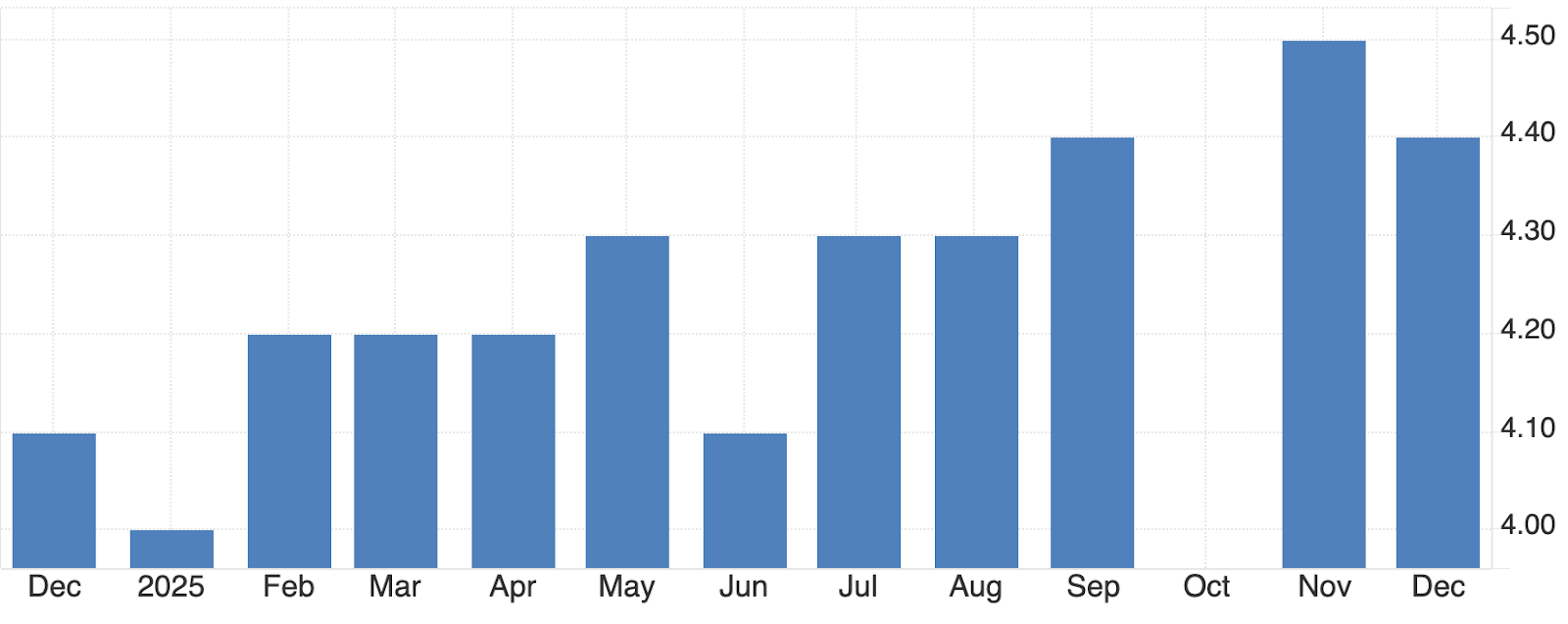
The Fed’s reluctance to move today reflects an economy behaving in unexpected ways. Output remains strong, yet the labour market is losing momentum rather than overheating. Unemployment has climbed to 4.4%, while hiring has slowed across multiple industries, weakening the traditional link between robust growth and job creation.
Inflation, meanwhile, remains a persistent problem. Consumer prices have drifted back into the 2.7–3.0% range, well above the Fed’s target. Tariffs have played a significant role, pushing the effective US tariff rate close to 17%, according to Yale Budget Lab estimates. Import costs of nearly $30bn per month are gradually feeding into retail prices, even as major retailers attempt to cushion consumers from the full impact.
This leaves policymakers caught between two risks. Cutting rates could reignite inflation just as price pressures are firming. Keeping rates unchanged, however, increases the risk that labour market weakness deepens. For now, the Fed appears more concerned about stubborn inflation than about growth cooling too sharply.
Why it matters
Today’s meeting underlines just how tight the Fed’s policy path has become. Its dual mandate is pulling in opposite directions: rising unemployment argues for support, while inflation argues for restraint. That tension explains why today’s statement is expected to offer little clarity on when easing might begin.
Bank of America expects Powell to lean heavily on patience and incoming data rather than forward guidance. One key theme is likely to be whether strong growth implies a higher neutral interest rate, which would justify keeping policy restrictive for longer. The political backdrop may also influence the tone, as the Fed seeks to reinforce its independence and avoid fuelling speculation about near-term cuts.
Impact on markets, borrowers, and FX
For households and businesses, a Fed on hold means borrowing costs are unlikely to fall anytime soon. Although the central bank does not set lending rates directly, its stance shapes Treasury yields, which influence everything from mortgages to business loans. With rates unchanged, financial relief remains limited.
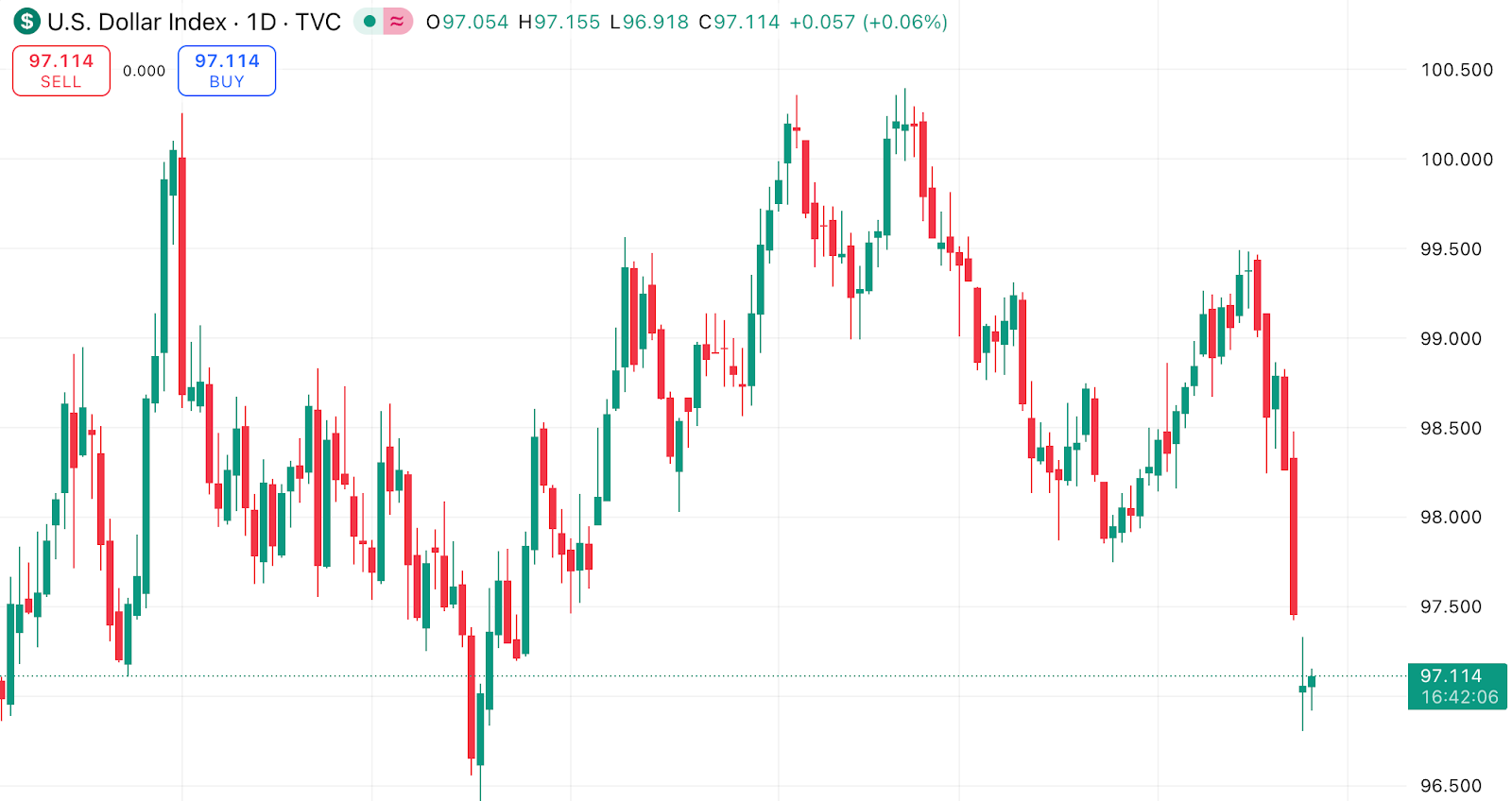
Markets, however, are already looking past today. The US dollar has weakened, with the dollar index slipping toward 97 as investors price in eventual easing and factor in concerns over political pressure on monetary policy.
The euro has climbed toward $1.19, while sterling has risen close to $1.37, supported by expectations that the global economy can slow without tipping into recession. Gold’s surge above $5,100 reinforces the theme, suggesting investors are increasingly turning to hard assets rather than relying on the dollar as a default safe haven.
Expert outlook: What markets are really waiting for
Few analysts expect today’s meeting to mark a turning point. Goldman Sachs forecasts the Fed will remain on hold for several more months, with two rate cuts pencilled in for 2026 starting around June. CFRA’s Sam Stovall shares that view, arguing policymakers will wait for clearer evidence that inflation is easing sustainably.
Politics adds an extra layer of uncertainty. Powell’s term as Chair ends in May 2026, and markets are becoming increasingly sensitive to what follows. Rabobank has described the current environment as the “eye of the storm”, noting that confidence in a June cut is closely tied to expectations of a leadership transition. If those expectations prove misplaced, volatility across bonds, equities, and currencies could rise sharply.
Key takeaway
The January FOMC meeting is set to confirm a Fed that is choosing caution over speed. Inflation remains too high, growth too strong, and the risks of acting too early too great. Markets are already looking beyond today, focusing on mid-2026 and the political and economic shifts that could eventually open the door to easier policy. For now, standing still is the Fed’s least risky option.
إخلاء مسؤولية:
The information contained on the Deriv Market News is for educational purposes only and is not intended as financial or investment advice. The information may become outdated, and some products or platforms mentioned may no longer be offered. We recommend you do your own research before making any trading decisions. The performance figures quoted refer to the past, and past performance is not a guarantee of future performance or a reliable guide to future performance.
الأسئلة الشائعة
Why is the Fed holding rates at today’s FOMC meeting?
When do markets expect the first rate cut?
Does today’s decision affect mortgage rates immediately?
Why is the US dollar weakening if rates are unchanged?
What should investors watch after this meeting?


