المحتويات
مقال
Why Silver is pulling back after hitting record highs
January 16, 2026
مقال
Why Silver is pulling back after hitting record highs
January 16, 2026
مقال
Why Silver is pulling back after hitting record highs
January 16, 2026

Silver is retreating as the conditions that propelled it to record levels begin to fade. After rallying to an all-time high near $93.90 earlier in the week, spot silver slipped by more than 2% during Friday’s Asian session, trading around $90.40 an ounce. The move signalled a pause in one of the year's strongest commodity rallies.
This pullback reflects a shift in short-term drivers. Easing trade-related supply concerns, reduced urgency around US interest rate cuts, and a softening in geopolitical tensions have all chipped away at the risk premium that helped push silver higher. While the longer-term demand story remains intact, the market is now reassessing how much of that optimism was priced in too quickly.
What’s driving Silver?
The most immediate trigger for silver’s decline was a change in US trade policy. President Donald Trump instructed US trade officials to pursue negotiations with key partners rather than move straight to imposing tariffs on critical mineral imports. That decision removed a supply shock risk that had been heavily factored into prices earlier in the week.
Silver’s response underlines its dual identity. It acts both as a traditional precious metal and as an essential industrial input for electronics, renewable energy, and advanced manufacturing. When fears of supply disruption eased, the scarcity premium embedded in prices unwound rapidly. That prompted traders who had ridden the rally to record highs to profit-take.
Why it matters
Monetary policy expectations have added another layer of pressure. Markets are now almost fully priced for the Federal Reserve to keep interest rates unchanged at its January meeting, with CME FedWatch showing around a 95% probability of a hold.
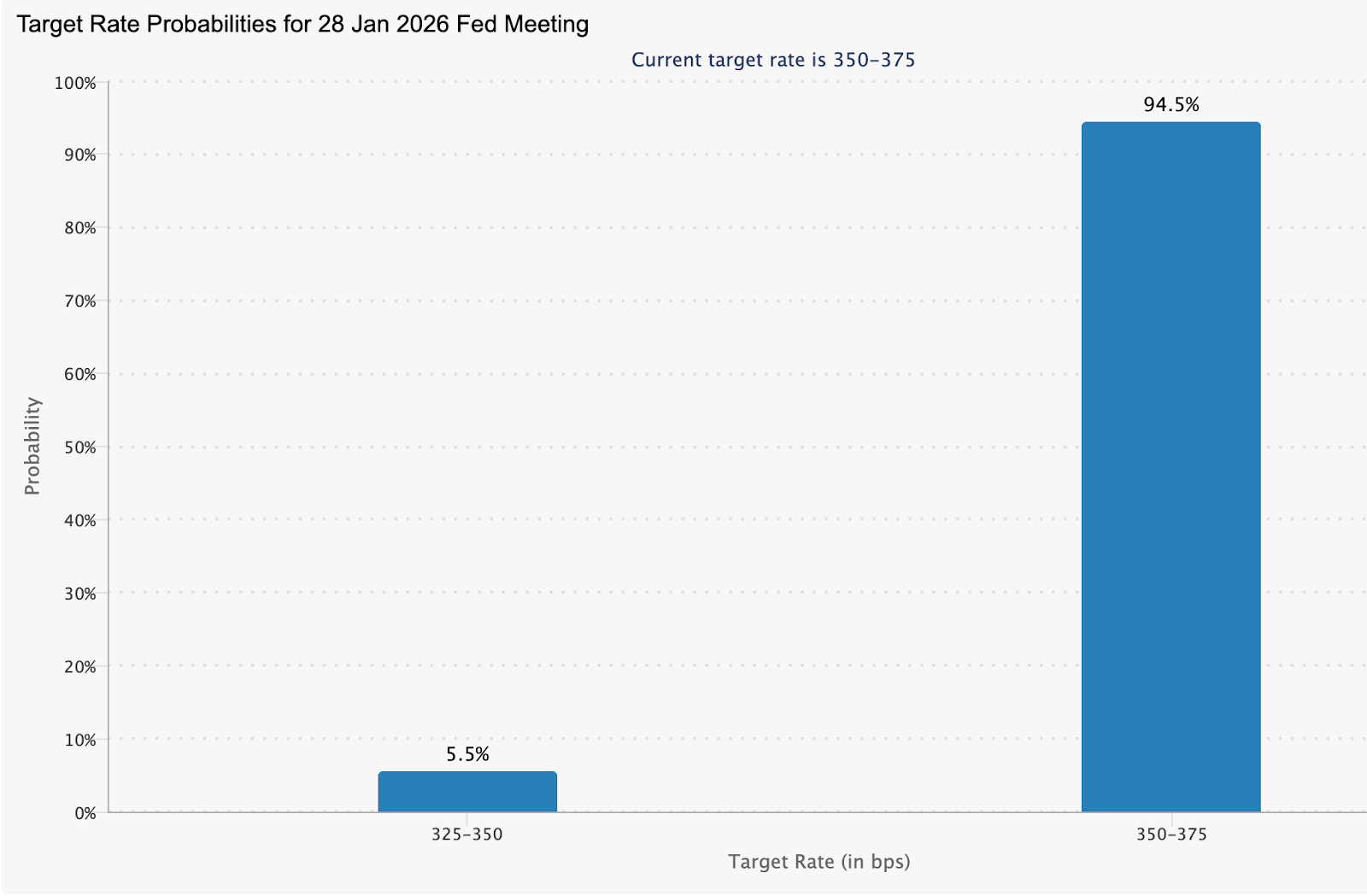
Expectations for the first rate cut have also been pushed back to June, as inflation data continues to show limited signs of cooling.
For silver, that matters. As a non-yielding asset, it tends to struggle when interest rates remain elevated and the US dollar strengthens. Rahul Kalantri, Vice-President of Commodities at Mehta Equities, highlighted that recent US economic data has driven the dollar to multi-week highs, creating headwinds for bullion prices despite resilient underlying demand.
Impact on precious metals markets
Silver’s pullback has not occurred in isolation. Weakness spread across the precious metals complex, with February gold futures falling 0.55% to $4,611 an ounce, while spot gold slipped to around $4,604.52. Platinum and palladium also edged lower, pointing to broad-based profit-taking rather than silver-specific stress.
Shifts in geopolitical sentiment also played a role. President Trump’s softer stance on Iran reduced near-term safe-haven demand, lifting risk appetite across global equity markets. Asian stock indices mostly advanced in line with Wall Street’s gains, while gold drifted toward $4,590 as defensive positions were trimmed. Silver, which often mirrors gold during changes in risk sentiment, followed the same path lower.
Expert outlook
Despite the near-term correction, silver’s fundamentals remain supportive in the longer term. The US has openly acknowledged that it lacks sufficient domestic capacity to meet demand for critical minerals, reinforcing silver’s strategic importance across multiple industries. That structural backdrop continues to underpin longer-term bullish expectations, even as prices consolidate.
In the short run, however, silver remains highly sensitive to macro signals. Federal Reserve guidance, movements in the US dollar, and any resurgence in geopolitical tension are likely to shape the next move. Until clearer direction emerges, a period of consolidation below recent highs appears more likely than a sharp trend reversal.
Key takeaway
Silver is falling as the short-term forces that drove it to record highs begin to unwind. Reduced tariff risks, delayed expectations for rate cuts, and improved risk sentiment have lowered the immediate price premium. Even so, strong industrial demand and silver’s strategic role continue to support the broader outlook. The next decisive move will hinge on macroeconomic signals and shifts in global risk appetite.
Technical perspective: Momentum beneath the pullback
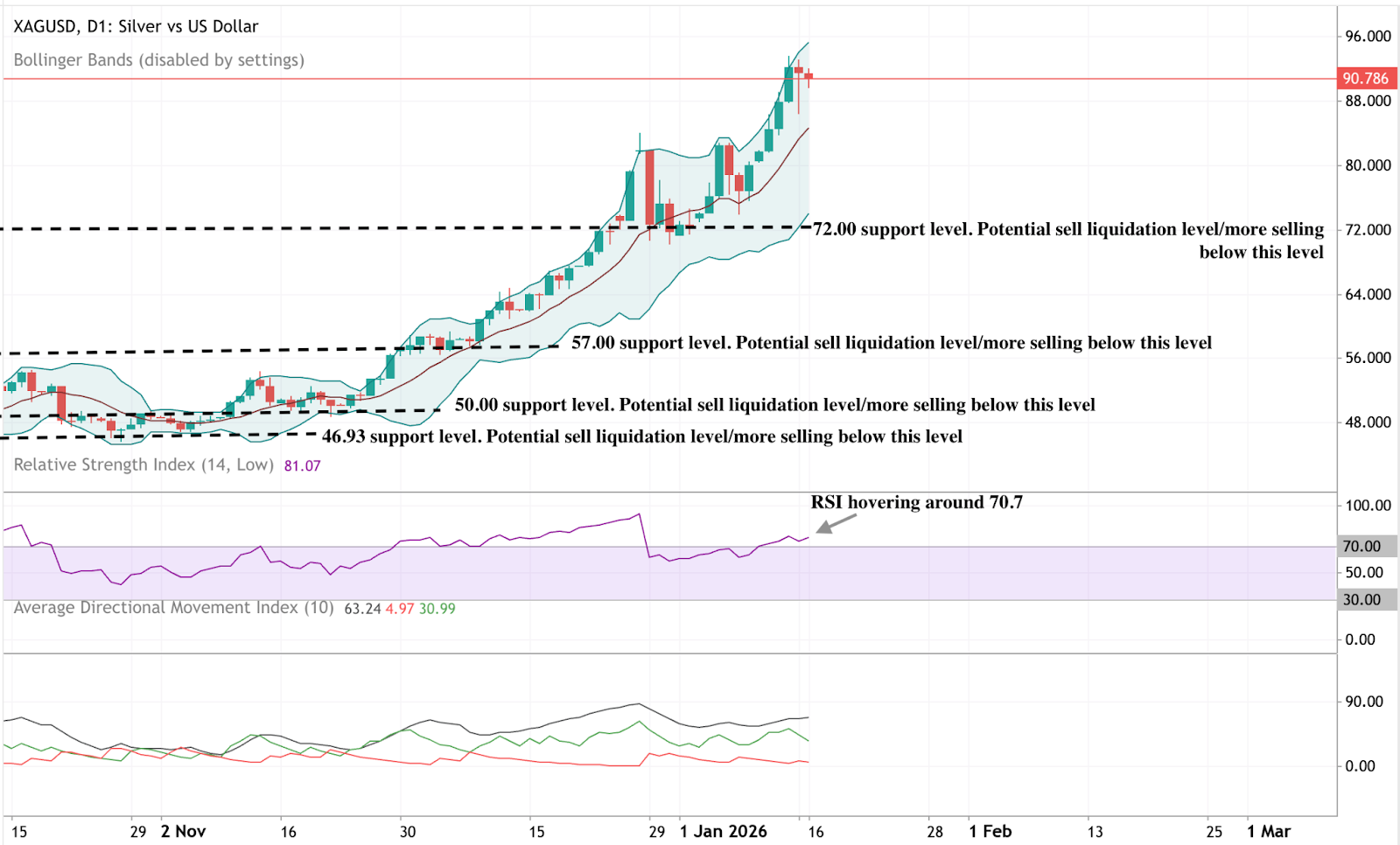
From a technical standpoint, silver still shows strong underlying momentum despite the recent pullback.
Daily indicators remain elevated, with the 14-day relative strength index hovering around 70.7 - a level often associated with overbought conditions following sharp advances.
Trend strength also remains notable. The average directional index stands at 51.18, an unusually high reading that points to a powerful directional move rather than a breakdown in momentum.
إخلاء مسؤولية:
The performance figures quoted refer to the past, and past performance is not a guarantee of future performance or a reliable guide to future performance.
الأسئلة الشائعة
Why is silver falling after hitting an all-time high?
How does Federal Reserve policy affect silver prices?
Why does silver react so strongly to trade policy news?
Is silver still supported in the long term?
What should markets watch next?


