المحتويات
مقال
Gold is sliding fast: Temporary pullback or trend reversal?
February 2, 2026
مقال
Gold is sliding fast: Temporary pullback or trend reversal?
February 2, 2026
مقال
Gold is sliding fast: Temporary pullback or trend reversal?
February 2, 2026

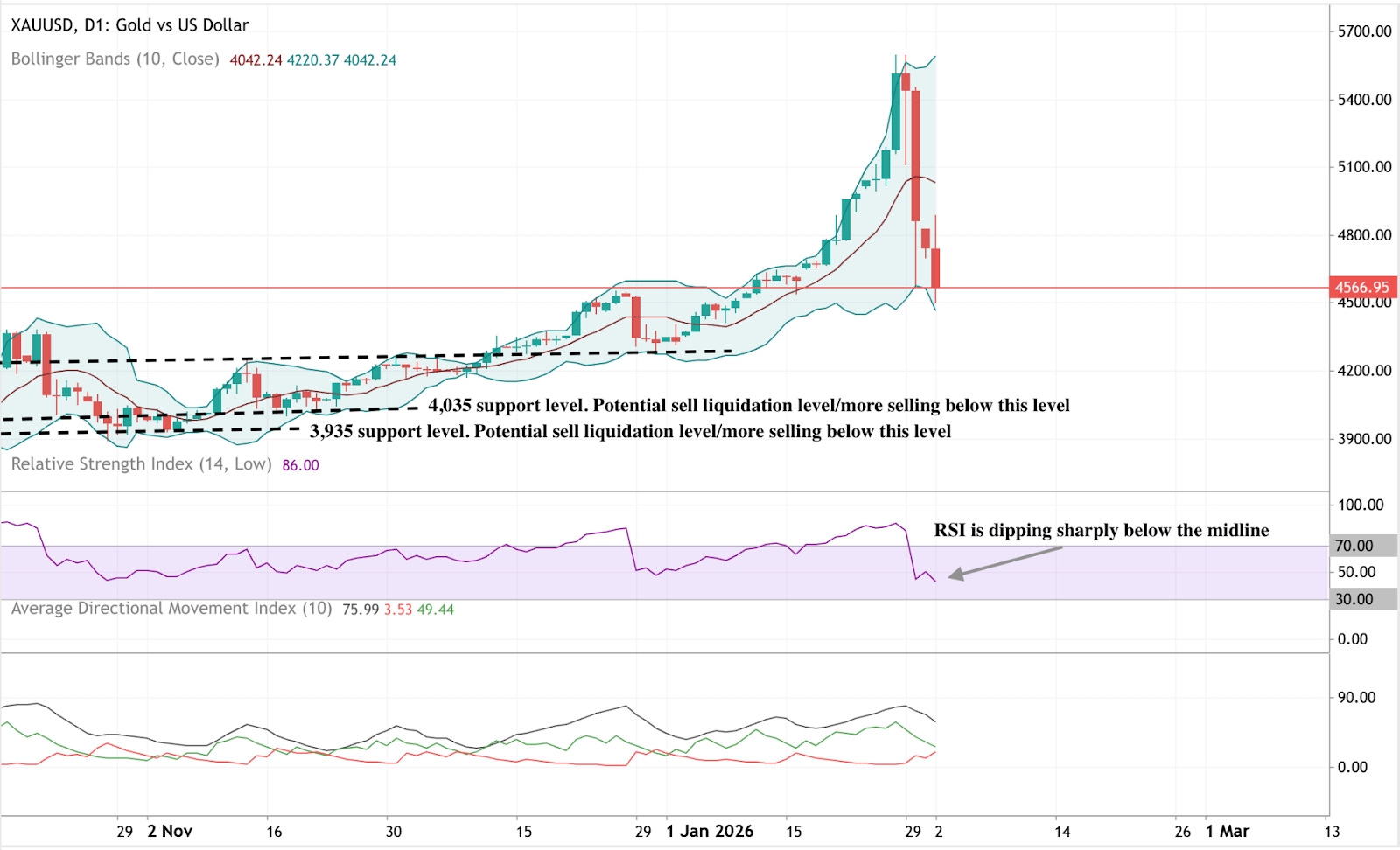
Gold’s abrupt sell-off appears closer to a sharp correction than the beginning of a prolonged downturn, though it has laid bare how stretched positioning had become at record levels. After racing beyond $5,600 per ounce earlier this year, prices have dropped sharply in a matter of days. Silver’s fall has been even more dramatic, underlining how quickly risk appetite has shifted. While the reversal has unsettled markets, the broader forces behind gold’s surge remain largely intact.
Even after the decline, gold is still trading well above last year’s levels, when prices hovered below $2,800 per ounce. That context highlights just how aggressive the rally had been. The key question now is whether the pullback represents a cooling-off period after speculative excess, or the first signal that the macro backdrop is starting to turn less supportive.
What’s driving gold’s sudden crash?
Gold’s powerful rally into 2026 was fuelled by a potent mix of geopolitical anxiety, monetary uncertainty and structural demand. Central banks continued to add bullion to their reserves, investors sought shelter from rising US debt, and concerns grew over the Federal Reserve’s independence amid renewed political pressure. The result was a year-on-year surge of more than 90%, marking gold’s strongest performance since the late 1970s.
The reversal began when some of that uncertainty eased. The announcement that former Federal Reserve governor Kevin Warsh would be nominated as the next Fed chair was taken as a sign of greater policy stability. As fears around central bank independence faded, the US dollar firmed and investors began locking in gains. Once prices slipped below key support levels, selling gathered pace as leveraged and speculative positions were reduced.
Why the move matters
Gold is no longer behaving like a slow, steady defensive asset. Its sharp swings reflect its growing role as a barometer for global risk sentiment, influencing currencies, bonds and broader capital flows. Rapid gains tend to coincide with deep distrust in political and financial institutions. Sudden declines, by contrast, suggest that fear-driven positioning may have gone too far.
Daniel McDowell, a professor of political science at Syracuse University, has described gold buying in unstable periods as largely psychological rather than strictly rational. That dynamic helps explain why price reversals can be so swift. When confidence improves, even slightly, gold does not ease lower gradually - it adjusts abruptly.
Impact on investors, markets and central banks
For investors, the move has underscored the importance of timing. Gold-backed exchange-traded funds attracted strong inflows during the rally, only to see money exit just as quickly once prices turned. Retail demand followed a similar pattern, with interest in physical gold and jewellery peaking near the highs before cooling sharply.
Central banks face more complex choices. Gold remains one of the few reserve assets free from counterparty risk, yet mounting fiscal pressures could prompt some governments to reassess their holdings. Nigel Green, CEO of deVere Group, has warned that under strain, “the temptation to mobilise gold reserves is real”. Any notable shift from accumulation to selling would increase downside pressure.
Expert outlook: correction or trend reversal?
Views among analysts remain deeply split. A Financial Times survey of eleven strategists places the average 2026 year-end forecast around $4,600 per ounce, suggesting limited upside from current levels even after the sell-off.
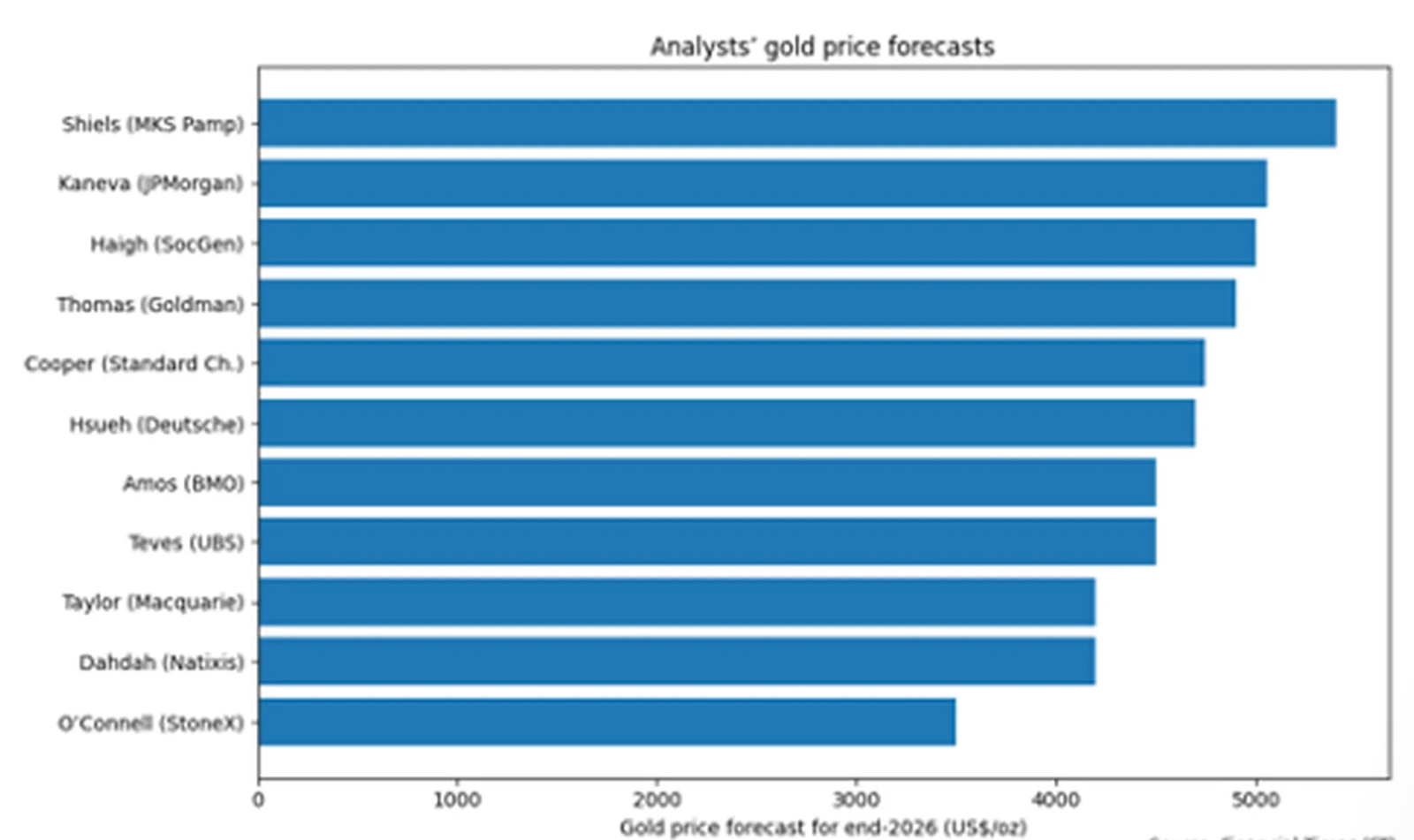
Macquarie is more cautious still, projecting prices closer to $4,200 by the final quarter of the year, arguing that speculative momentum has outpaced underlying fundamentals.
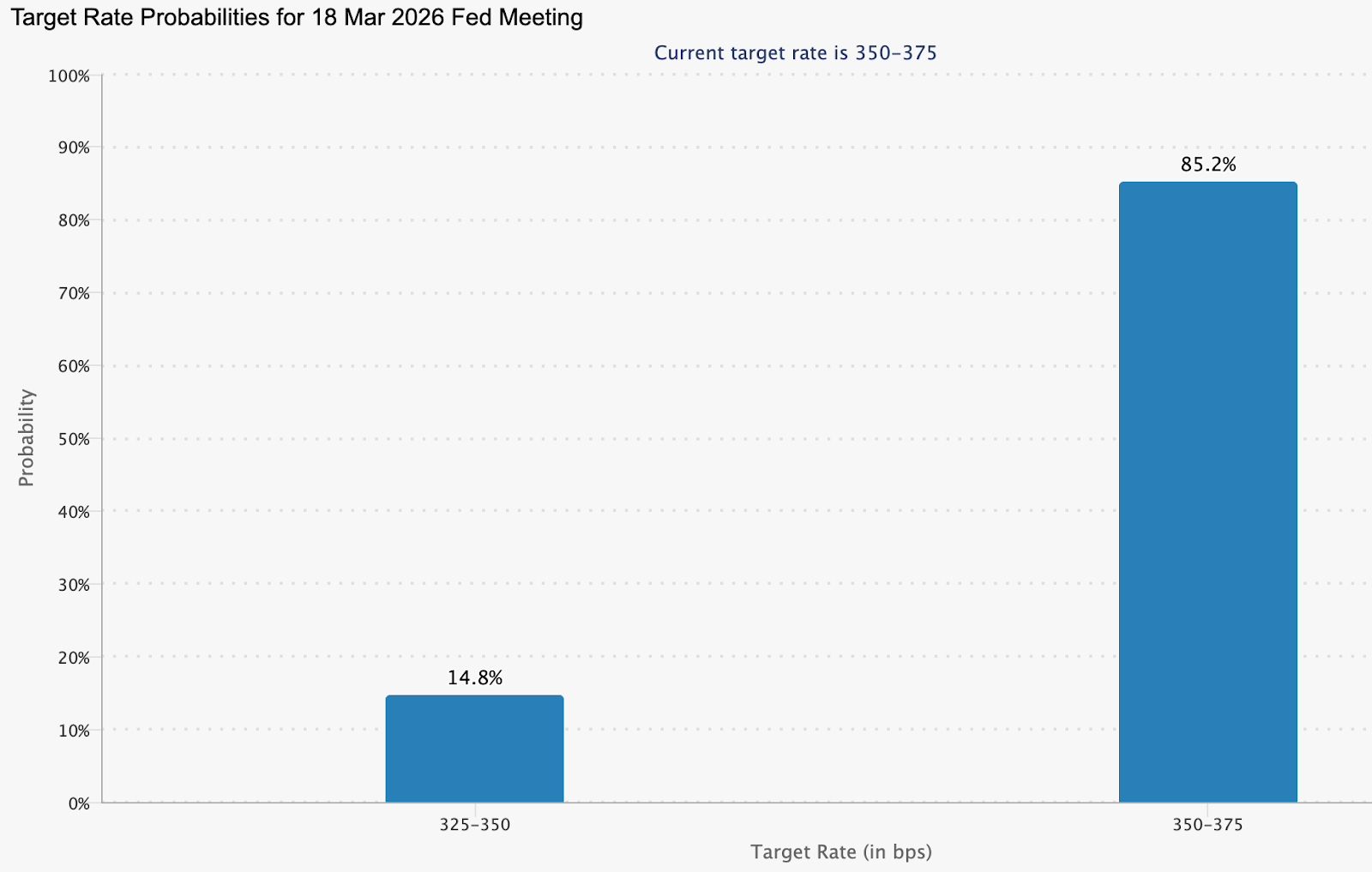
Others remain more optimistic. UBS believes gold could revisit levels above $6,000 in the coming months, pointing to ongoing geopolitical risk, de-dollarisation trends and the prospect of interest rate cuts. Markets currently assign an 87% probability that US rates remain unchanged in the near term, with easing expected later in the year. A softer dollar would once again bolster gold’s appeal.
Key takeaway
Gold’s sharp fall looks less like the collapse of a bull market and more like a forceful reset after an overheated rally. The structural drivers that supported higher prices — rising debt, geopolitical tension and waning trust in fiat currencies — have not vanished, but sentiment has clearly shifted. Whether gold stabilises or resumes its climb will hinge on interest rate expectations, central bank behaviour and global political developments. For now, elevated volatility is likely to remain a defining feature.
Bitcoin technical outlook
Bitcoin has continued to slide, drifting towards the lower boundary of its broader trading range after breaking down from a prolonged consolidation. Price action is hugging the lower Bollinger Band, while the widening of the bands points to sustained volatility and ongoing selling pressure.
Momentum signals reflect a sharp deterioration in the short term. The RSI has moved firmly into oversold territory, while elevated ADX readings suggest the trend remains strong. Directional indicators continue to favour the downside following the latest acceleration lower.
From a structural perspective, price has slipped well below the former consolidation zone near $90,000. Previous resistance areas around $107,000 and $114,000 now sit far above current levels, reinforcing the scale of the recent breakdown.
إخلاء مسؤولية:
The information contained on the Deriv Market News is for educational purposes only and is not intended as financial or investment advice. The information may become outdated, and some products or platforms mentioned may no longer be offered. We recommend you do your own research before making any trading decisions. The performance figures quoted refer to the past, and past performance is not a guarantee of future performance or a reliable guide to future performance.
الأسئلة الشائعة
Is gold crashing because demand has collapsed?
Why did silver fall much harder than gold?
Does Kevin Warsh’s appointment change gold’s outlook?
Could central banks start selling gold?
Is gold still a safe haven in 2026?


