المحتويات
مقال
BoJ vs Fed: How December decisions could shatter the yen’s fragile range
November 27, 2025
مقال
BoJ vs Fed: How December decisions could shatter the yen’s fragile range
November 27, 2025
مقال
BoJ vs Fed: How December decisions could shatter the yen’s fragile range
November 27, 2025

December 2025 is shaping up to deliver a pivotal policy confrontation between the Bank of Japan (BoJ) and the US Federal Reserve, with USD/JPY holding within a precarious 154–158 band that leaves the yen exposed to sudden volatility, according to analysts.
As of 27 November 2025, the pair sits near 155.91, easing from recent highs around 157.89 but still poised for a decisive move. A possible BoJ rate hike colliding with what markets see as an almost guaranteed Fed cut could finally tip the balance. Yen optimists are preparing for a downside break, while dollar bulls are positioning for a rebound if either central bank swerves off expectations.
The yen’s tightrope: USD/JPY’s November range
Analysts note that USD/JPY has traded comfortably between 154.00 support and the 158.00 danger zone throughout November, reflecting a stalemate between persistent US rate strength and rising expectations of policy divergence.
The upper end - 157-158 - sits squarely within Tokyo’s informal intervention territory, where authorities have previously stepped in to slow speculative yen weakness. This narrow range persists despite rising concerns that a weak currency is fuelling imported inflation in Japan, while softening US data continues to push traders towards a December Fed cut.
BoJ: A December hike edges into focus
The BoJ’s tone has sharpened as policymakers warn that sustained yen weakness risks amplifying inflation through higher import costs. A Reuters poll (11–18 November) found a slim majority - 53% of 81 economists - expecting a 25 bps increase to 0.75% at the 18–19 December meeting. Every forecaster surveyed expects rates to reach at least that level by March 2026.
Political barriers to tightening have also eased. Prime Minister Sanae Takaichi has signalled support for gradual normalisation after discussions with Governor Kazuo Ueda. Several former BoJ officials suggest that current FX levels present an opportune moment for action, reinforcing market expectations that December may deliver the first move.
Fed: Overwhelming odds on a December cut
Market pricing remains firmly skewed toward Fed easing. As of November 26, the CME FedWatch Tool indicates an 84.9% probability of a 25-basis-point cut at the December 10 FOMC meeting.
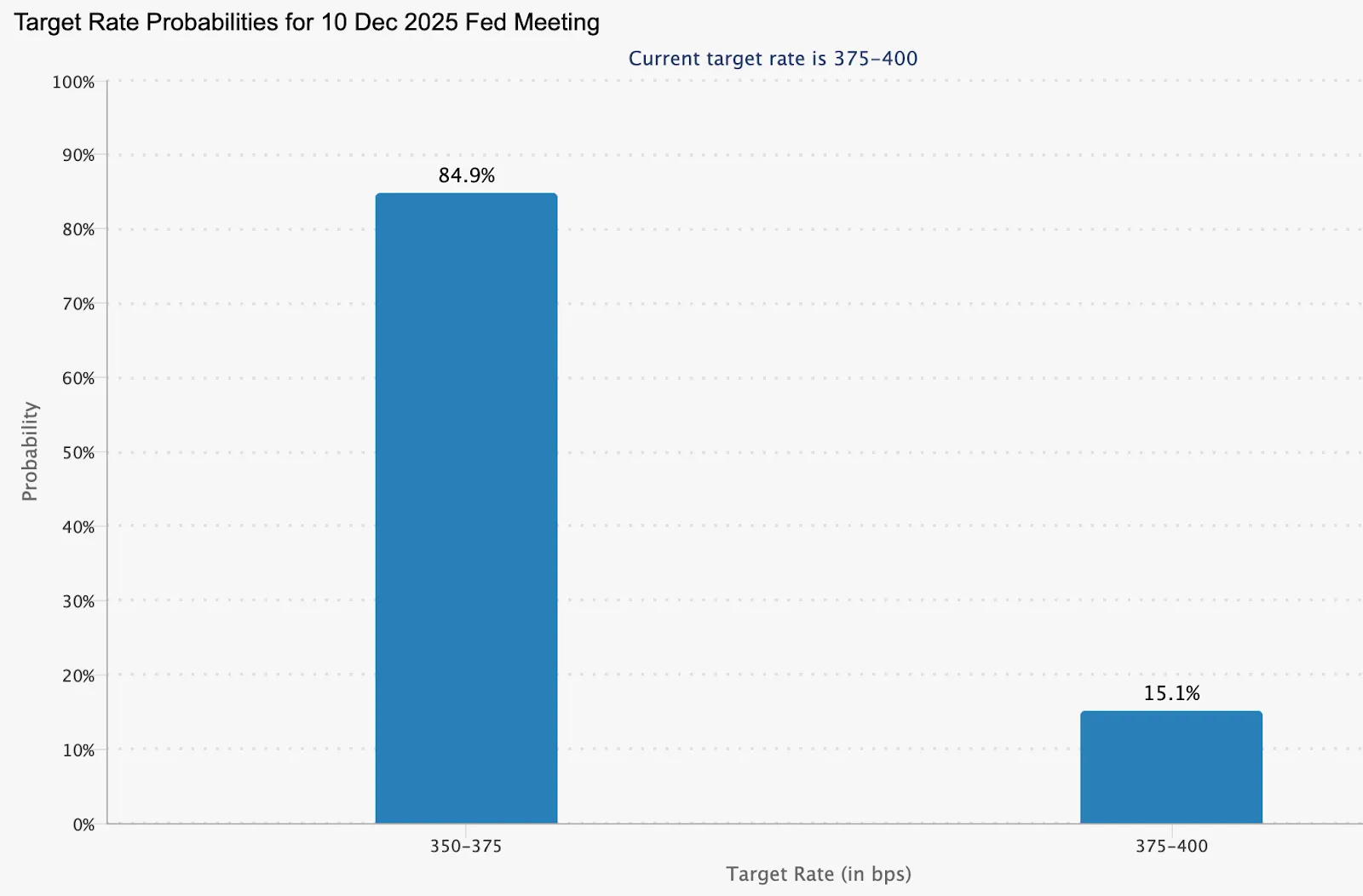
This conviction persists despite mixed signals in recent US data. Employment figures have softened, but not by enough to derail expectations, despite a handful of policymakers cautioning against moving too quickly. A December cut would slightly reduce the US–Japan yield advantage, offering support to the yen even without BoJ tightening.
Why it matters
The December policy outcomes will determine whether the yen finally escapes its months-long stasis - a crucial moment for traders, policymakers, and corporates managing currency exposure into year-end. A breakout on either side of the 154–158 corridor would influence carry trades, hedging flows, and global capital movements at a time when FX volatility is already ticking higher, according to analysts.
Analysts also suggest that the implications for Japan are significant. A stronger yen would ease the pressure from imported inflation and rising energy costs, while another bout of depreciation would intensify political scrutiny and place the Ministry of Finance under greater pressure to act. For the United States, the Fed’s decision will reveal how confident policymakers are about inflation returning to target, shaping risk sentiment across global markets.
Breakout scenarios: Two paths for USD/JPY
The market reaction will hinge not only on the decisions themselves but also on the tone of the post-meeting communication. Hawkish signals from the BoJ or dovish comments from the Fed could magnify directional pressure.
What to monitor closely
- Event timeline: Fed decision on 10 December; BoJ on 18–19 December.
- Volatility gauges: One- and two-week option-implied volatility expected to spike as hedge demand rises.
- Intervention threshold: The 157–160 zone remains a politically sensitive level for the Ministry of Finance.
USD/JPY technical insights
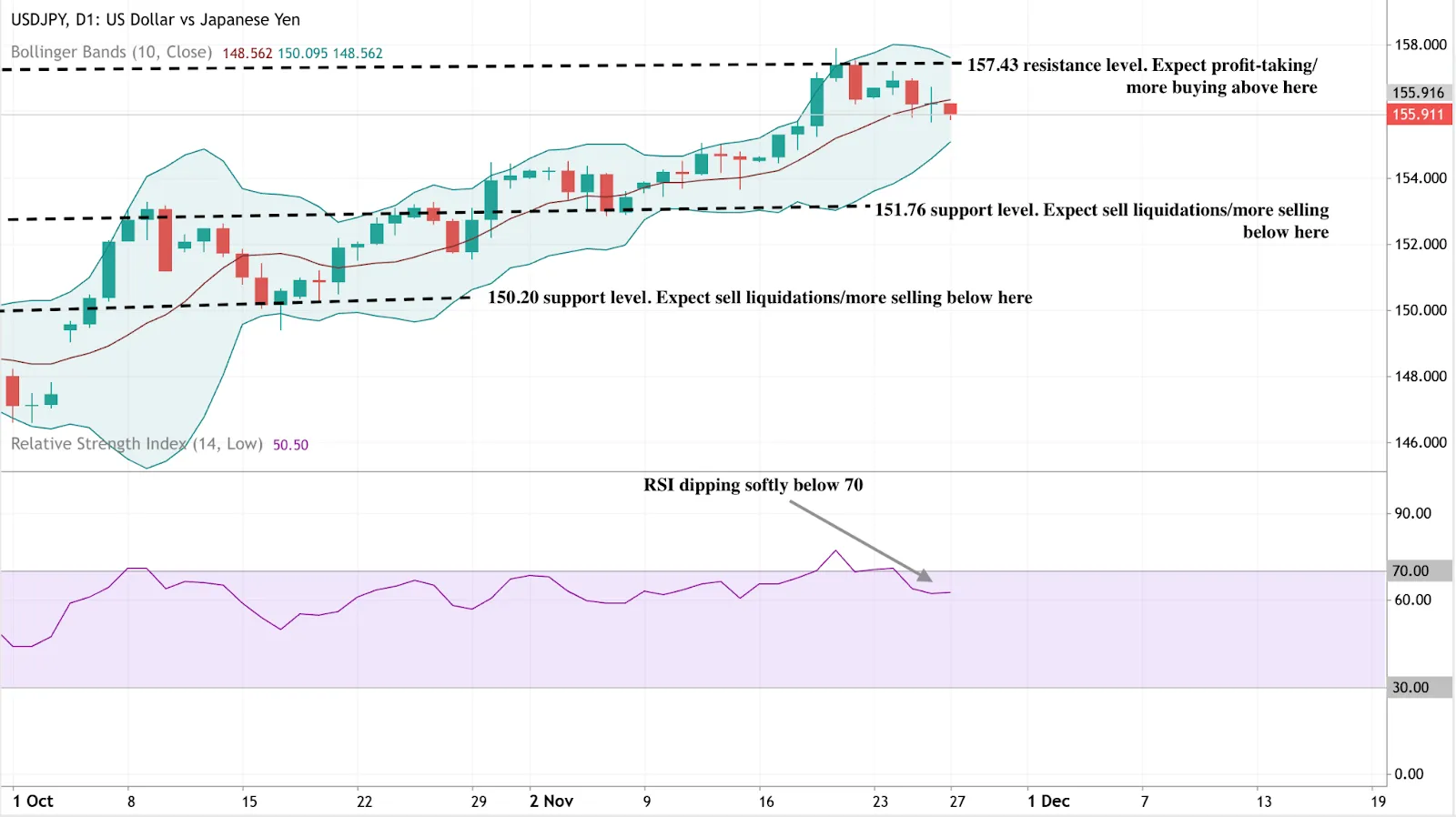
At the time of writing, USD/JPY is trading just below 156, easing after failing to sustain gains near the 157.43 resistance zone - a level where traders often take profits or watch for breakout momentum. The pair remains above two important supports at 151.76 and 150.20; slipping below either could trigger liquidation flows and open the door to a deeper correction toward the lower Bollinger Band.
Despite the pullback, the broader structure remains constructive, with price still tracking the middle Band and trading below short-term moving averages. Meanwhile, the RSI has dipped modestly below 70, indicating that bullish momentum is cooling after a stretch of overbought readings. This soft retreat hints at consolidation rather than a full reversal, suggesting sideways movement until fresh catalysts - such as US data or BoJ remarks - push the pair into its next phase.
إخلاء مسؤولية:
The performance figures quoted are not a guarantee of future performance.
الأسئلة الشائعة
Why is USD/JPY stuck in such a tight range?
Could Japan intervene even if the BoJ raises rates?
How decisive is a Fed cut for the yen?
What happens if both banks surprise markets?
Is 160 a guaranteed intervention trigger?


