المحتويات
مقال
Tech stocks rebound: Are we entering a new market cycle?
November 25, 2025
مقال
Tech stocks rebound: Are we entering a new market cycle?
November 25, 2025
مقال
Tech stocks rebound: Are we entering a new market cycle?
November 25, 2025

The sharp rebound in tech stocks this week has reignited a question that’s divided traders and analysts alike: is this just a short-term bounce, or the early phase of a new cycle? Reports show that the Nasdaq Composite’s 2.7% surge and the S&P 500’s 1.5% climb indicate a shift in sentiment, driven by renewed enthusiasm for AI and growing expectations of a Federal Reserve rate cut in December.
Behind the rally lies a deeper conversation about what’s really changing - whether this is a reset of momentum or the foundation of another long-term tech-led growth phase. Let’s break down what’s driving this move, why it matters, and what signals to watch next.
What’s driving the tech stock rally
Two powerful forces have converged to spark this rally: policy expectations and technological optimism. On the monetary side, comments from Fed officials such as Christopher Waller and John Williams reinforced hopes that interest rates could soon start falling, giving growth stocks an immediate lift. Cheaper borrowing costs make it easier to justify higher valuations for companies whose earnings lie further in the future - a core advantage for tech.
At the same time, AI remains the engine of excitement. Alphabet’s momentum following its Gemini model reveal and Tesla’s sharp 7% rise on bullish analyst sentiment, have reminded investors why this sector dominates headlines. The market appears to be settling after months of caution and rotating back into the firms powering the AI revolution - from chipmakers to cloud platforms. The key question is whether this represents the next growth wave or simply a healthy reset within the ongoing bull trend.
Why it matters
If we are indeed seeing the birth of a new tech cycle, the implications ripple across global markets. Big Tech no longer merely influences index direction - it defines it. As one strategist recently noted, investor hesitation on AI spending “could paradoxically be what fuels the next leg higher,” suggesting that scepticism might be the contrarian catalyst this rally needs.
For both institutional desks and retail traders, timing matters. Analysts suggest that a sustained cycle would likely tilt capital toward innovation and growth over value, while a false dawn could punish overextended positions. For corporations - from semiconductor giants to AI software providers - the next few quarters will shape hiring, investment, and competitive positioning. Everything from the cost of capital to global chip supply chains depends on whether this momentum endures or fades.
Impact on the market and industry
If this rebound truly evolves into a new cycle, the impact could stretch beyond Wall Street tickers. We’d expect to see heavier investment in data centres, a faster rollout of AI infrastructure, and a deeper pivot to AI-first business models. Some analysts project that AI could contribute $5–19 trillion in additional corporate value to U.S. firms over time, although several warn that much of this optimism is already reflected in share prices.
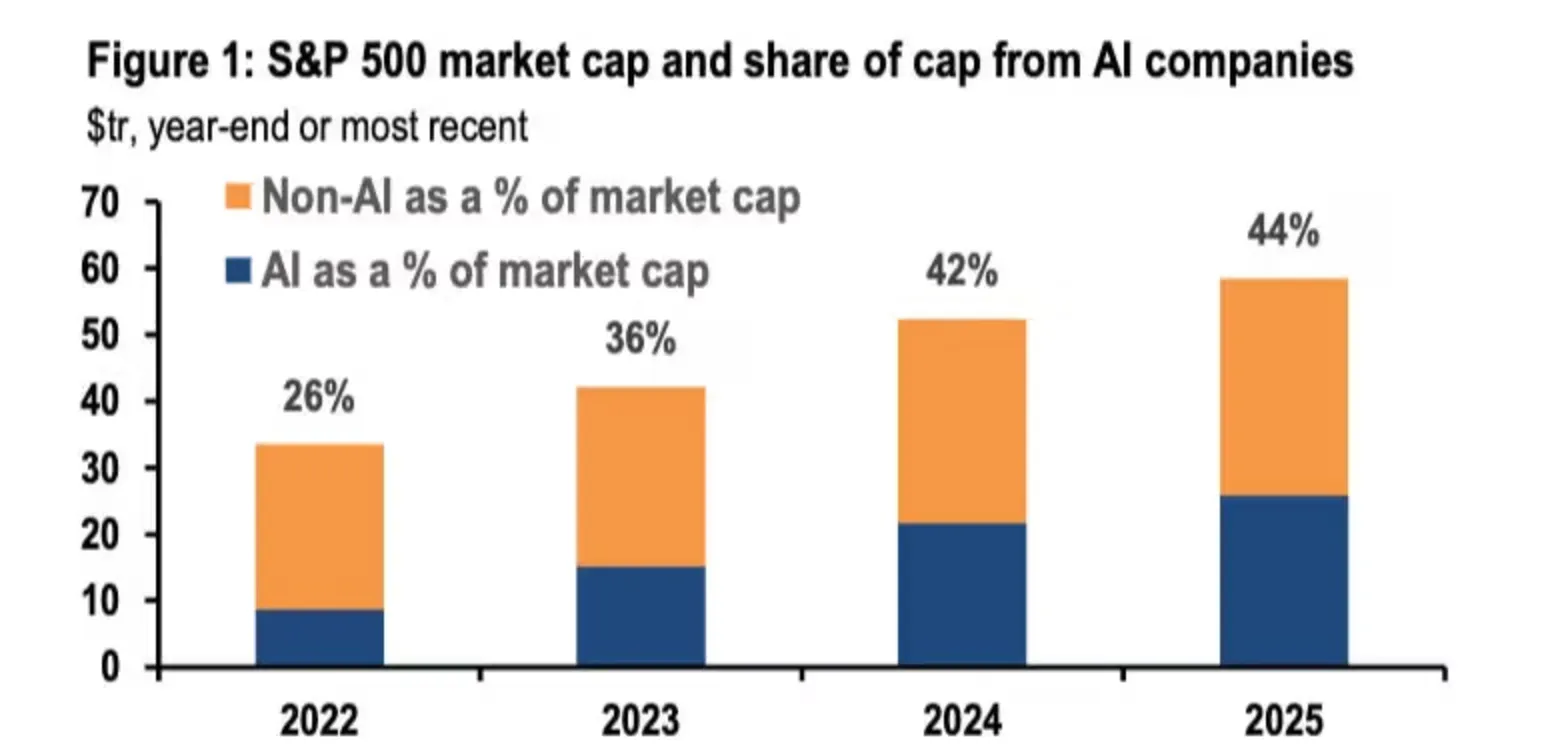
The shift could reshape investor behaviour, pulling funds back into technology-heavy portfolios while sidelining cyclical and value sectors. For traders, the volatility accompanying such rotations is both risk and opportunity. Platforms like Deriv MT5 allow traders to navigate these swings with flexibility, while tools such as the Deriv Trading Calculator help assess position size, margin, and potential exposure before committing to the market. As this phase matures, precision becomes the competitive edge.
Expert outlook
In the weeks ahead, the market’s focus turns to the Fed’s December meeting, fresh inflation readings, and earnings guidance from the tech heavyweights. With an 80% probability now priced in for a rate cut, the short-term bias remains bullish - but it’s a cautious optimism. Should inflation data surprise on the upside or corporate results disappoint, momentum could quickly unravel.
Some strategists, including those at Goldman Sachs, warn that the market might simply be extending the existing cycle rather than entering a fresh one. While the long-term AI story remains intact, valuations are lofty, and the margin for error is shrinking. A balanced scenario sees tech continuing to outperform - albeit with narrower breadth and more selective winners. The coming months could determine whether this rally marks the beginning of a new chapter or the final act of the current cycle.
Key takeaway
The recent surge in tech stocks carries echoes of early-cycle behaviour: optimism, policy shifts, and sector leadership converging at once. But history reminds us that every rally needs validation through data, not just sentiment. Inflation trends, Fed language, and AI earnings will ultimately confirm whether this is the start of something new or simply another reprieve before consolidation.
For traders watching from the sidelines or active on Deriv MT5, using the Deriv Trading Calculator to evaluate each trade can make the difference between following the noise and following the trend. The opportunity is real - but so are the risks.
Alphabet technical insights
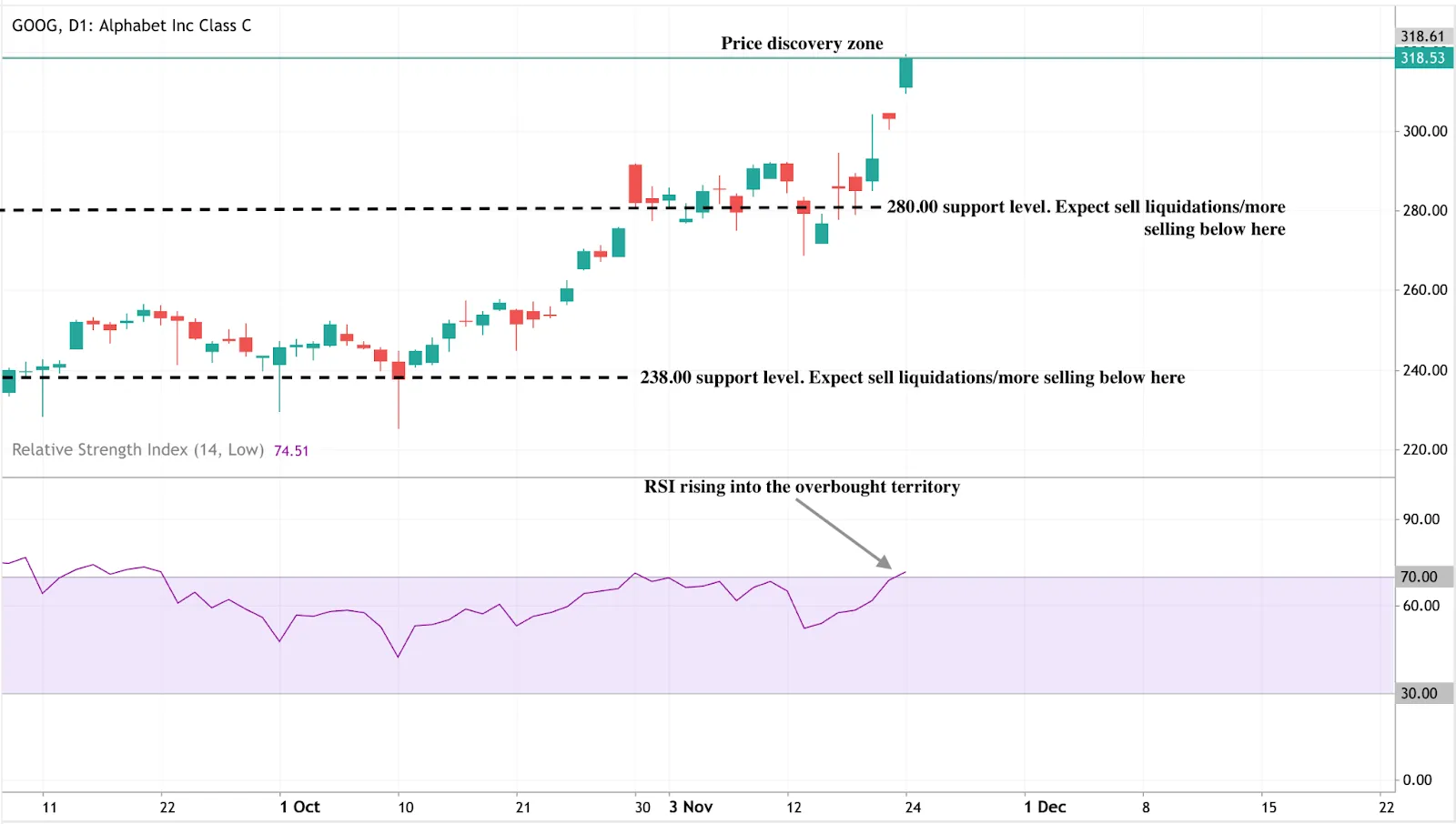
At the time of writing, Alphabet’s (GOOG) stock is trading above $318, breaking into a new price discovery zone and maintaining bullish momentum. The $280 and $238 levels act as notable support zones - slipping below them could trigger stronger selling or a broader correction.
The RSI sits around 74, signalling overbought conditions that could prompt short-term profit-taking before the next leg higher. Traders on Deriv MT5 can track these dynamics closely, combining technical setups with the platform’s analytical tools to navigate shifts in market sentiment.
إخلاء مسؤولية:
The performance figures quoted are not a guarantee of future performance.
الأسئلة الشائعة
Is the current tech rally the start of a new growth cycle?
Why are tech stocks rallying while broader growth is uneven?
What risks could halt the rally?
Which firms stand to benefit most?
Is this a repeat of the dot-com bubble?


