Contents
Article
Crypto opens 2026 strong, but liquidity remains the key fault line
January 6, 2026
Article
Crypto opens 2026 strong, but liquidity remains the key fault line
January 6, 2026
Article
Crypto opens 2026 strong, but liquidity remains the key fault line
January 6, 2026
.jpg)
Crypto markets have entered 2026 with a noticeable rebound after a subdued finish to last year, underpinned by renewed institutional participation and the fading impact of year-end positioning. Bitcoin has climbed more than 7% since the start of January, Ether is up roughly 9%, and several major altcoins have delivered double-digit gains over the past week, pointing to improving breadth rather than a narrow, Bitcoin-only move.
That strength, however, is developing against a backdrop of unusually light trading conditions. Spot market activity remains subdued, leaving prices more reactive to marginal flows. As a result, the early-year rally faces a familiar stress test for crypto: whether improving momentum can attract sustained participation, or whether thin liquidity leaves the market vulnerable to sudden reversals.
What’s driving the early-2026 crypto rally?
The clearest catalyst has been the sharp return of institutional demand through U.S.-listed spot crypto ETFs. After enduring persistent outflows through the final months of 2025, the 11 approved funds recorded more than $1 billion in net inflows during the first two trading days of the new year. The shift suggests that the recent period of risk reduction has ended abruptly, at least for now.
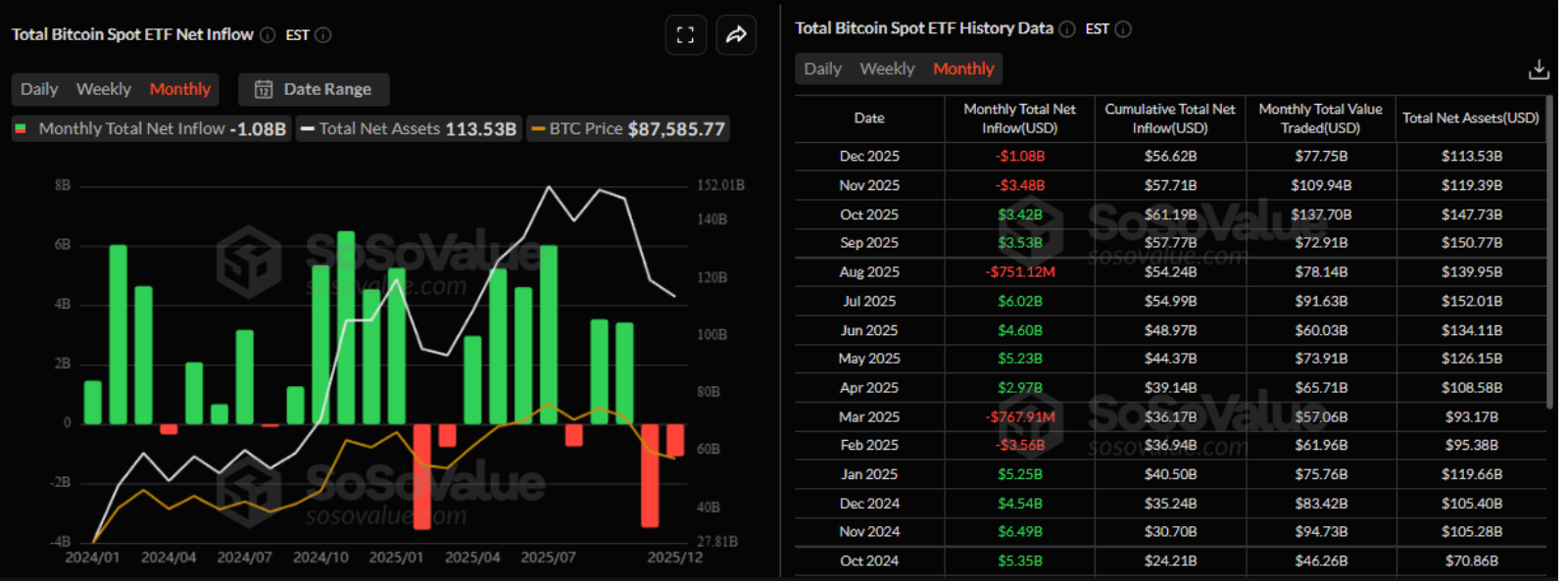
These inflows have provided critical support during a period of thin liquidity, particularly for Bitcoin and Ether, helping stabilise prices and reinforce early momentum.
Seasonal dynamics have also played a role. The drag from tax-loss selling that weighed on prices through December has dissipated, allowing fresh annual allocations to come into effect. QCP Capital characterised the move as a possible shift in regime, with crypto once again trading in step with broader risk assets as macro positioning and policy expectations return to the forefront.
Geopolitical developments have added a defensive undertone. The U.S. military strike on Venezuela sparked a bid for hard assets, lifting gold and Bitcoin simultaneously. At the same time, speculation around increased Venezuelan oil supply under U.S. oversight has fuelled a disinflationary narrative. Lower energy prices would ease inflation pressure and strengthen the case for earlier rate cuts, a backdrop that has historically supported both crypto and technology-linked assets.
Why it matters
The early-year rebound matters because it raises the possibility that crypto markets are transitioning out of a prolonged correction rather than simply staging a technical bounce. Price action across large-cap tokens supports that interpretation. XRP advanced nearly 29% over the week, Solana climbed more than 20%, and Dogecoin recorded a sharp rally, signalling renewed appetite for higher-beta exposure alongside Bitcoin.
Still, confidence remains uneven. Jeff Anderson, head of Asia at STS Digital, described the rally as the product of overlapping forces, including fresh risk budgets, rotation into hard assets, and geopolitical positioning. That mix of drivers adds complexity, making the recovery less straightforward than a classic risk-on surge.
For investors, the signal is mixed. Momentum has clearly improved, but participation remains selective. In the absence of deeper spot engagement, price movements remain highly sensitive to incremental inflows rather than broad-based conviction.
Impact on crypto market structure
Thin liquidity has had a visible impact on market behaviour. Spot trading volumes across major exchanges remain near their lowest levels since late 2023, leaving order books shallow and susceptible to sharp price swings. In this environment, relatively small trades can produce outsized moves, both to the upside and the downside.
Vikram Subburaj, chief executive of Giottus exchange, noted that while short-term structure has shifted from weakness to strength, low volume heightens the risk of abrupt extensions or sudden pullbacks. In his view, the setup is constructive, but conviction remains uneven across participants.
Derivatives markets echo that cautious optimism. Options data from Deribit shows growing interest in Bitcoin call options around the $98,000–$100,000 range, alongside bullish positioning in Ether between $3,200 and $3,400. However, overall volumes remain contained, suggesting traders are positioning for upside while still prioritising risk management rather than aggressively chasing the rally.
Expert outlook
From a technical standpoint, the broader crypto market is beginning to show signs of stabilisation, led by Bitcoin’s break above its previous descending channel. That move points to a reduction in sustained selling pressure, though the lack of strong continuation keeps the rally in a tentative phase.
Key resistance zones, particularly Bitcoin’s $94,000–$96,000 region, are likely to act as a critical test. A sustained move above this area, accompanied by rising volatility and improved spot participation, would strengthen the case for a more durable trend across the market.
Analysts at Bitfinex emphasise that ETF flow data remains central to the outlook. Continued inflows could help anchor prices despite thin liquidity, while any slowdown would expose the market’s limited depth. For now, crypto enters 2026 with momentum, but conviction has yet to fully follow.
Key takeaway
Crypto markets have started 2026 with renewed momentum, supported by institutional inflows, fading seasonal pressure, and a more supportive macro narrative. However, thin liquidity remains the market’s defining vulnerability, magnifying both gains and pullbacks. Whether this recovery develops into a lasting trend will depend on sustained participation and improving depth. Until then, strength should be acknowledged - but treated with caution.
BTC technical outlook
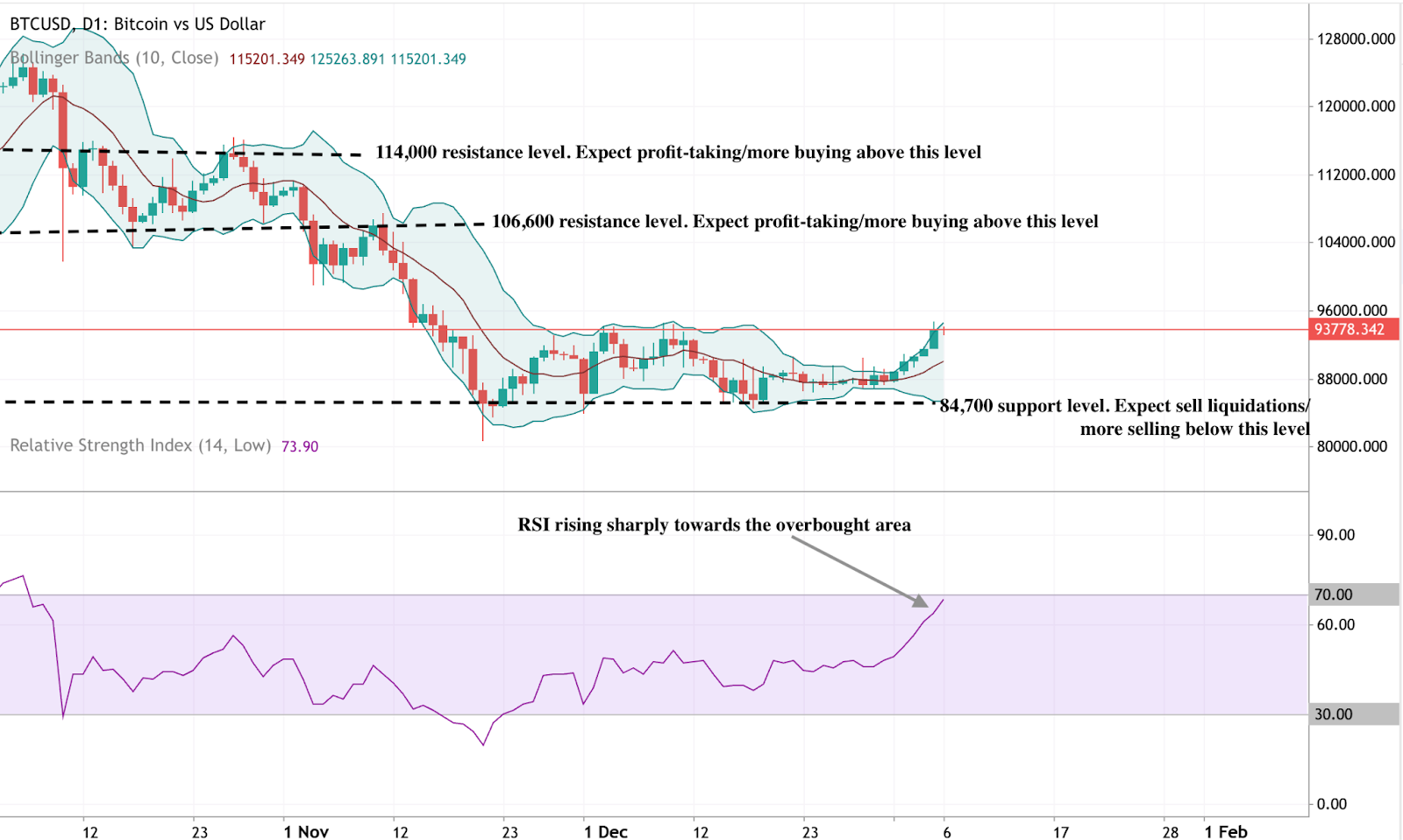
Bitcoin is attempting to extend its recovery after holding the $84,700 support area, with price pushing back toward the $94,000 region and reclaiming the upper portion of its recent range. The rebound has been accompanied by widening Bollinger Bands, indicating a rise in volatility as buying interest returns.
Momentum signals suggest the move may be entering a more tactical phase. The RSI is advancing rapidly toward overbought levels, reflecting strong short-term momentum but also increasing the risk of near-term consolidation or profit-taking.
From a structural perspective, upside remains constrained by resistance near $96,000, followed by $106,600 and $114,000, where previous rallies have faltered. As long as Bitcoin holds above $84,700, the broader structure remains constructive, but further gains may require a period of consolidation to absorb stretched conditions before a more durable advance can emerge.
Disclaimer:
The performance figures quoted refer to the past, and past performance is not a guarantee of future performance or a reliable guide to future performance.
FAQs
Why is the crypto market rising at the start of 2026?
Are ETFs driving the crypto rebound?
Why does low liquidity matter for crypto prices?
Is this a new bull market for crypto?
What should investors watch next?


