Contents
Article
EUR/USD outlook: A dollar bracing for its rate-cut reality
November 28, 2025
Article
EUR/USD outlook: A dollar bracing for its rate-cut reality
November 28, 2025
Article
EUR/USD outlook: A dollar bracing for its rate-cut reality
November 28, 2025

According to recent market reports, the dollar’s growing rate-cut reality has become the dominant driver in EUR/USD, with traders now pricing an over 84% chance of a Federal Reserve cut in December. That probability stood closer to 39% only a week earlier. What began as a sluggish Thanksgiving trading period has instead evolved into the dollar’s sharpest weekly slide in four months, altering sentiment across major currency pairs.
EUR/USD has advanced not because the euro has staged an impressive revival, but because the dollar’s policy edge is fading. The rising prospect of a softer Federal Reserve stance - amplified by political scrutiny - has turned the pair into a real-time measure of how markets perceive the central bank’s credibility heading into year-end. Traders watching these shifts on Deriv MT5 have been quick to map out new levels as volatility builds.
What’s driving EUR/USD right now?
The Federal Reserve remains the central influence. Expectations for a December cut have accelerated rapidly, driven by a run of softer labour indicators and more cautious comments from policymakers. Reuters also highlighted the market reaction to speculation surrounding Kevin Hassett’s potential nomination as the next Fed Chair, a development that traders view as reinforcing a dovish tilt. Holiday-thinned liquidity in the U.S. allowed even modest data points to push the dollar lower than expected.
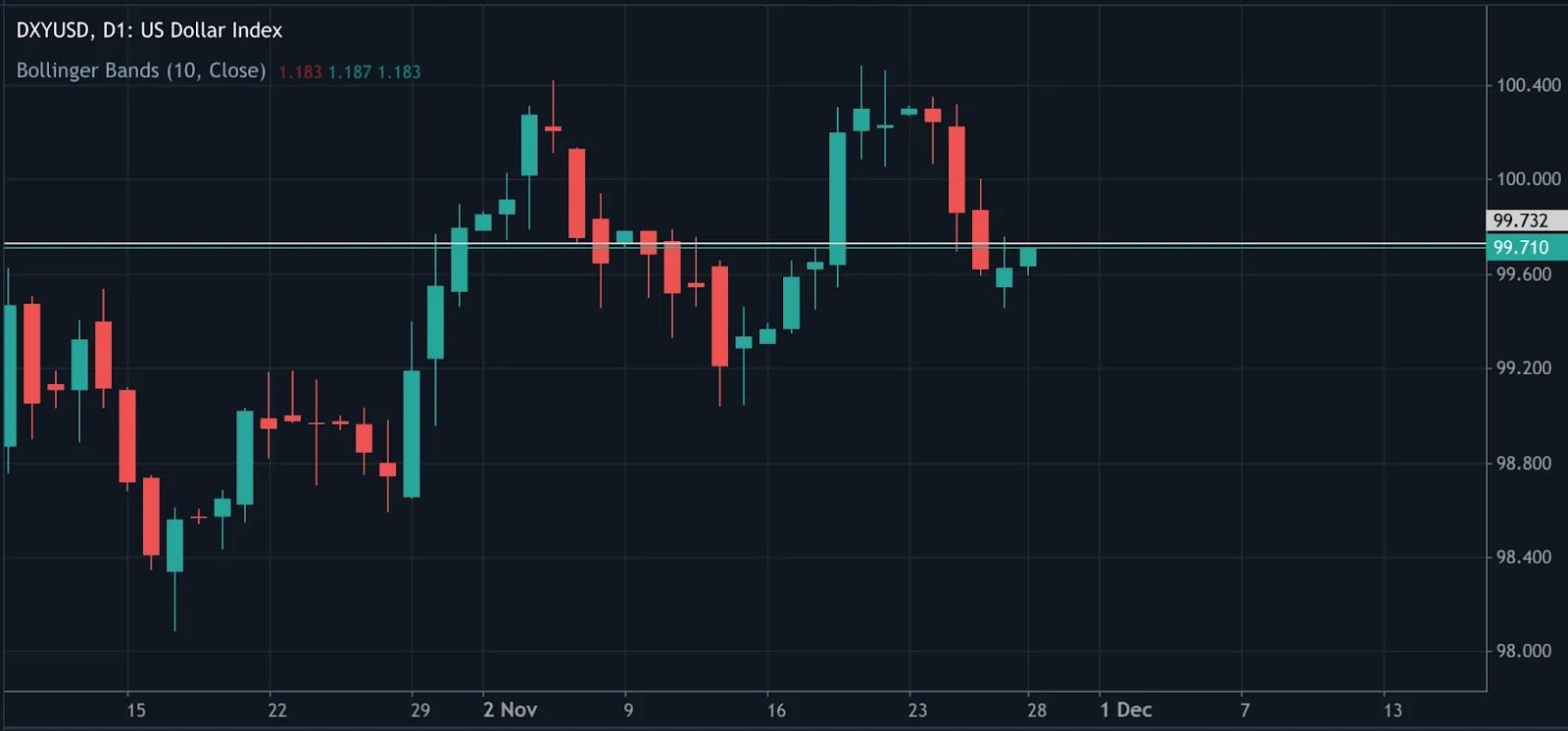
This shift in expectations has helped the EUR/USD climb despite a still uneven European economic landscape. The dollar index, which has been lingering near 99.72, is heading for its worst weekly performance since late July.
The euro briefly touched a 1½-week high of $1.1613 before easing back, driven more by dollar fatigue than any surge in eurozone confidence. Even so, narrower U.S.-European rate differentials have given the currency pair room to push higher - something that looked unlikely only a fortnight ago.
Why the dollar is facing its own reckoning
Political influence is becoming harder for markets to ignore. President Donald Trump has again urged the Federal Reserve to act more aggressively, insisting that rate cuts are needed to preserve economic momentum. The possibility of Kevin Hassett - a well-known supporter of looser policy - taking over as Fed Chair has prompted traders to rethink the institution’s independence and its long-term policy direction.
On the macro front, the dollar’s long-held credibility buffer is being questioned. Themos Fiotakis of Barclays noted that Europe previously benefited from favourable rate differentials and improving sentiment, though those advantages are now being reassessed.
The euro remains relatively expensive compared with historical norms, while the U.S. economy continues to show resilience in services and consumption. The dollar’s decline is therefore less about structural weakness and more about the market preparing for a new policy regime.
What this means for EUR/USD traders
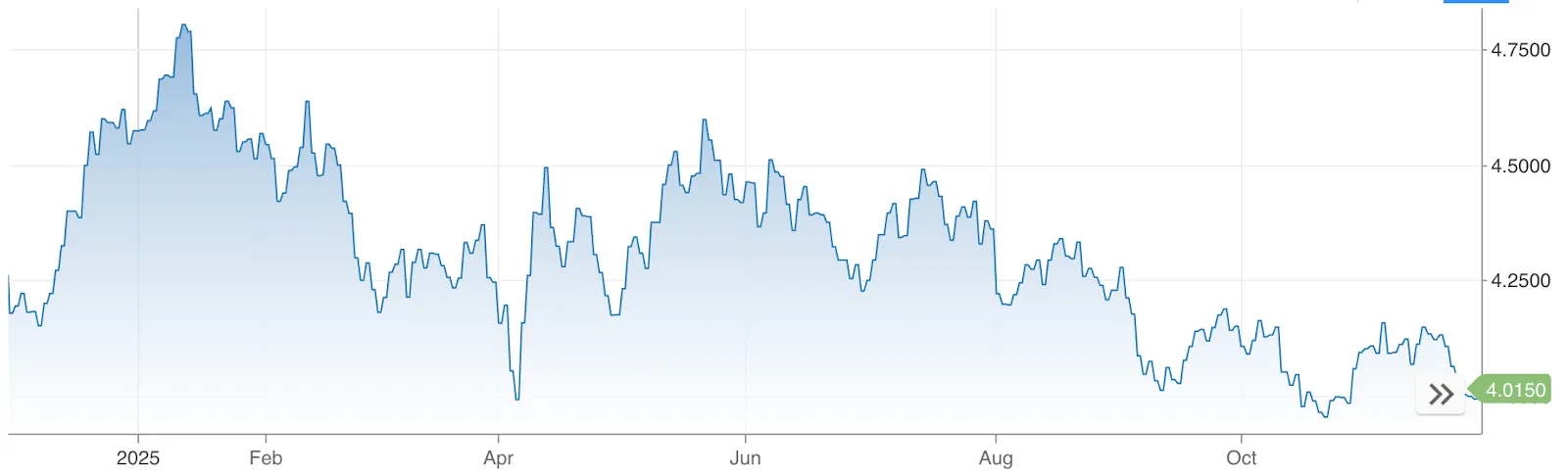
Analysts note that positioning in EUR/USD has turned increasingly supportive over recent sessions. With liquidity thin, traders have been unwinding long-dollar exposure accumulated earlier in the quarter. The effects are visible beyond FX: U.S. 10-year Treasury yields dipped below 4% before stabilising, while German bunds held their ground, giving euro buyers more confidence.
Corporate impacts are also emerging. A firmer euro can squeeze exporters but ease cost pressures for import-heavy firms. For investors, EUR/USD has become a story of reputational trust: whether the Fed’s pivot is grounded in economic reality or steered by political considerations - and whether the European Central Bank can maintain a stable narrative as global conditions shift.
Analysts also point to the geopolitical backdrop. Developments around Ukraine peace talks continue to sway sentiment, with Vladimir Putin signalling that existing draft proposals could shape future negotiations. While few expect a swift “peace premium”, even small signs of progress have reduced safe-haven demand for the dollar.
Expert outlook
In the near term, observers expect EUR/USD to remain closely tied to incoming U.S. policy signals. A confirmed December cut paired with dovish language could lift the pair back toward 1.17. Stronger-than-expected U.S. employment or inflation data, however, would cool momentum and revive volatility. Many traders gauge potential exposure using tools such as the Deriv trading calculator, particularly when sharp swings make risk management critical.
Further out, the picture becomes more uncertain. The eurozone continues to face uneven growth and muted fiscal support, limiting the sustainability of rallies driven solely by dollar weakness. Bond markets will hold considerable sway: if U.S. 10-year yields climb above 4.1% again, the dollar could regain some traction.
The next decisive catalysts are likely to come from Fed communication, data surprises, and the evolving geopolitical landscape in Eastern Europe - all capable of redirecting EUR/USD quickly.
EUR/USD technical insights
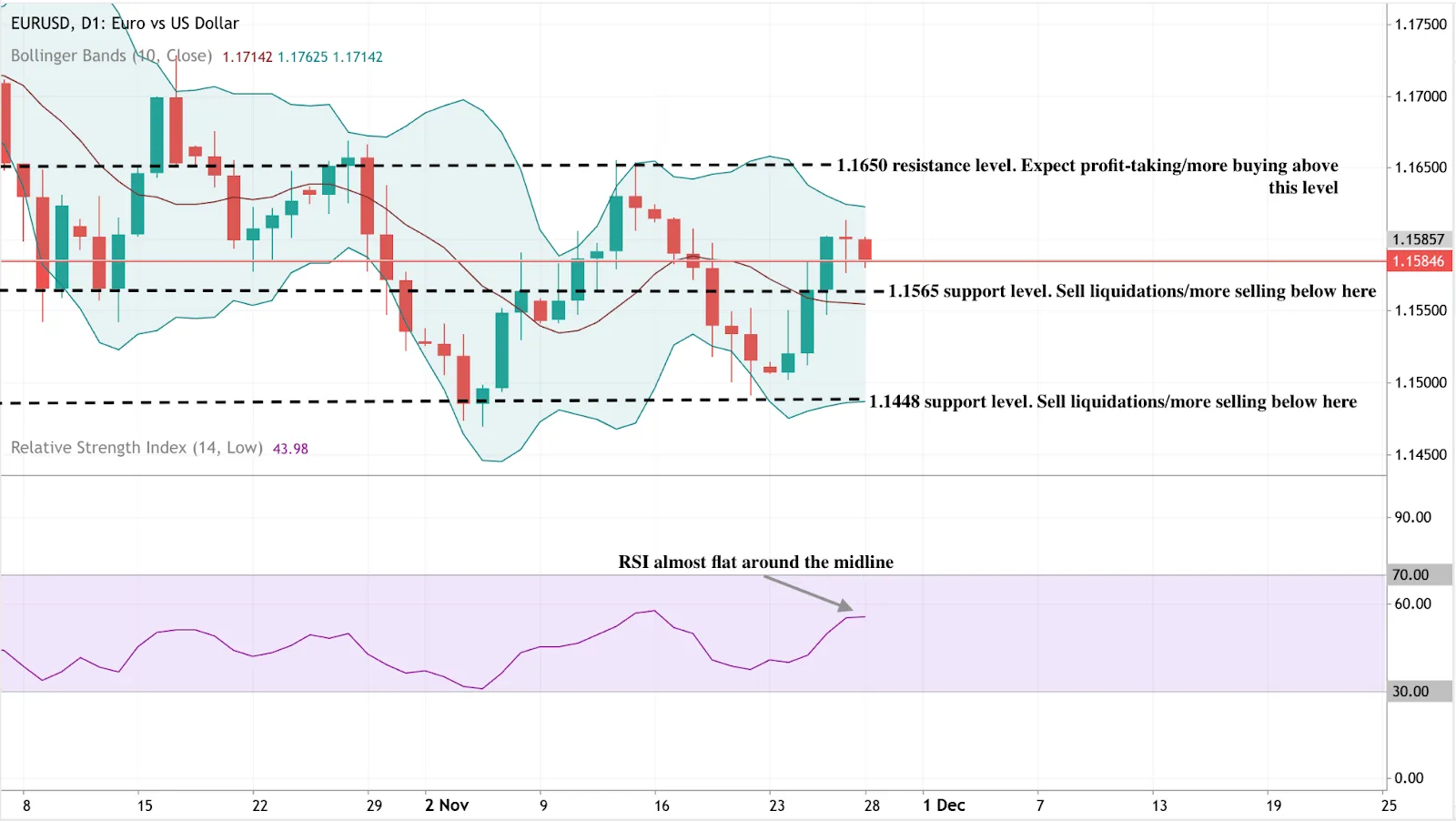
At the time of writing, EUR/USD trades near 1.1585, consolidating inside a tight range. The pair continues to face overhead pressure at 1.1650, a level that has repeatedly encouraged profit-taking. A clean break above this zone could unlock a push higher, while 1.1565 remains the first notable support level. A deeper floor sits at 1.1448, where a break would signal a broader shift in momentum.
The pair remains contained within the Bollinger Bands, reflecting a market lacking clear direction. This consolidative behaviour suggests EUR/USD may continue to oscillate until a macro catalyst - such as central bank commentary - triggers a decisive move. The RSI sits close to 44, essentially neutral, underscoring the absence of dominant buying or selling pressure.
Key takeaway
EUR/USD is advancing largely because the dollar is confronting a policy rethink shaped by shifting rate expectations and growing political influence. While the euro itself does not have an overwhelmingly strong domestic narrative, the recalibration of U.S. monetary expectations has given it room to climb. The decisive drivers from here will be the Fed’s December decision, Treasury yield movements, and geopolitical developments. Traders on Deriv MT5 will continue monitoring these catalysts as they refine their exposure.
Disclaimer:
The performance figures quoted are not a guarantee of future performance.
FAQs
Why is EUR/USD rising if Europe’s economy is still weak?
Is the dollar entering a structural downtrend?
Could a Ukraine peace deal boost the euro?
Does Kevin Hassett’s potential appointment matter for currencies?
How should traders view the yen in this environment?


