Contents
Article
How the Fed rate cut is shaping gold’s path into December
October 30, 2025
Article
How the Fed rate cut is shaping gold’s path into December
October 30, 2025
Article
How the Fed rate cut is shaping gold’s path into December
October 30, 2025

Gold is holding steady near the $4,000 mark after the U.S. Federal Reserve lowered interest rates by 25 basis points to the 3.75%–4% range - a move that matched expectations but revealed sharp disagreement within the central bank.
Typically, a rate cut boosts gold by reducing the appeal of yield-bearing assets. But Chair Jerome Powell’s cautious remarks and the split vote have muddied the outlook.
With Powell warning that another cut in December is “not a foregone conclusion,” traders now face two competing possibilities - a break above $4,100 if economic data weakens, or a pullback toward $3,900 if the Fed’s tone turns hawkish.
Key takeaways
- The Fed reduced rates by 25 bps to 3.75%–4%, marking its second cut of 2025, but the vote was not unanimous.
- Stephen Miran wanted a deeper 50 bps cut, while Jeffrey Schmid preferred no change, highlighting internal divisions.
- The statement described moderate economic growth, slowing job gains, and inflation that remains “somewhat elevated.”
- The Fed will end balance sheet reduction on 1 December, signalling a shift toward neutral liquidity management.
- Gold is trading between $3,990 and $4,010, reflecting market indecision after the announcement.
The Federal Reserve interest rate divided decision
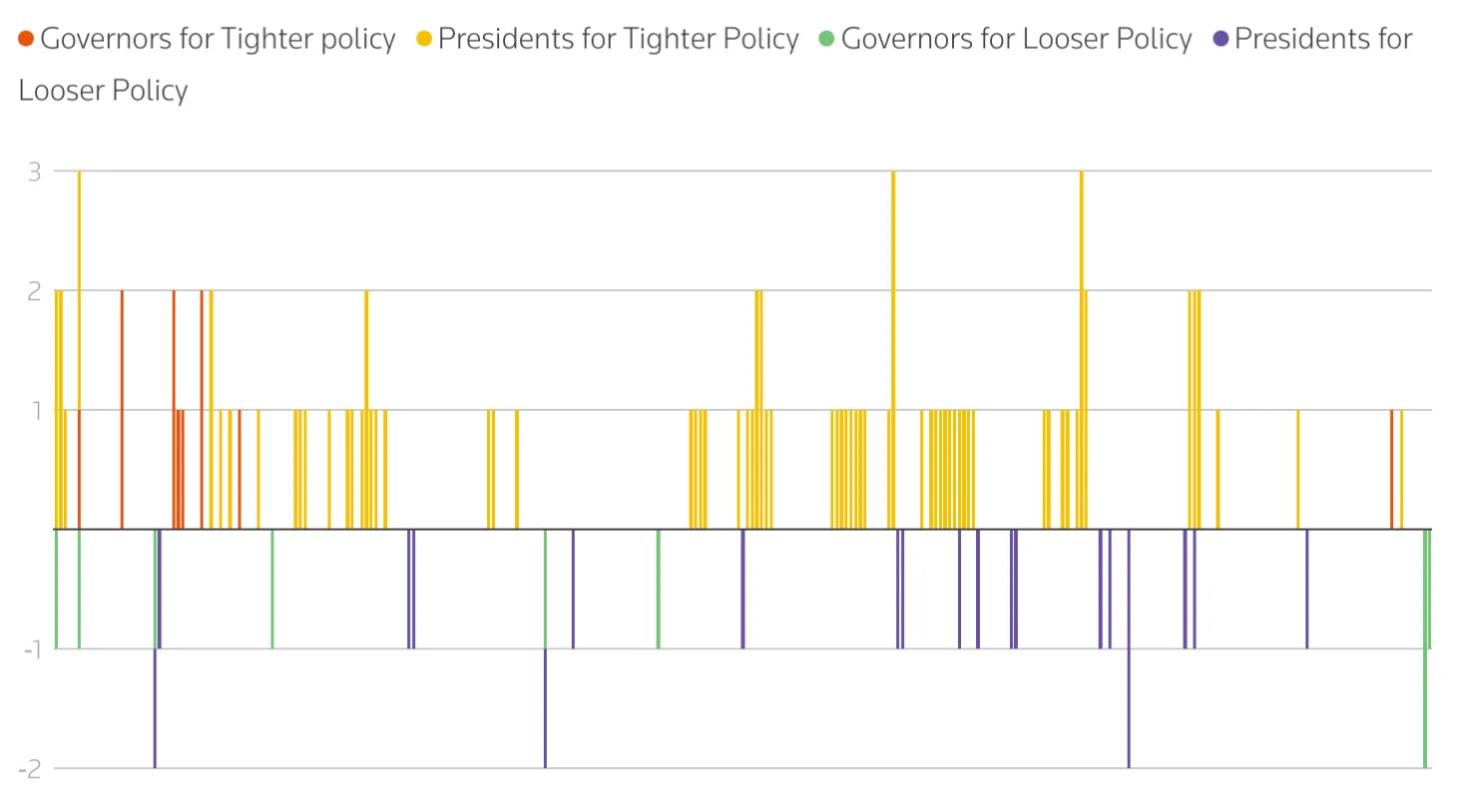
The 10-2 vote at the latest FOMC meeting underscored how uncertain the Fed’s policy path has become. Most members backed a smaller cut to cushion slowing employment data, but dissenters pulled in opposite directions.
Fed Governor Stephen Miran argued for a 50 bps cut to offset weaker job growth, while Kansas City Fed President Jeffrey Schmid voted to hold rates steady, warning that inflation remains elevated.
The official statement noted that “economic activity has been expanding at a moderate pace,” but emphasised that “job gains have slowed this year and the unemployment rate has edged up.” Inflation, meanwhile, “remains somewhat elevated.”
It’s a rare instance of dual dissent within the Fed - only the third time since 1990 that policymakers have disagreed in opposite directions - signalling deep uncertainty about the balance between growth and inflation.
Powell’s message: a cut, not a pivot
At his press conference, Jerome Powell described the rate cut as a “solid decision to support a gradually cooling economy,” but he resisted the idea of a policy pivot.
He made clear that the Fed is not committed to a preset path, saying: “A further reduction in the policy rate at the December meeting is not a foregone conclusion.” The ongoing government shutdown, he added, has made it harder for the Fed to rely on official data.
“When you’re driving in the fog, you slow down,” Powell said, capturing the central bank’s more cautious stance.
Markets reacted swiftly. Fed funds futures trimmed expectations for further cuts, gold pared gains, slipping back from highs near $4,010, and the U.S. dollar index (DXY) strengthened as traders reassessed.
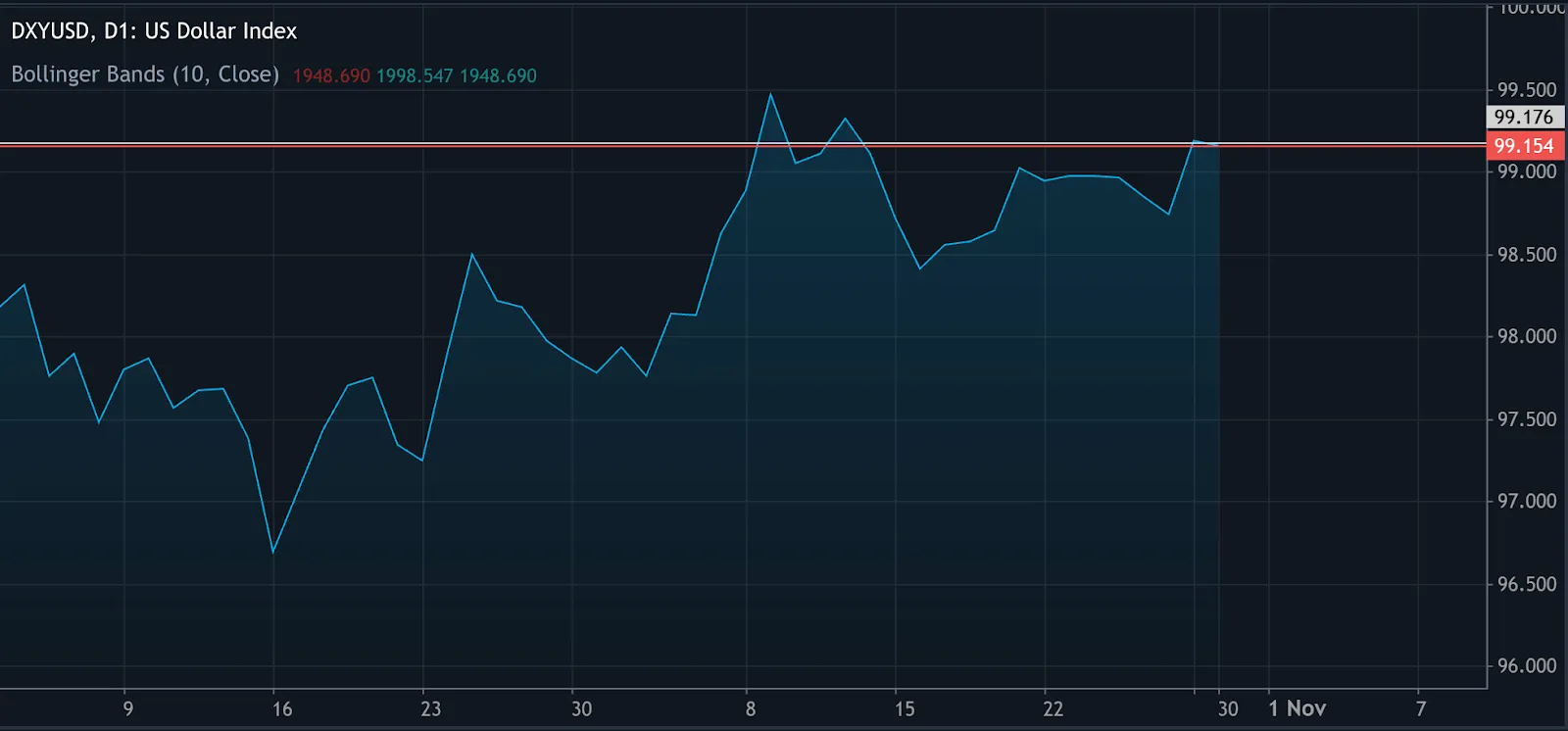
The takeaway: Powell’s tone made this a “pause disguised as a cut.” The Fed is easing carefully but keeping options open, which leaves gold traders guessing whether the December meeting will bring follow-through or a pause.
The quiet pivot: Ending balance sheet reduction
The Fed’s decision to end its balance sheet reduction on 1 December was a critical but underplayed move. This marks the conclusion of its multi-year quantitative tightening (QT) effort and signals that the central bank wants to stabilise liquidity ahead of a potentially volatile 2026.
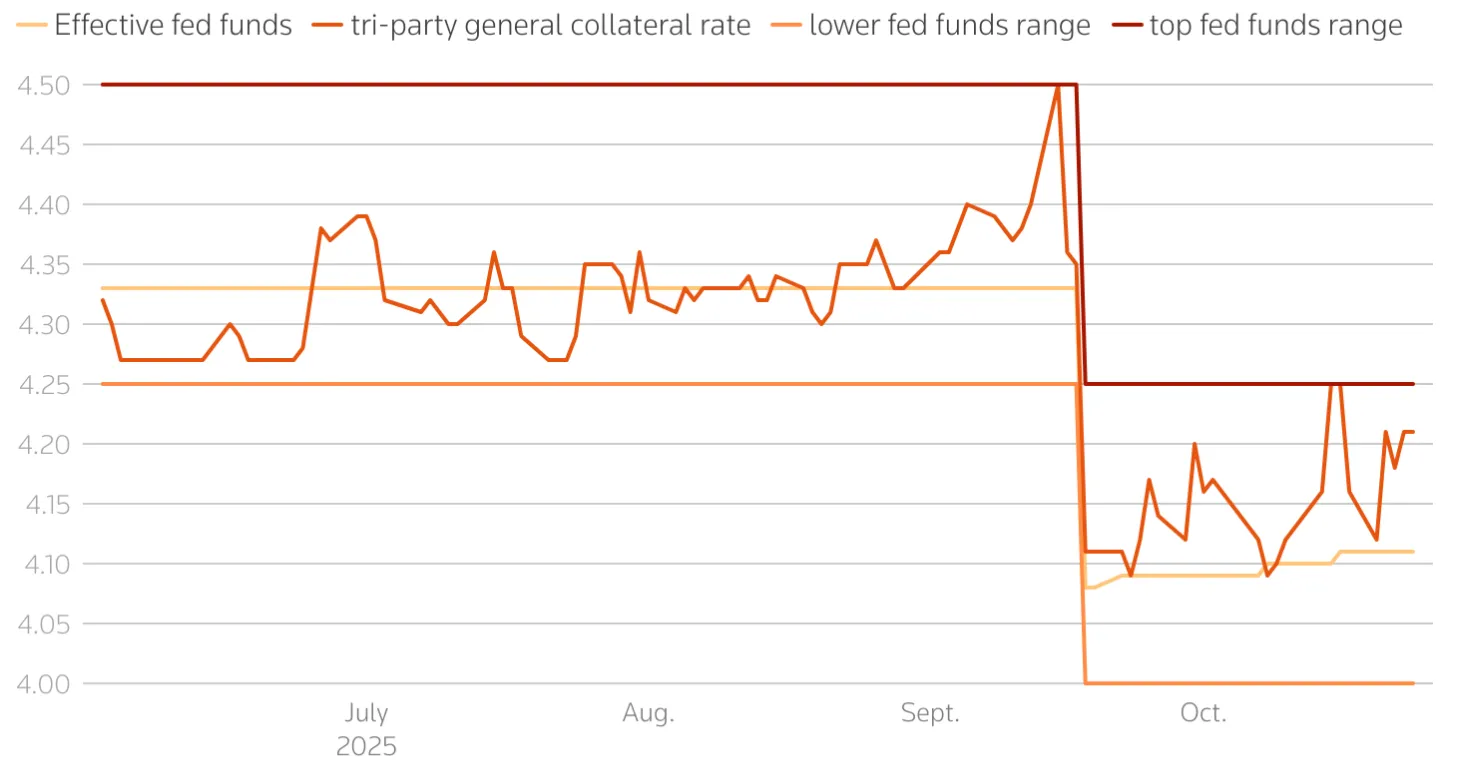
Ending QT means the Fed will reinvest maturing securities rather than shrinking its balance sheet - a change that helps maintain liquidity in money markets. Historically, this backdrop supports gold by weakening real yields and encouraging safe-haven demand.
Still, Powell’s cautious approach indicates that the shift is more about preserving flexibility than launching a new easing cycle.
Market reaction: volatility replaces certainty
Gold’s price action captured the uncertainty of the moment. The metal spiked after the announcement, then quickly retreated as Powell spoke. By Wednesday evening, XAU/USD traded in a tight range between $3,990 and $4,010, signalling indecision rather than conviction.
The U.S. dollar strengthened as traders reduced rate-cut calls, while Treasury yields slipped, showing expectations of slower growth. Equity markets, meanwhile, surrendered early gains as Powell’s words cooled hopes of another cut.
“Gold had a logical reaction to Powell trying to walk back expectations for a December cut. That’s dollar positive and gold negative,” said Peter Grant, senior strategist at Zaner Metals.
The subdued reaction shows that gold’s next move depends less on actual rate changes and more on how credible the Fed’s communication remains.
Gold price forecast: The road to December
The focus now shifts to December’s meeting - and the data that will shape it.
- If inflation softens and labour data weakens, the Fed could deliver another 25 bps cut, potentially sending gold above $4,100.
- If growth stays firm and inflation persists, policymakers may hold rates steady, pushing gold back toward $3,900 as the dollar firms.
Powell acknowledged the widening split within the Fed - some see rates as still restrictive, while others consider them near neutral. This divergence means the December meeting could define gold’s short-term path and market sentiment heading into 2026.
Gold technical insights
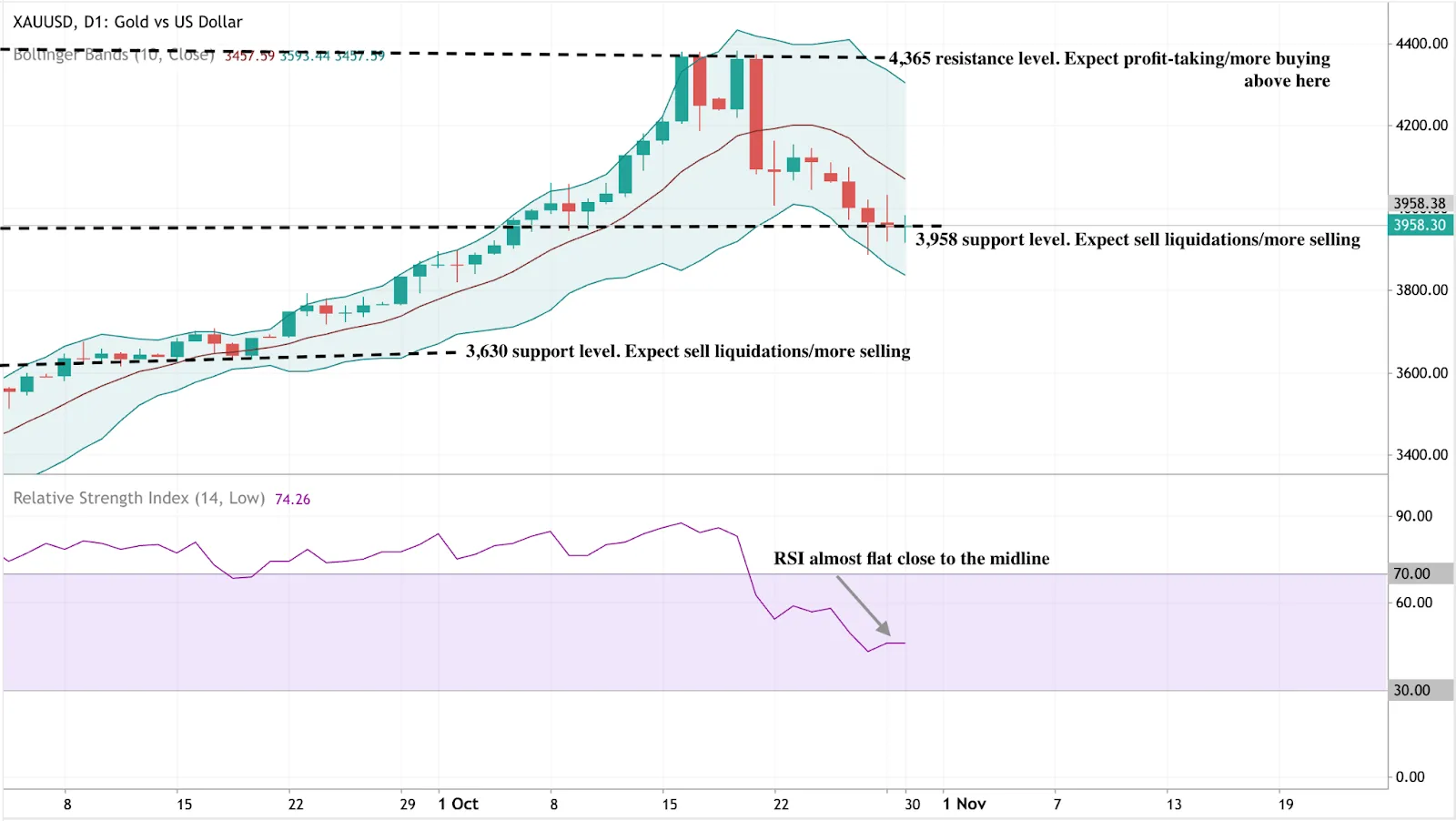
Gold is consolidating near $3,958 support, showing signs of fatigue after recent gains. Bollinger Bands have narrowed, pointing to lower volatility, while the RSI has levelled off near 50, suggesting equilibrium between buyers and sellers.
A move below $3,958 could trigger stops and open the door to $3,630, while renewed buying could lift gold toward $4,365, where selling pressure historically emerges.
Traders monitoring these setups can use Deriv MT5 to track cross-market correlations between gold, the U.S. dollar, and Treasury yields - essential indicators for assessing short-term volatility and trend momentum.
Investment implications
The Fed’s latest move marks the start of a data-driven trading environment for gold rather than a one-way rally.
- Short term: Expect range-bound trading between $3,950–$4,100, with volatility tied to key U.S. data releases.
- Medium term: A modestly bullish bias persists if liquidity stays stable after QT ends.
- Long term: Gold’s broader uptrend remains supported by cautious central bank policy and sustained investor demand.
Before entering new positions, traders can use Deriv’s trading calculator to estimate margin, contract size, and risk exposure - useful for planning gold trades during high-volatility events.
Disclaimer:
The performance figures quoted are not a guarantee of future performance.
FAQs
Why didn’t gold rally after the rate cut?
What does ending the balance sheet reduction mean for gold?
Could gold break above $4,100 before December?
What could push gold lower?
How does the Fed’s split vote influence long-term gold trends?


