Contents
Article
Gold rallies as Fed cuts ignite a powerful new wave of momentum
December 12, 2025
Article
Gold rallies as Fed cuts ignite a powerful new wave of momentum
December 12, 2025
Article
Gold rallies as Fed cuts ignite a powerful new wave of momentum
December 12, 2025

Gold’s latest surge reflects a market that now sees the Federal Reserve’s rate-cut cycle as a defining macro theme rather than a one-off adjustment. Spot prices pushed toward $4,275 in early Asian trading after the Fed delivered its third 25-basis-point cut of the year, reinforcing a trend that has steadily pulled real yields lower. Silver followed with conviction, briefly striking a record $62.37 as capital rotated into assets that historically strengthen when policy becomes more accommodative.
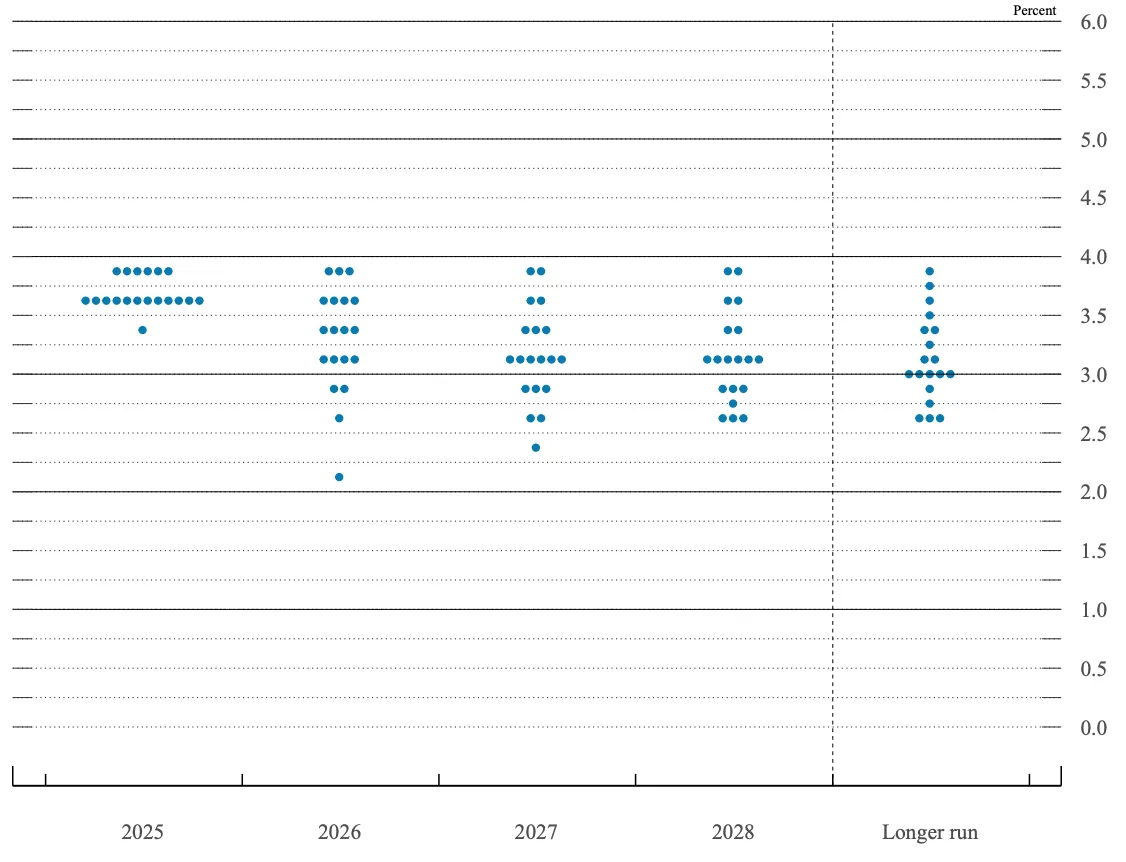
Market watchers emphasise that this matters because the global policy backdrop has shifted in a way that reshapes capital flows. Traders are now pricing an additional 75 basis points of easing for 2025, signalling a reassessment of growth, inflation, and risk-taking appetite. The next few months will determine whether incoming data supports this dovish trajectory or forces a rethink.
What’s driving gold higher?
Reports indicate that gold’s latest leg higher is tied to a rapid repricing of the Fed’s policy outlook. The most recent 25-basis-point rate cut lowered the funds rate to its weakest level in three years, dragging the US Dollar with it and deepening the decline in real yields.
When the opportunity cost of holding yield-bearing assets fades, gold’s lack of income becomes far less of a disadvantage. Investors have treated this shift as a signal that the policy environment will remain supportive, prompting fresh allocations into assets that protect buying power as monetary conditions loosen. Analysts at CBA said the Fed’s actions have created a “powerful cyclical tailwind” likely to persist well into next year.
Silver’s performance has highlighted the more speculative edge of this theme. The metal tends to overshoot during monetary inflection points, and its push beyond $62 suggests traders are blending macro hedging with pure momentum. Confidence that industrial demand will not be derailed by lower borrowing costs has amplified the move, turning silver into both a defensive and high-beta expression of the same macro story.
Why it matters
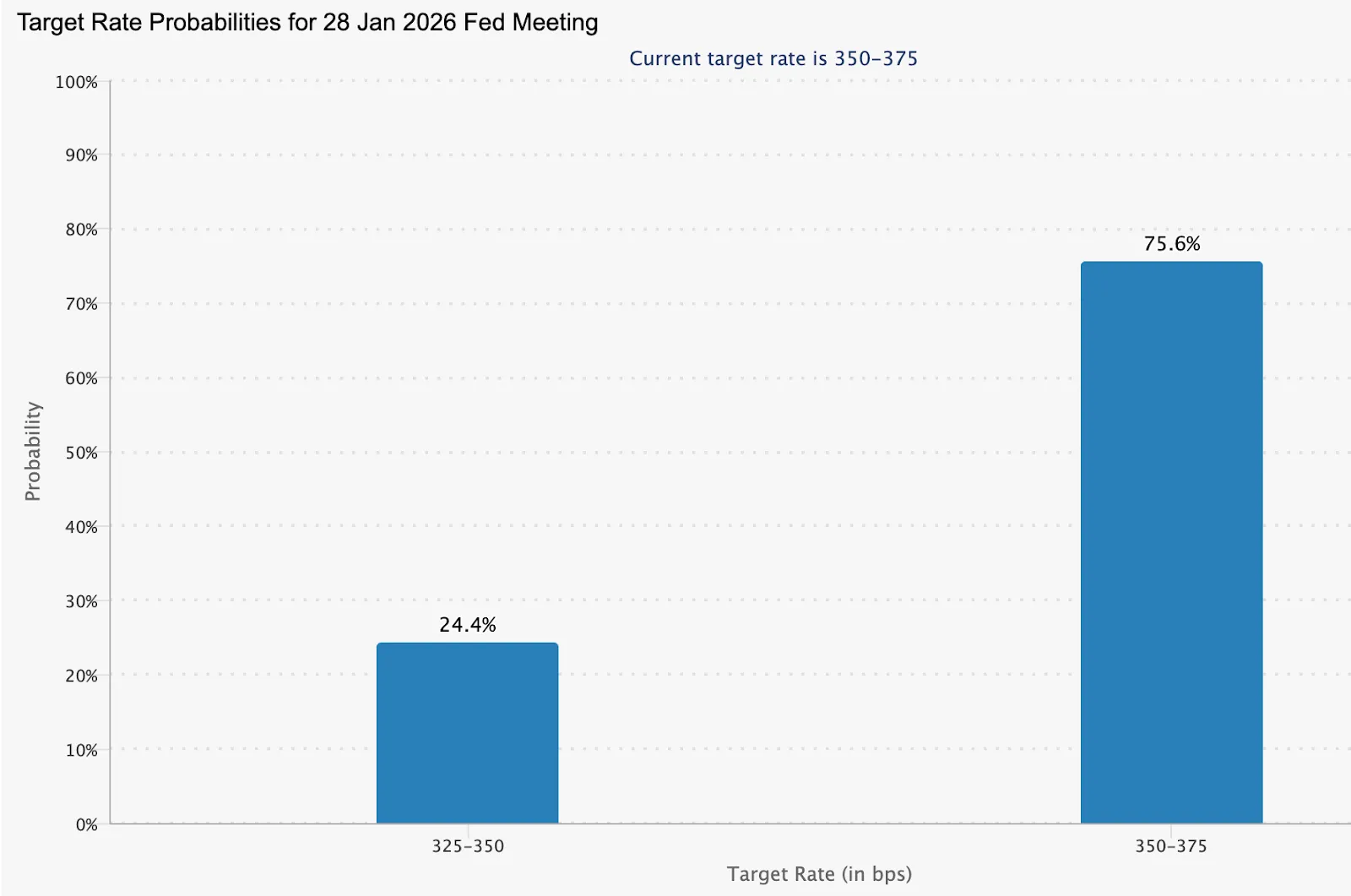
Analysts noted that gold is becoming a proxy for confidence in the Fed’s ability to guide inflation lower while cushioning the labour market. The sharp rise in US jobless claims - the largest increase in nearly four and a half years - reinforced expectations that further easing is on the way. With markets assigning a 75.6% probability to a January pause, traders see the path ahead as dominated by weaker yields and strong demand for defensive stores of value.
Strategists argue that the current shift extends beyond routine rate tracking. One London-based metals analyst observed that “gold is now pricing the direction of policy rather than the pace,” signalling confidence that the Fed is preparing to lean harder against economic softness. That mindset supports gold even if nominal rates stabilise, because the real-yield narrative remains the key driver.
Impact on markets and investors
Experts noted that the most immediate effects are concentrated in precious metals rather than across wider asset classes. Gold continues to draw steady inflows from investors, treating it as the clearest expression of falling real yields. Funds with mandates to hedge policy uncertainty have increased their allocations, while discretionary traders see the break above $4,250 as validation of renewed upside potential. For now, fundamentals and momentum are working in sync.
Silver is attracting a different cohort of participants. Its breakout to new highs has encouraged short-term systems and CTA strategies to extend long exposure, tightening liquidity around pivotal levels. This positioning can intensify volatility when sentiment becomes crowded. Industrial buyers are closely monitoring these swings as elevated prices are factored into next year’s procurement plans.
Retail traders face a more layered backdrop. Gold’s elevated level may make entry points less compelling, yet the directional clarity - policy easing favouring metals - keeps interest strong. The question is whether inflation cools further or reaccelerates into the Fed’s field of vision, altering the timing and depth of future cuts.
Expert outlook
Analysts say the next phase hinges on how US data evolves. If inflation eases and labour-market softness persists, expectations for 75 basis points of additional cuts next year will harden. That environment would help gold maintain its footing above $4,250 and keep silver anchored near recent highs. Persistent demand from reserve managers and large allocators seeking diversification is likely to reinforce the trend, particularly against a backdrop of geopolitical uncertainty.
The risk scenario centres on labour costs and inflation. A surprise rebound in either metric would force the Fed to slow or pause its easing path, lifting real yields and moderating gold’s ascent. This would not negate the long-term case for metals, but it would cool the pace of gains and increase short-term volatility. Traders continue to watch wage growth, core inflation, and Fed communication as the key catalysts.
Key takeaway
Gold’s rise above $4,250 reflects more than an initial reaction to the Fed’s latest decision; it signals a shift in how markets value defensive assets in a weakening-yield environment. Real yields are sliding, jobless claims are rising, and expectations for deeper cuts are increasingly embedded in pricing. Silver’s breakout illustrates how quickly momentum can accelerate when macroeconomic conditions and positioning align. The next chapter will be shaped by US inflation and wage data, which remain decisive for the Fed’s path.
Gold technical insights
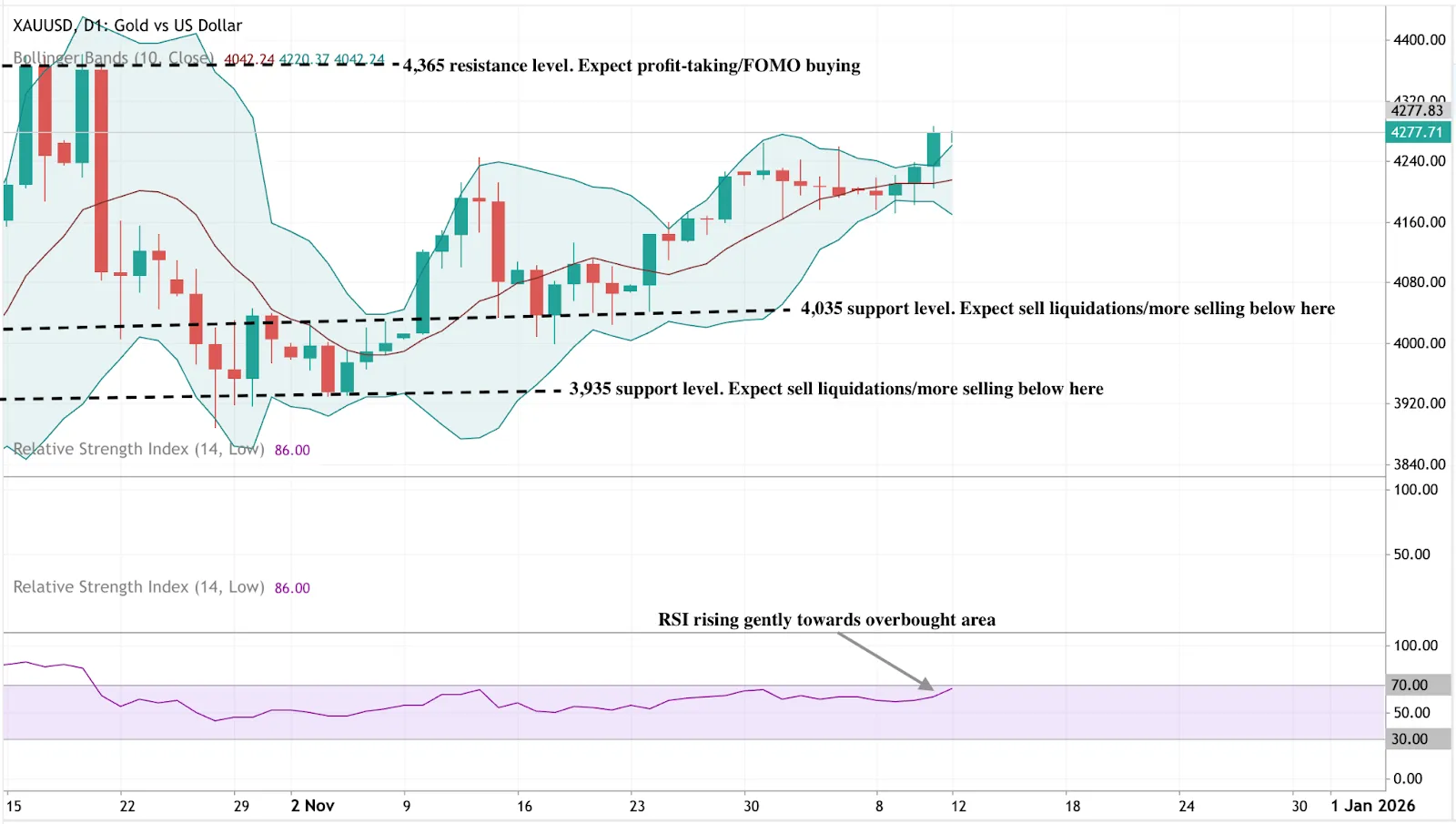
Gold has extended its rebound, moving decisively above the US$4,240 zone and advancing toward the US$4,365 resistance area - an inflection point where profit-taking often emerges.
The widening of Bollinger Bands confirms rising volatility and strengthening bullish momentum, while the RSI’s drift toward the overbought region signals that price may be entering a stretched phase despite buyers retaining control. Immediate support sits at US$4,035; holding above this level maintains the bullish structure, while a break below would expose the deeper US$3,935 liquidation zone.
When the opportunity cost of holding yield-bearing assets fades, gold’s lack of income becomes far less of a disadvantage. Investors have treated this shift as a signal that the policy environment will remain supportive, prompting fresh allocations into assets that protect buying power as monetary conditions loosen. Analysts at CBA said the Fed’s actions have created a “powerful cyclical tailwind” likely to persist well into next year.
Silver’s performance has highlighted the more speculative edge of this theme. The metal tends to overshoot during monetary inflection points, and its push beyond $62 suggests traders are blending macro hedging with pure momentum. Confidence that industrial demand will not be derailed by lower borrowing costs has amplified the move, turning silver into both a defensive and high-beta expression of the same macro story.
Why it matters
Analysts noted that gold is becoming a proxy for confidence in the Fed’s ability to guide inflation lower while cushioning the labour market. The sharp rise in US jobless claims - the largest increase in nearly four and a half years - reinforced expectations that further easing is on the way. With markets assigning a 75.6% probability to a January pause, traders see the path ahead as dominated by weaker yields and strong demand for defensive stores of value.
Strategists argue that the current shift extends beyond routine rate tracking. One London-based metals analyst observed that “gold is now pricing the direction of policy rather than the pace,” signalling confidence that the Fed is preparing to lean harder against economic softness. That mindset supports gold even if nominal rates stabilise, because the real-yield narrative remains the key driver.
Impact on markets and investors
Experts noted that the most immediate effects are concentrated in precious metals rather than across wider asset classes. Gold continues to draw steady inflows from investors, treating it as the clearest expression of falling real yields. Funds with mandates to hedge policy uncertainty have increased their allocations, while discretionary traders see the break above $4,250 as validation of renewed upside potential. For now, fundamentals and momentum are working in sync.
Silver is attracting a different cohort of participants. Its breakout to new highs has encouraged short-term systems and CTA strategies to extend long exposure, tightening liquidity around pivotal levels. This positioning can intensify volatility when sentiment becomes crowded. Industrial buyers are closely monitoring these swings as elevated prices are factored into next year’s procurement plans.
Retail traders face a more layered backdrop. Gold’s elevated level may make entry points less compelling, yet the directional clarity - policy easing favouring metals - keeps interest strong. The question is whether inflation cools further or reaccelerates into the Fed’s field of vision, altering the timing and depth of future cuts.
Expert outlook
Analysts say the next phase hinges on how US data evolves. If inflation eases and labour-market softness persists, expectations for 75 basis points of additional cuts next year will harden. That environment would help gold maintain its footing above $4,250 and keep silver anchored near recent highs. Persistent demand from reserve managers and large allocators seeking diversification is likely to reinforce the trend, particularly against a backdrop of geopolitical uncertainty.
The risk scenario centres on labour costs and inflation. A surprise rebound in either metric would force the Fed to slow or pause its easing path, lifting real yields and moderating gold’s ascent. This would not negate the long-term case for metals, but it would cool the pace of gains and increase short-term volatility. Traders continue to watch wage growth, core inflation, and Fed communication as the key catalysts.
Key takeaway
Gold’s rise above $4,250 reflects more than an initial reaction to the Fed’s latest decision; it signals a shift in how markets value defensive assets in a weakening-yield environment. Real yields are sliding, jobless claims are rising, and expectations for deeper cuts are increasingly embedded in pricing. Silver’s breakout illustrates how quickly momentum can accelerate when macroeconomic conditions and positioning align. The next chapter will be shaped by US inflation and wage data, which remain decisive for the Fed’s path.
Gold technical insights
Gold has extended its rebound, moving decisively above the US$4,240 zone and advancing toward the US$4,365 resistance area - an inflection point where profit-taking often emerges.
The widening of Bollinger Bands confirms rising volatility and strengthening bullish momentum, while the RSI’s drift toward the overbought region signals that price may be entering a stretched phase despite buyers retaining control. Immediate support sits at US$4,035; holding above this level maintains the bullish structure, while a break below would expose the deeper US$3,935 liquidation zone.
Disclaimer:
The performance figures quoted are not a guarantee of future performance.
FAQs
Why is gold rising after the Fed’s recent rate cut?
How does weaker US jobs data affect gold prices?
Is silver likely to outperform gold in this environment?
Could a Ukraine peace deal hurt gold’s rally?
What would cause gold’s rally to stall?


