Contents
Article
US indices rise as tech earnings move into focus
February 3, 2026
Article
US indices rise as tech earnings move into focus
February 3, 2026
Article
US indices rise as tech earnings move into focus
February 3, 2026

US equity indices kicked off the new month on a firm note, with Wall Street brushing aside turbulence in commodities, cryptocurrencies, and select artificial intelligence names. Reports show that the Dow Jones Industrial Average surged by more than 500 points on Monday, while the S&P 500 added around 0.5%, ending the session just short of a new record close. The Nasdaq Composite also pushed higher, underscoring underlying strength even as pressure lingered on major technology stocks.
With over 100 S&P 500 constituents scheduled to report this week, attention is shifting away from short-term macro noise toward earnings. Investors are now looking for evidence that corporate performance can keep pace with expectations, making upcoming results central to whether indices can build on recent gains.
What’s driving US Indices?
Momentum at the start of the month has been underpinned by a blend of improving economic data and steady earnings sentiment. Fresh manufacturing figures showed US factory activity expanding for the first time in almost a year, with both the Institute for Supply Management and S&P Global reporting stronger-than-forecast production readings for January.
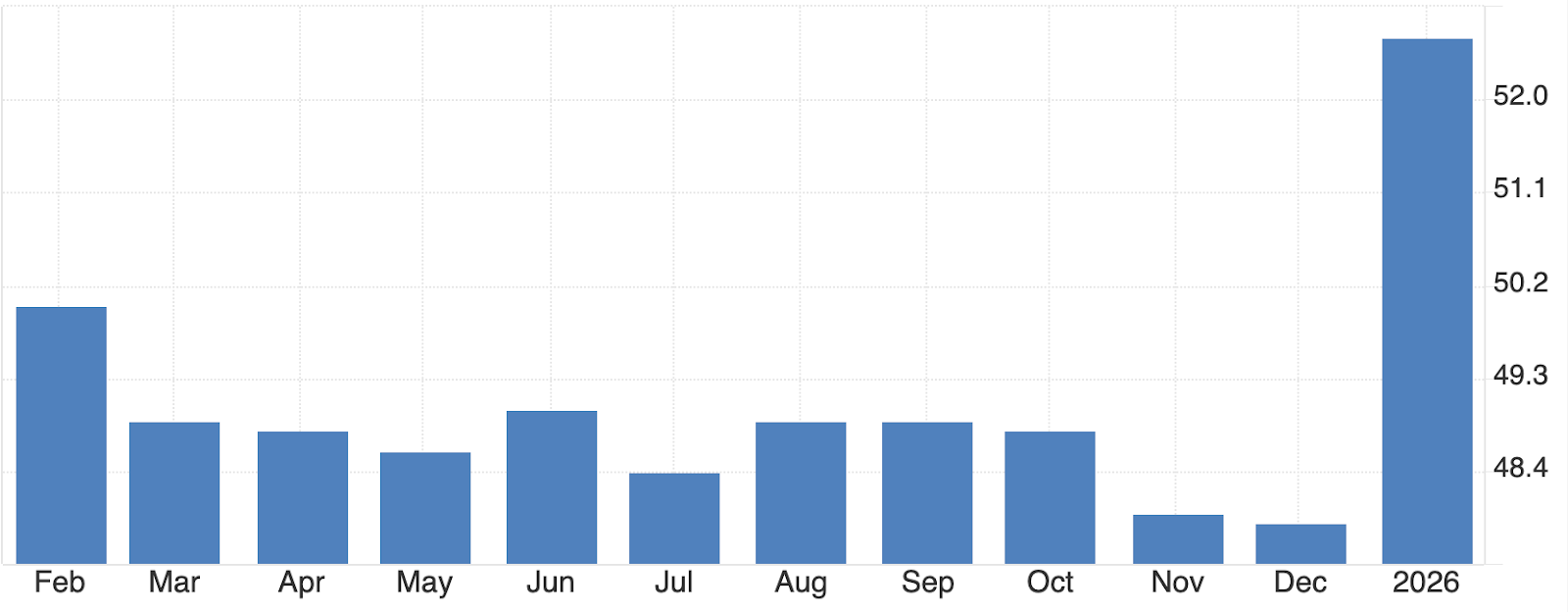
Those readings helped counterbalance uncertainty surrounding monetary policy, particularly after President Donald Trump nominated Kevin Warsh as his preferred successor to Federal Reserve Chair Jerome Powell. The data suggested the real economy may be regaining traction, even as policy questions remain unresolved.
At the same time, index gains have broadened. Strength was no longer concentrated solely in mega-cap technology, but spread across industrials, consumer names, and semiconductors. Sandisk jumped 15% to top the S&P 500, while Caterpillar and Walmart led advances in the Dow. Increased sector participation has coincided with a period where indices appeared less affected by volatility in individual technology stocks.
Why it matters
The ability of US indices to advance amid uneven performance from large technology stocks carries important implications. Nvidia shares slid by close to 3% after reports indicated that OpenAI was reassessing a proposed $100bn investment, citing concerns about existing chip capabilities. Despite that setback, the Nasdaq still closed higher, suggesting that investors are distinguishing between company-specific risks and broader sector health.
As analysts at Morgan Stanley observed, markets appear to be transitioning “from narrative-driven enthusiasm toward earnings validation.” For index investors, this shift is critical. When benchmarks remain firm amid negative headlines, it often signals confidence in overall earnings growth rather than reliance on speculative themes.
Impact on markets and investors
The contrast between equity strength and weakness elsewhere in financial markets has become more pronounced. While US indices pushed higher, precious metals continued to retreat from recent highs. Gold slipped below $4,700 an ounce after trading above $5,600 last week, and silver remained volatile following a sharp, historic sell-off. Bitcoin also stabilised near $78,000 after briefly falling to its lowest level since April.
For investors focused on indices, this divergence highlights ongoing rotation rather than broad risk aversion. Even as the US dollar firmed and the 10-year Treasury yield climbed toward 4.3%, equity markets remained supported, suggesting that higher yields have not yet derailed risk appetite.
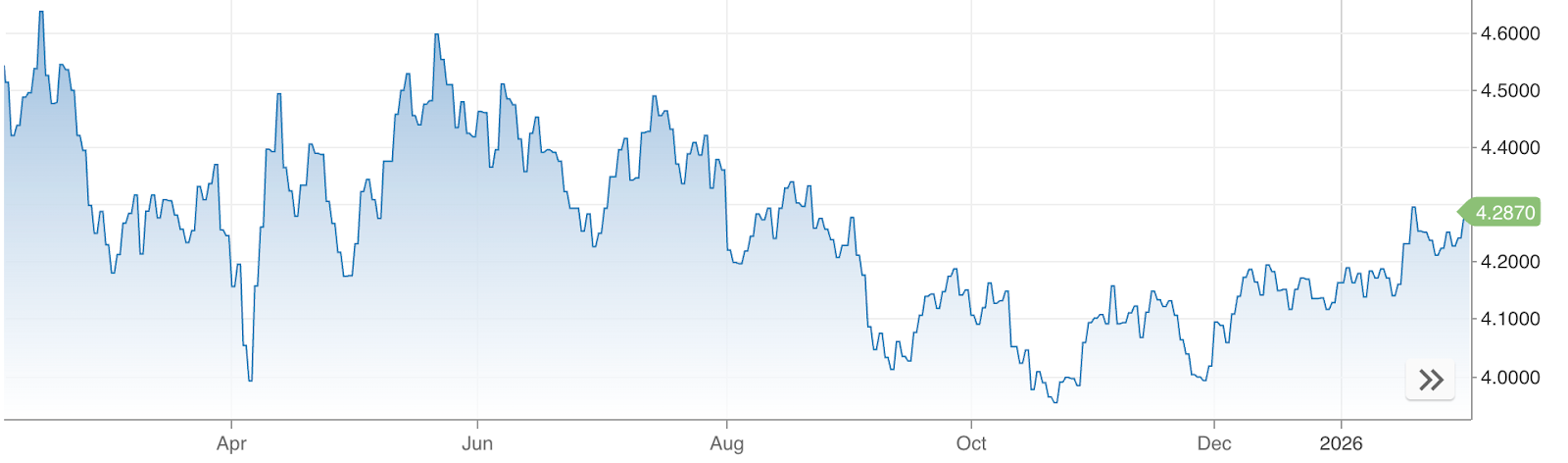
That resilience points to a market placing greater weight on earnings visibility than on near-term currency or rate pressures.
Expert outlook
The spotlight now turns firmly to Big Tech results. Earnings from Amazon, Alphabet, and Advanced Micro Devices are expected to shape near-term index direction and determine whether the early-month rebound has room to extend. Palantir’s upbeat guidance has already lifted sentiment, while Microsoft’s more subdued market reaction last week has raised expectations for peers.
Uncertainty has not disappeared. The postponement of Friday’s US jobs report due to a partial government shutdown removes a key data reference for interest-rate expectations. The absence of labor market data may contribute to increased volatility, as indices react to individual earnings surprises without a clear macroeconomic backdrop. The next phase looks less about chasing momentum and more about confirming fundamentals.
Key takeaway
The initial trading sessions of the month showed gains; however, market direction remains sensitive to upcoming economic data and earnings surprises. Importantly, gains are being driven by multiple sectors rather than a single technology narrative, potentially diversifying the drivers of recent index movements. Volatility in commodities and crypto appears to reflect repositioning rather than rising risk aversion. With major earnings and delayed labour data still ahead, markets are now focused on whether stability can evolve into sustained upside.
Disclaimer:
The information contained on the Deriv Market News is for educational purposes only and is not intended as financial or investment advice. The information may become outdated, and some products or platforms mentioned may no longer be offered. We recommend you do your own research before making any trading decisions.
FAQs
Why are US indices rising despite volatility in tech stocks?
Do Nvidia’s losses threaten the Nasdaq outlook?
How important is earnings season for index direction?
Why are gold and bitcoin falling as equities rise?
Will delayed US data increase market risk?


