Contents
Article
Precious metals are surging but this rally isn’t what it seems
December 24, 2025
Article
Precious metals are surging but this rally isn’t what it seems
December 24, 2025
Article
Precious metals are surging but this rally isn’t what it seems
December 24, 2025
%20(1)%20(1).webp)
Precious metals are surging, but the forces behind the move are more complex than a traditional dash for safety. Recent data showed gold pushing beyond $4,500 an ounce, silver climbing close to 150% this year, and platinum delivering one of its strongest rallies in decades could easily be mistaken for a fear-driven trade. In reality, the momentum has been building beneath the surface for some time.
Rather than reacting to a single shock, the metals market is responding to multiple pressure points converging at once. Reports revealed that confidence in monetary policy is being tested, supply constraints are tightening across key materials, and industrial demand is reshaping how scarcity is valued. Each metal is reacting to a distinct imbalance, creating a rally that looks broad but is anything but uniform.
What’s driving the precious metals rally?
At first glance, monetary policy appears to be the obvious catalyst. The US Federal Reserve has already cut 75 basis points this year, and markets increasingly expect further easing in 2026 as growth slows and inflation pressures ease.
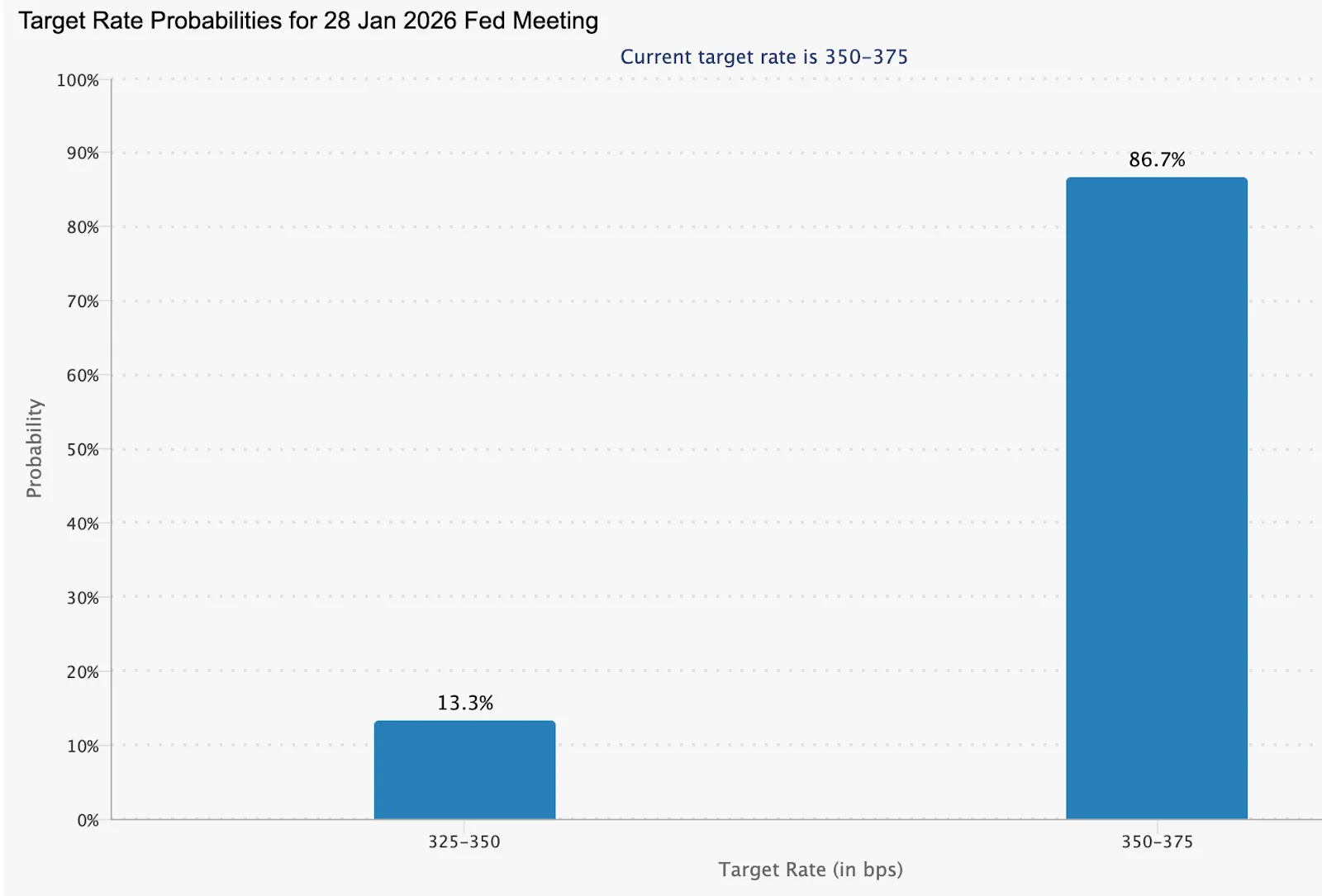
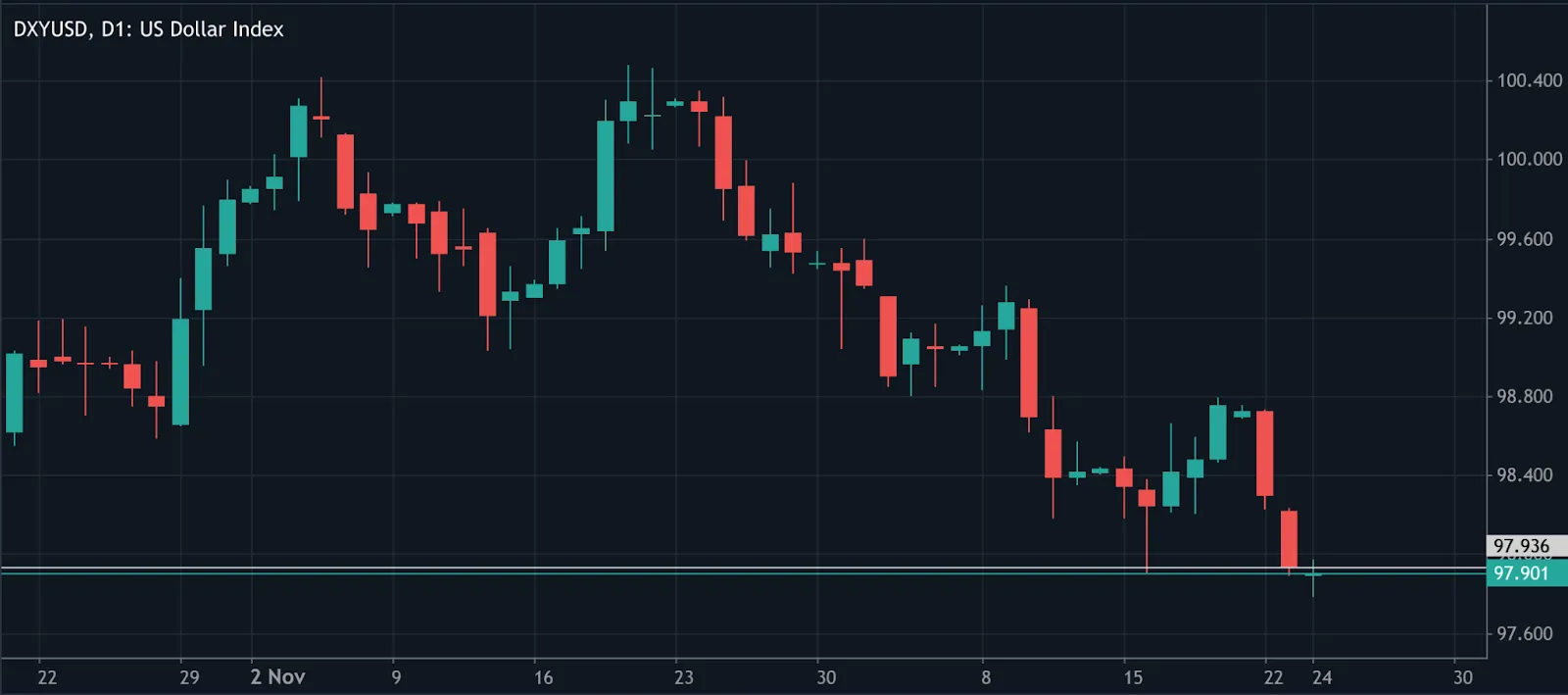
Lower real yields have weighed on the US dollar, which recently slipped to a near three-month low, boosting demand for dollar-denominated metals among overseas buyers.
Yet, interest rates alone do not explain why silver and platinum have outpaced gold. The key difference this time is physical supply. Silver has pushed decisively above $70 per ounce, driven by persistent market deficits and sustained industrial demand from solar power, electronics, and electric vehicles, based on data. Its classification as a US critical mineral has further underlined concerns that supply shortfalls are structural, not temporary.
Platinum’s story is even more acute. Data showed that the market is facing its third consecutive year of deficits, with an estimated shortfall of around 692,000 ounces, equivalent to nearly 9% of annual demand. Above-ground stocks have been drawn down to roughly five months of consumption, the lowest level seen since 2020. This is not a paper shortage - it reflects real constraints in available supply.
Why it matters
The importance of this rally lies in the fact that precious metals are now being valued. Analysts noted that gold continues to serve as a monetary anchor, reflecting unease regarding inflation management, central bank credibility, and rising geopolitical risk. Developments involving Venezuela, Russia, and shifting trade policies have reinforced gold’s role as a long-term hedge rather than a short-term insurance.
Silver and platinum, however, are increasingly being treated as strategic materials. William Rhind, CEO of GraniteShares, has described platinum as “both a precious metal and a strategic industrial asset”, a framing that changes how investors assess its price potential. When metals become essential inputs for energy transition, manufacturing, and emissions control, demand becomes less sensitive to price and more resistant to pullbacks.
That helps explain why corrections across the sector have been limited. Rather than chasing momentum, investors are reacting to clearer supply constraints and policy-driven demand that cannot be easily replaced or delayed.
Impact on markets, industry, and investors
Platinum’s resurgence highlights how assumptions around electrification are being re-evaluated. Earlier expectations that electric vehicles would quickly reduce platinum demand have not played out as planned.
Market watchers higlighted that slower EV adoption, combined with tighter emissions standards, has led to higher platinum loadings in catalytic converters. In many applications, increased platinum content improves durability and performance, particularly under heavy-duty use and extreme operating conditions.
Industrial demand is also expanding beyond the automotive sector. Platinum remains critical for hydrogen fuel cells, chemical processing, and industrial decarbonisation. Meanwhile, China’s approval of platinum and palladium futures contracts has altered global price discovery, with activity on the Guangzhou Futures Exchange increasingly influencing established Western markets.
For investors, this creates a more nuanced landscape. Gold offers relative stability but less scarcity-driven upside, while silver and platinum bring greater volatility linked to industrial cycles, policy decisions, and supply concentration. Treating precious metals as a single trade risks overlooking these growing divergences.
Expert outlook
Looking ahead, analysts remain broadly constructive but caution that the drivers behind the rally are becoming more layered. Futures and commodities specialist Zafer Ergezen points to the gold-to-silver ratio falling below 65 as a signal that markets are pricing both aggressive rate cuts and stronger industrial demand simultaneously.
Gold’s longer-term outlook remains supportive, with Goldman Sachs projecting a $4,900 base case for 2026, although momentum could slow if inflation stabilises. Platinum’s path is more sensitive to supply risks in South Africa and shifts in Chinese industrial demand. With production largely price-inelastic, even small disruptions could have outsized price effects. The dominant risk is no longer excess supply, but how little margin for error the market now has.
Key takeaway
The 2025 precious metals rally is not a single, fear-driven narrative. Analysts expressed that gold reflects monetary uncertainty, silver highlights industrial shortages, and platinum exposes the fragility of concentrated supply. Together, they suggest a repricing of real-world constraints rather than a fleeting risk-off move. The next phase will hinge on interest rates, inventory levels, and geopolitics - not sentiment alone.
Platinum technical insights
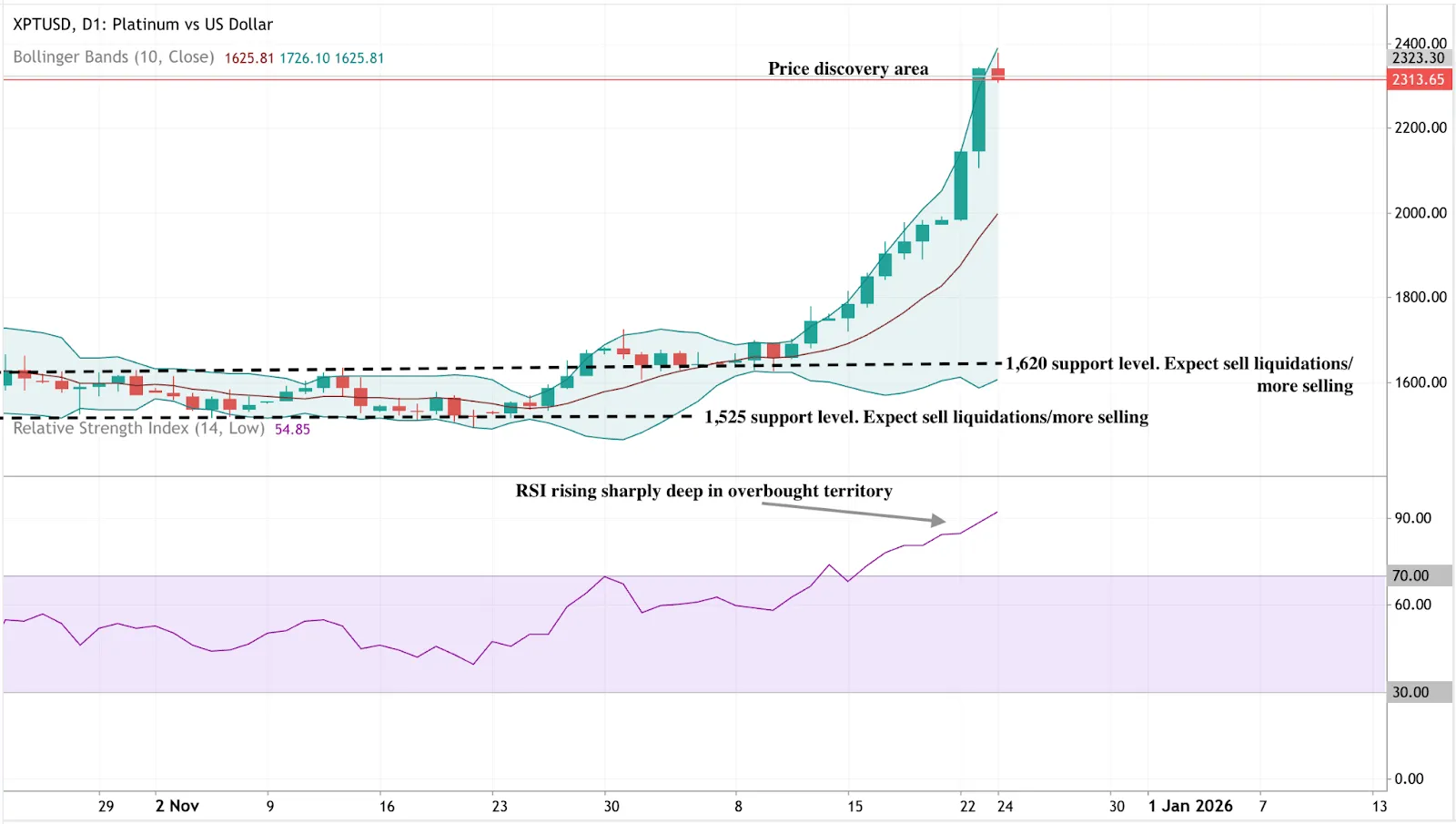
Platinum has pushed decisively into price discovery, with prices hugging the upper Bollinger Band - a signal of strong upside momentum and a confirmed breakout. The sharp widening of the bands indicates rising volatility, while shallow pullbacks suggest that buyers remain firmly in control.
On the downside, $1,620 serves as the first key support level, followed by $1,525. A sustained move back toward the Bollinger mid-band would raise the risk of a deeper correction. For now, momentum remains bullish, with the RSI pushing deep into overbought territory - a sign of strength, but also a warning that short-term consolidation cannot be ruled out.
Disclaimer:
The performance figures quoted refer to the past, and past performance is not a guarantee of future performance or a reliable guide to future performance.
FAQs
Why are precious metals rising so sharply in 2025?
Why is silver outperforming gold?
What is behind platinum’s record rally?
Does the shift to electric vehicles reduce platinum demand?
Is this rally driven by fear or fundamentals?


