Contents
Article
Silver is quietly outshining gold: But is the rally running out of road?
November 28, 2025
Article
Silver is quietly outshining gold: But is the rally running out of road?
November 28, 2025
Article
Silver is quietly outshining gold: But is the rally running out of road?
November 28, 2025
Silver continues to edge ahead of gold, extending a rally that has already lifted XAG/USD more than 7% this week and carried the metal to within touching distance of its record high. Reduced liquidity around Thanksgiving has sharpened intraday moves, making silver’s upward push even more striking at a time when gold’s volatility has noticeably cooled.
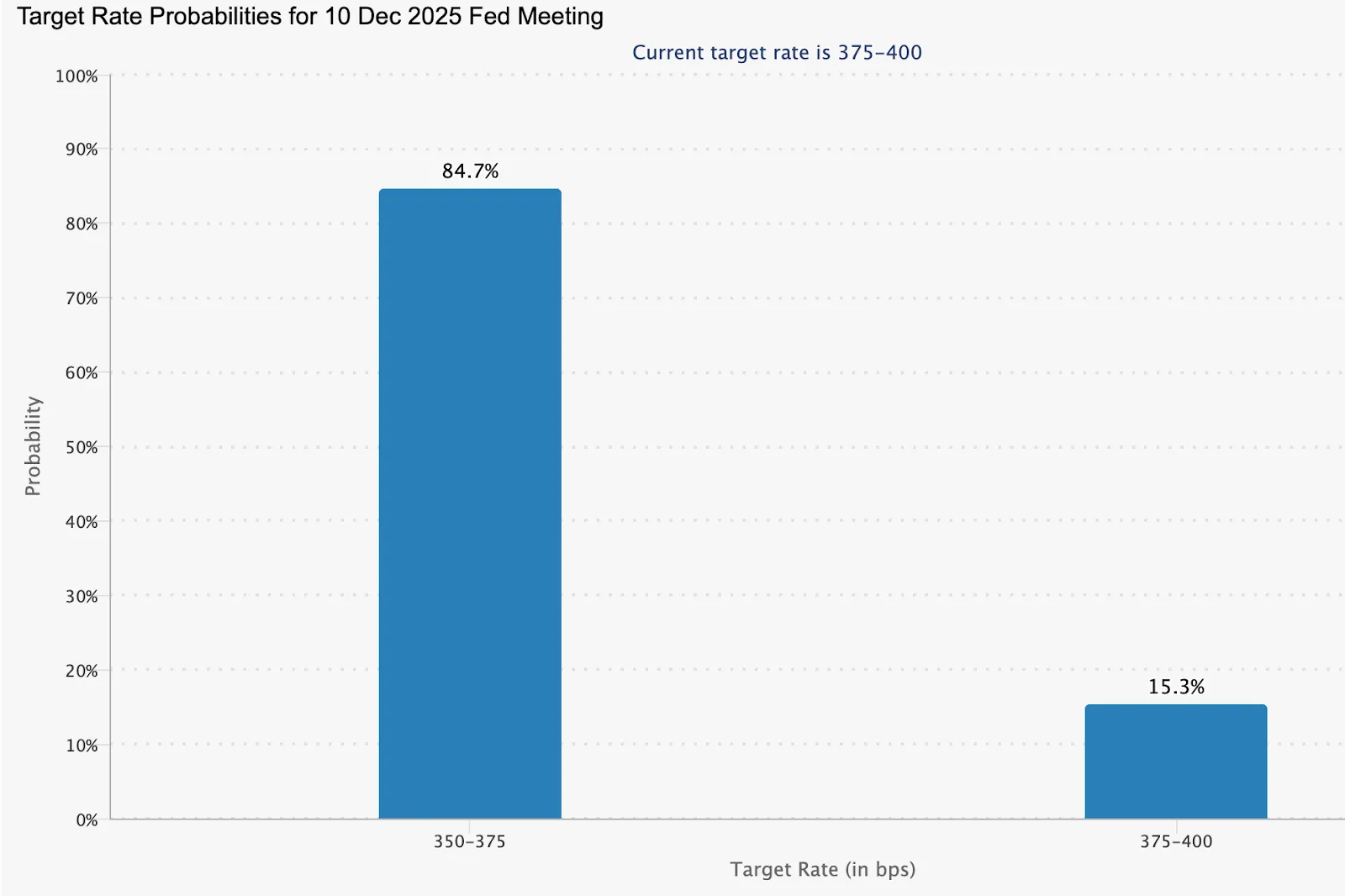
The drivers behind this shift are rooted in weakening US data and a growing belief that the Federal Reserve will act sooner rather than later. With markets pricing an 84.7% chance of a December rate cut and consumer expectations falling sharply, traders are questioning whether this is a brief distortion of the festive season or the start of a more durable revaluation. That concern - whether silver’s dominance can last - frames the broader discussion.
What’s driving silver’s surge?
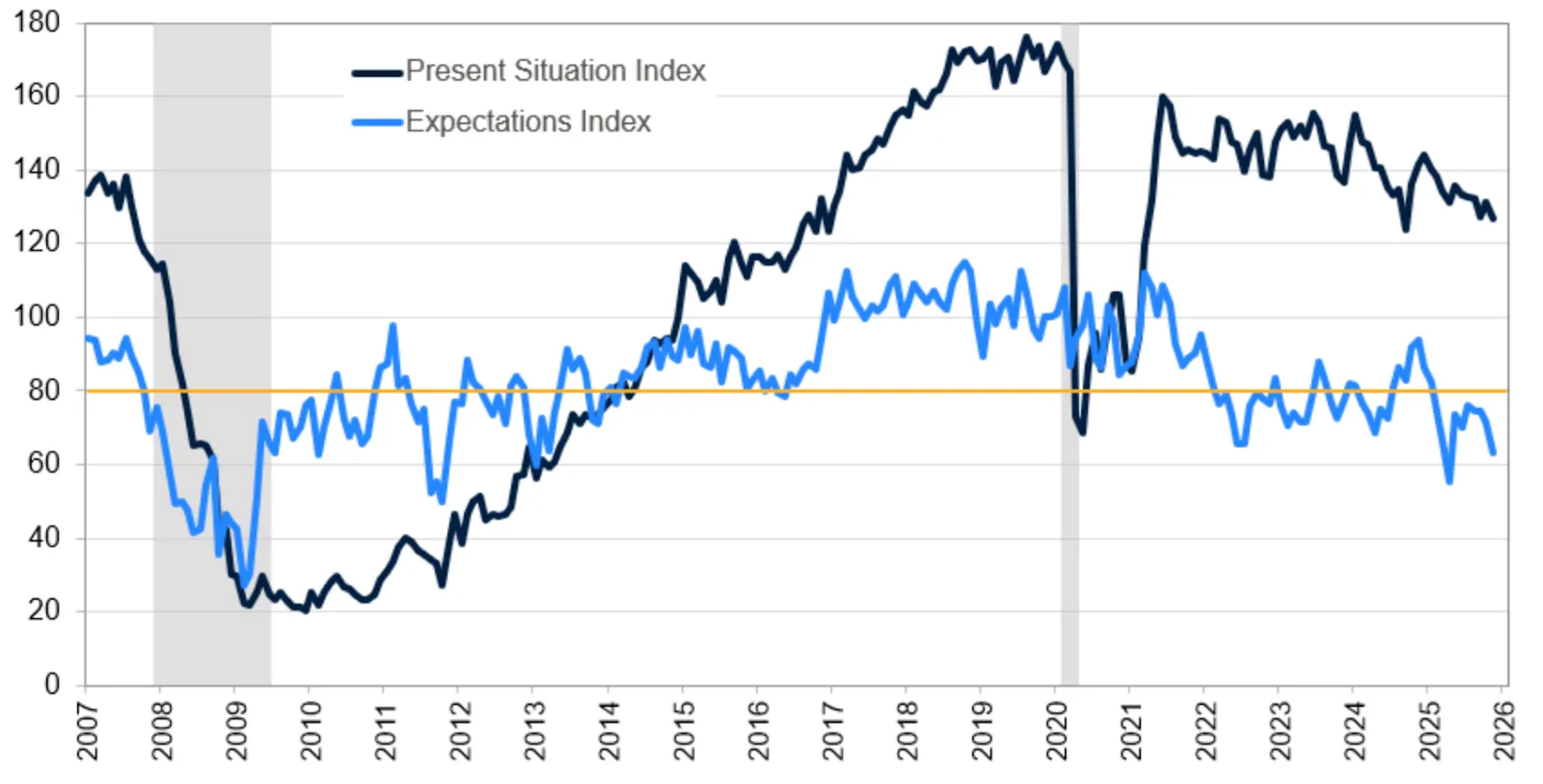
Silver’s momentum has been fuelled by a macro backdrop that looks increasingly fragile. US retail sales have barely improved in real terms since 2021, signalling that household spending is losing traction. The Conference Board’s expectations index - now at 63.2 - sits at levels that have historically preceded downturns, reinforcing the shift toward defensive assets.
With sentiment turning, metals that react quickly to economic uncertainty have become the first ports of call. Silver, as both an industrial input and a monetary hedge, sits squarely at the centre of that rotation.
A second catalyst is the Fed’s recent change in tone. Rate-cut probabilities for December have leapt from 50% to 84.7% in a matter of days.
Recent remarks from New York Fed President John Williams suggest policymakers are ready to move if growth stumbles further. As Treasury yields slip and the dollar softens, non-yielding assets gain a powerful relative advantage. Silver’s sensitivity to these conditions explains the speed - and the intensity - of the latest rally.
Why it matters
Silver’s rise matters because it tells a story far bigger than a holiday liquidity squeeze. The metal has surged 163% since October 2023, reaching a fresh all-time high of $54.38 this month and outpacing gold by a wide margin. That magnitude of performance is hard for institutional investors to ignore, especially given silver’s dual role as both a safe haven and an indispensable industrial material.
Analysts warn the rally reflects deeper macro anxieties. Tim Waterer of KCM Trade notes the market is reacting to “a chorus of dovish remarks” from policymakers as weaker data accumulates. His view highlights a key point: the jump in silver is less about exuberance and more about fading confidence in the US economic trajectory. Metals are simply translating that caution into price.
Impact on markets and industry
For traders, the volatility poses fresh challenges. Thinner market participation heightens intraday swings, making precision essential. On platforms such as Deriv MT5, where rapid order execution and accurate lot sizing matter during fast-moving sessions, silver’s behaviour demands close attention. Many traders are turning to the Deriv trading calculator to assess exposure and evaluate trade scenarios before committing to larger positions in these conditions.
The bigger structural story, however, comes from industry. Silver use in solar manufacturing climbed to 243.7 million ounces in 2024, up sharply from the previous year and more than double 2020 levels. With new global solar installations expected to approach 1,000 GW a year by 2030, demand could rise by another 150 million ounces annually.
Supply is the sticking point. Because most silver is produced as a byproduct of other metals, miners cannot easily ramp up output in response to higher prices. Mining Technology projects global production could decline to 901 million ounces by 2030 - a tightening that strengthens the long-term bullish argument.
Expert outlook
Traders say silver’s next phase depends on three pillars: the Fed’s confirmation of a December cut, the resilience of US consumers, and industrial activity through early 2026. If rates are lowered sooner than expected, the combination of weaker yields and a softer dollar could propel silver beyond its recent peak. With recession indicators flashing, the case for safe-haven demand remains persuasive.
Still, the path forward is not guaranteed. A rebound in consumption or a surprise uptick in inflation could slow the easing narrative. Industrial buyers may also resist higher prices if the rally accelerates too quickly; however, the solar sector’s trajectory suggests that demand is unlikely to collapse. For now, market participants are closely watching upcoming US data and Fed communications. A convincing break above the prior record would signal that silver has entered a new pricing regime.
Key takeaway
Silver’s impressive ascent reflects a combination of softer US economic data, rising expectations of rate cuts, and a powerful industrial story centred on renewable energy. The metal’s outperformance puts it within reach of new highs, supported by a mix of haven flows and long-term supply constraints. Whether the rally can continue depends on how the Fed navigates the next few weeks and whether consumer spending remains weak. The market is now deciding whether silver is merely rallying - or repricing for a new era.
Silver technical insights
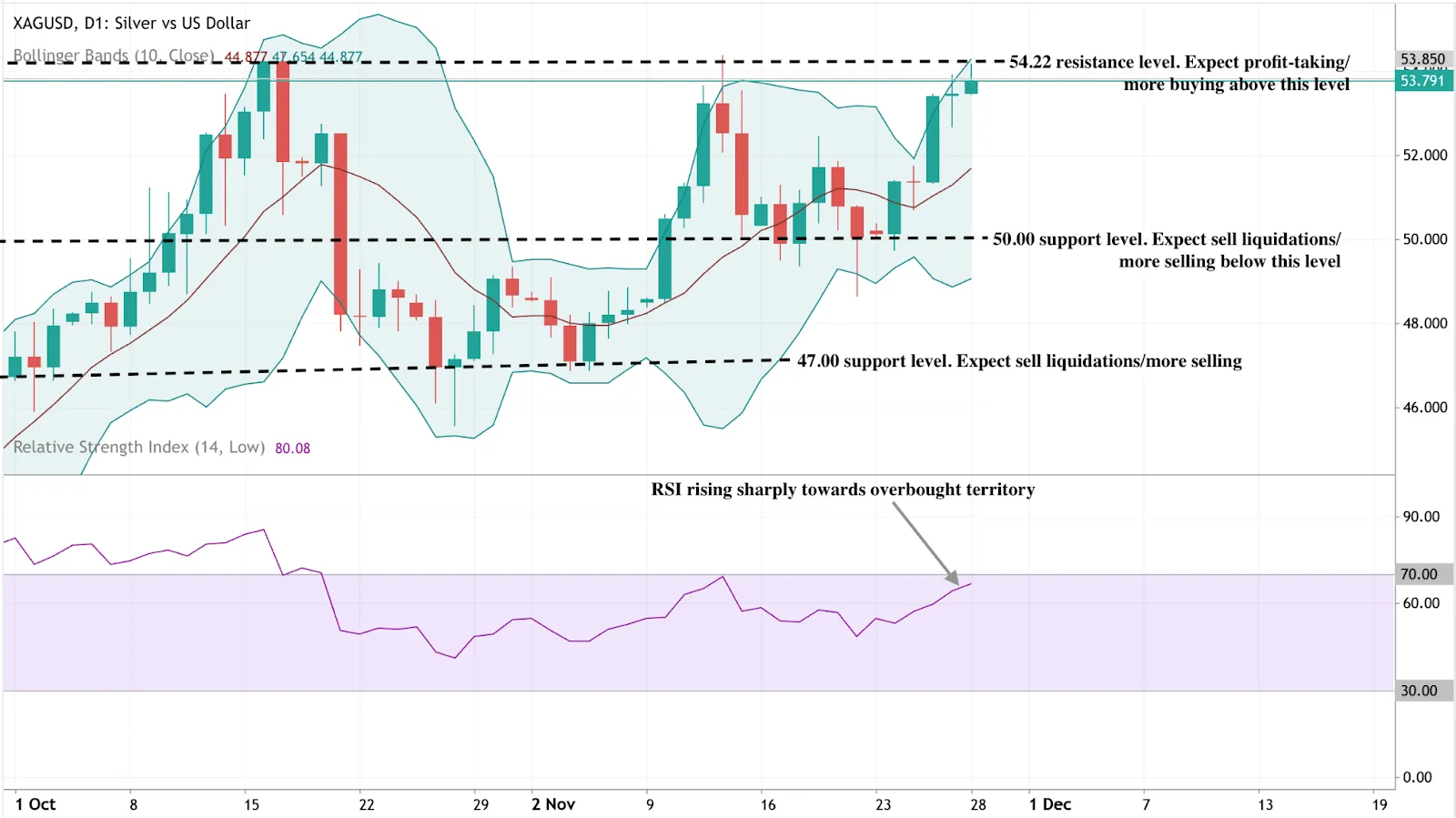
At the time of writing, XAG/USD trades near $53.79, pressing against the key $54.22 resistance level. This area may attract sellers looking to lock in gains, but a decisive breakout could unleash further momentum given the strength of the upward trend.
Support zones sit near $50.00 and $47.00. A move below either would signal fading bullish pressure and could set off a deeper retracement, particularly if price dips beneath the midline of the Bollinger Band structure. Momentum remains strong, with the RSI hovering around 80 - deep in overbought territory. This reinforces buyer dominance but also hints at near-term fatigue, raising the likelihood of short-lived pullbacks or sideways consolidation.
Disclaimer:
The performance figures quoted are not a guarantee of future performance.
FAQs
Why is silver outperforming gold right now?
Is silver about to break a new all-time high?
What role does the Fed play in silver’s trajectory?
How important is industrial demand to silver?


