Contents
Article
Is US jobs data the spark markets are waiting for?
December 16, 2025
Article
Is US jobs data the spark markets are waiting for?
December 16, 2025
Article
Is US jobs data the spark markets are waiting for?
December 16, 2025

Markets are trading as if they are poised for a turning point, and upcoming U.S. jobs data could determine which direction sentiment breaks. The dollar has drifted towards a two-month low, gold is consolidating near record levels after a powerful 64% rally this year, and Bitcoin is behaving less like a fringe asset and more like a barometer of global liquidity conditions.
The delayed U.S. employment reports for October and November arrive at a time when the debate has shifted. Investors are no longer focused on whether growth is slowing, but on how quickly policymakers will respond if it does. With futures markets increasingly leaning towards rate cuts in early 2026, reports suggest that the jobs data could become the catalyst that forces markets - and the Federal Reserve - to confront that shift.
What’s driving the focus on US jobs data?
The heightened attention on this week’s labour data reflects circumstance as much as substance. The reports cover a period disrupted by the longest U.S. government shutdown in history, which delayed releases and left gaps in the usual data flow. As a result, markets have been operating with limited visibility on labour conditions during a critical phase for policy decisions.
Even without a full breakdown of unemployment trends, the figures offer the most comprehensive insight yet into how resilient the labour market remained amid intensified uncertainty. For investors, this matters because employment has become the key variable anchoring the Fed’s policy stance.
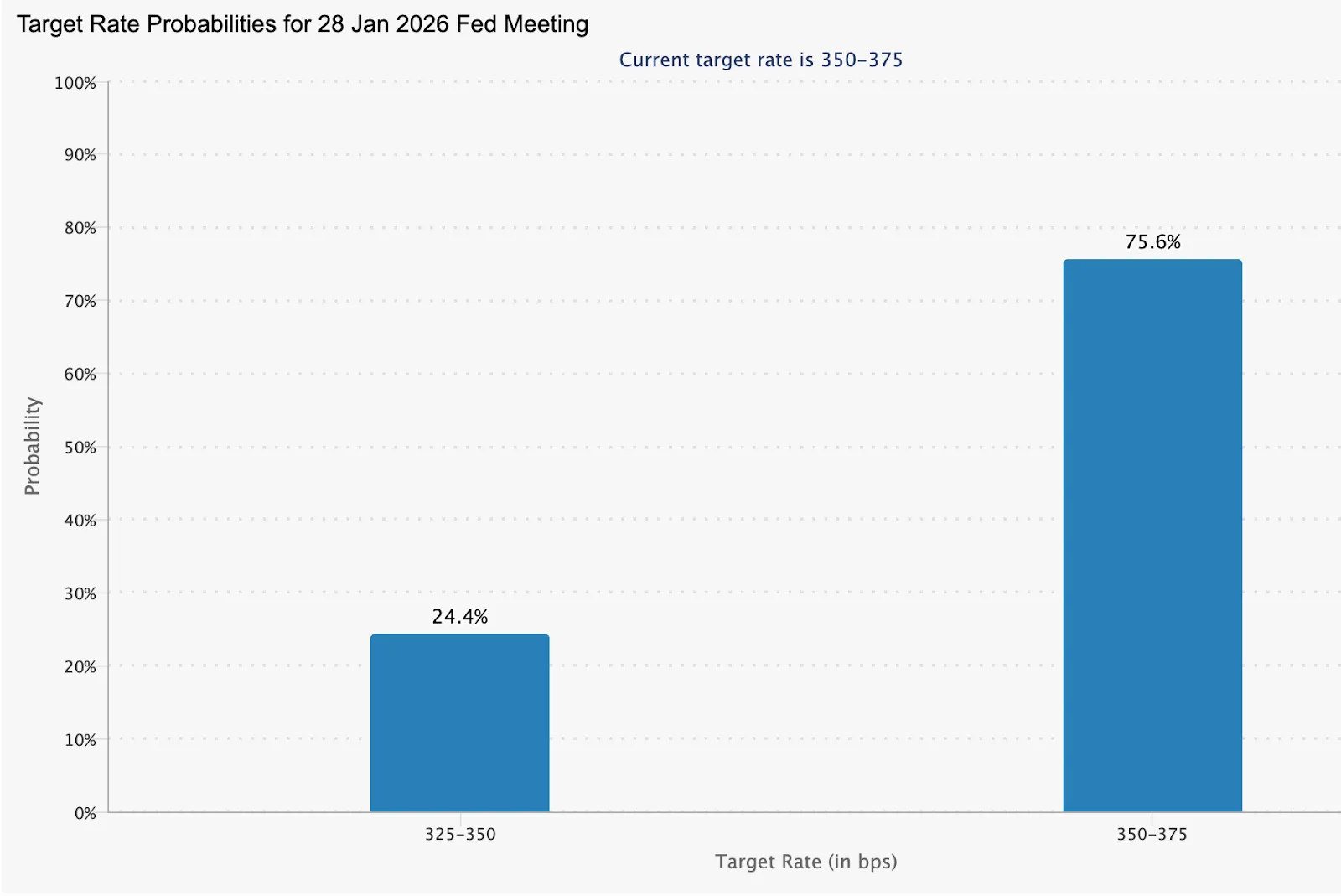
Analysts note that inflation has cooled, but not evenly, leaving officials dependent on softer demand to justify a policy easing. Fed funds futures reflect this balancing act, with markets pricing a 75.6% probability of a rate hold in January while gradually building expectations for cuts should labour conditions weaken further.
Why it matters
Labour data now sits at the centre of the Fed’s challenge. Strong hiring would give policymakers room to keep rates restrictive, while signs of deterioration would expose how narrow the path has become. Paul Mackel, global head of FX research at HSBC, said the delayed reports would help “give closure on how U.S. employment conditions were panning out during the shutdown,” warning that the dollar could remain under pressure if the data disappoints.
For policymakers, the implications go beyond market moves. Fed Governor Stephen Miran has argued that current inflation readings exaggerate underlying pressures, suggesting price dynamics are closer to the 2% target than headlines imply. If jobs data confirms that labour demand is cooling, the case for prolonged policy restraint becomes harder to defend, even if inflation has not fully settled.
Impact on markets, assets and consumers
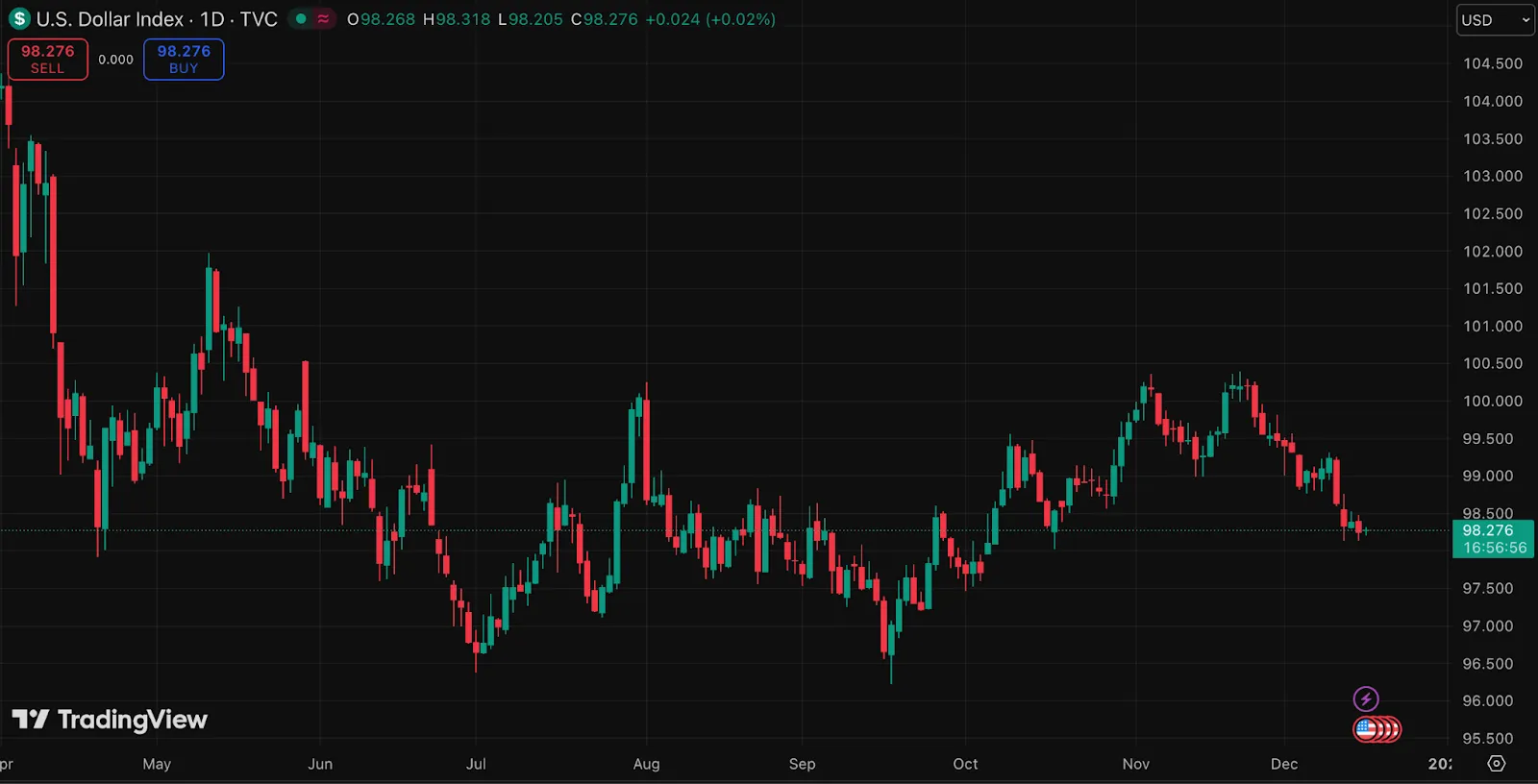
Currency markets have already begun to reflect this uncertainty. The U.S. dollar index slipped towards 98.26 in early Asian trade, while the greenback softened against the yen near 155 as traders positioned cautiously ahead of the data. As rate differentials compress, currencies have become increasingly sensitive to labour signals.
Gold’s reaction has been more decisive. Analysts note that after a brief pause following five consecutive days of gains, spot prices edged back towards $4,311 an ounce, supported by a weaker dollar and expectations of looser policy, before seeing a modest pullback. The metal continues to trade as a hedge against policy uncertainty rather than short-term growth fears.
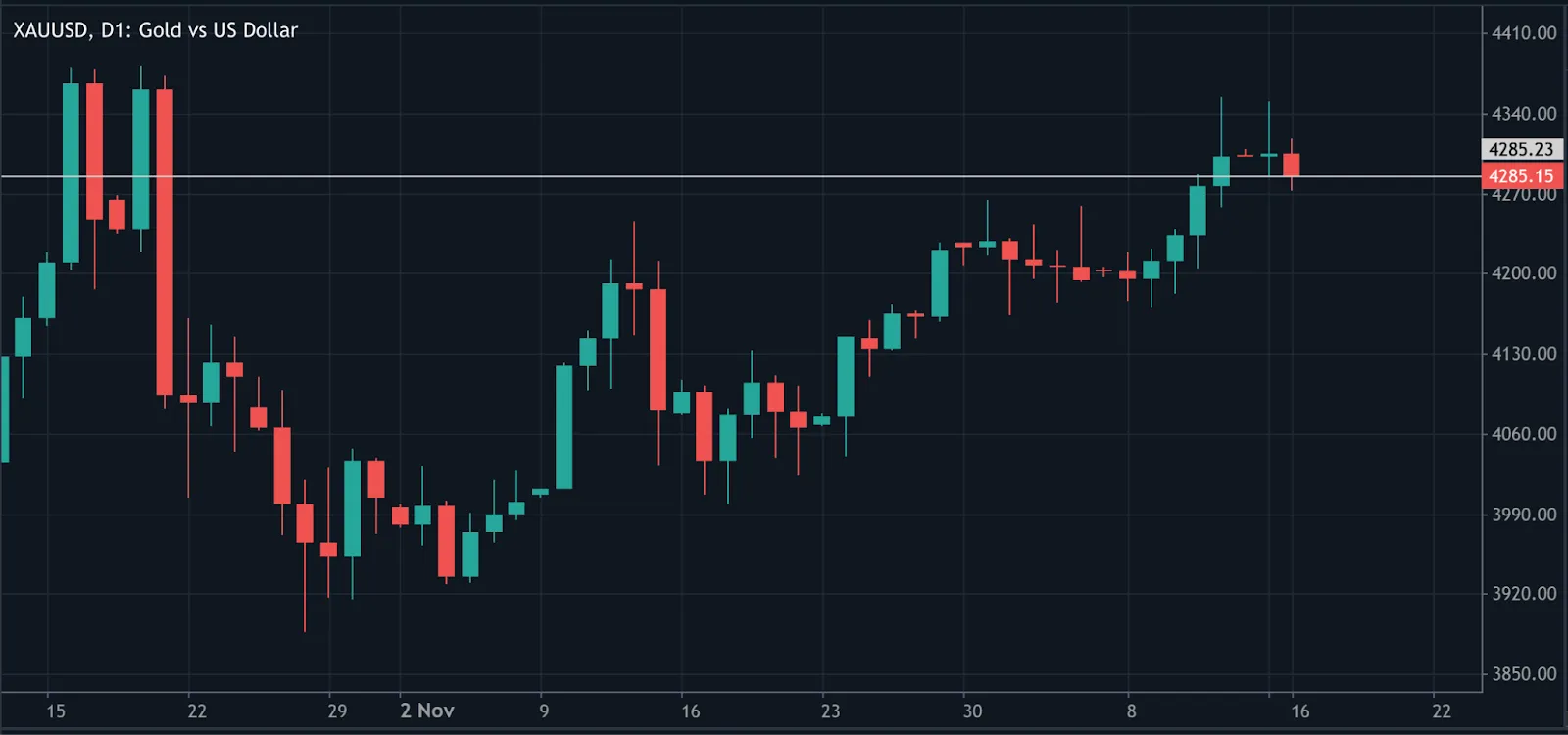
Tim Waterer, chief market analyst at KCM Trade, said subdued dollar performance is keeping gold “on the front foot,” as markets question whether the Fed is underestimating the scale of future rate cuts.
Equity markets have shown more restraint. U.S. stock futures were largely flat at the start of the week as investors avoided taking fresh risk ahead of the delayed November jobs report. Futures tied to the S&P 500 and Nasdaq edged slightly higher after earlier losses, while the Dow hovered close to unchanged, reflecting caution rather than confidence.
Technology stocks led the previous session’s declines as concerns over AI valuations resurfaced following disappointing earnings from companies such as Oracle and Broadcom. Those worries have since faded into the background, with attention turning firmly towards macro risks. The November nonfarm payrolls report is expected to show a modest gain of around 50,000 jobs, with unemployment forecast at 4.4%, figures that could influence whether markets expect the Fed to pause or accelerate easing in 2026.
Crypto markets have taken a different route. Bitcoin and major altcoins slipped as traders cut leverage ahead of the data, triggering more than $470 million in liquidations within 24 hours. Historically, however, periods of labour weakness that shift policy expectations have often proven supportive for liquidity-sensitive assets once volatility subsides.
Expert outlook
Looking ahead, analysts see uneven risks surrounding the jobs data. ANZ has highlighted upside potential for gold if employment emerges as a weak point, suggesting prices could test $5,000 an ounce next year should rate cuts arrive sooner than expected.
The bigger challenge lies in interpretation. This week’s jobs report coincides with delayed releases of retail sales, CPI, PCE inflation and housing data, compressing several key signals into a short window. Markets are likely to respond less to individual numbers and more to whether they collectively point towards a slowing economy. On its own, the jobs data may not provide clarity, but it could still serve as the trigger that forces expectations to adjust.
Key takeaway
As analysts note, U.S. jobs data has become the focal point where concerns about growth and policy expectations converge. A softer labour picture would strengthen the case for rate cuts, weighing on the dollar while supporting gold and other liquidity-driven assets. With several delayed releases arriving at once, volatility is likely to persist. What matters most is how decisively the data reshapes the Fed’s outlook as 2026 approaches.
Gold technical insights
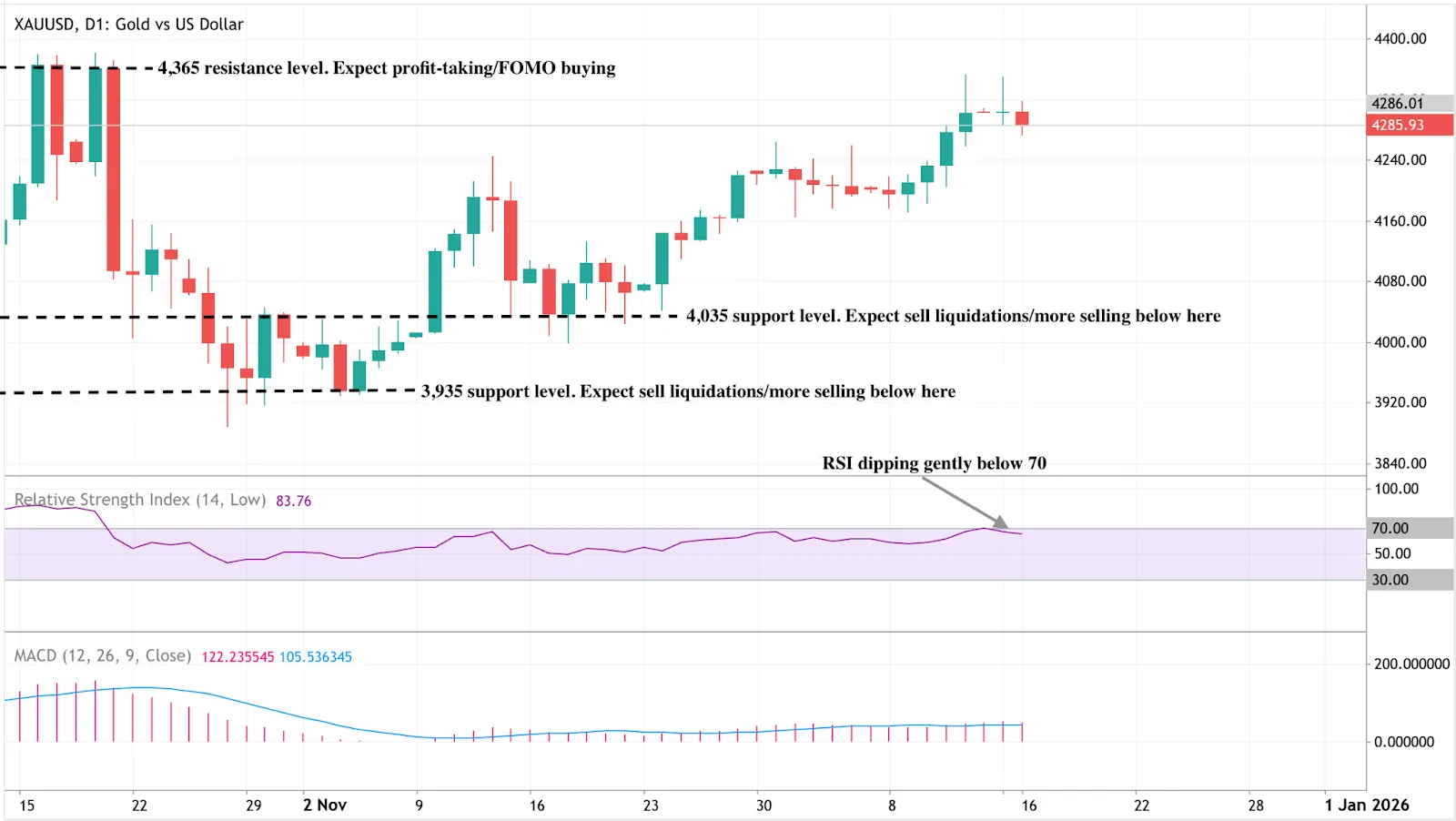
Gold remains in a constructive, albeit consolidative, phase following its sharp rally. Prices have stalled just below the $4,365 resistance zone as profit-taking emerges. Momentum indicators suggest consolidation rather than a reversal: the RSI has eased below 70, signalling that overbought conditions are being worked off, while the MACD remains firmly positive, with a flattening histogram indicating slowing upside momentum rather than outright weakness.
As long as prices hold above the $4,035 support zone, the broader bullish structure remains intact. A decisive break above $4,365 would likely reignite trend momentum, while a failure to defend key support could open the door to deeper pullbacks towards $3,935.
Disclaimer:
The performance figures quoted are not a guarantee of future performance.
FAQs
Why is US jobs data so important right now?
How does US jobs data affect the dollar?
Why does gold react to employment figures?
What does jobs data mean for Bitcoin and crypto markets?
Will missing details limit the impact of this report?


